Duck Confit Spring Rolls Recipe
By Emma
Certified Culinary Professional
·
Recipe tested & approved
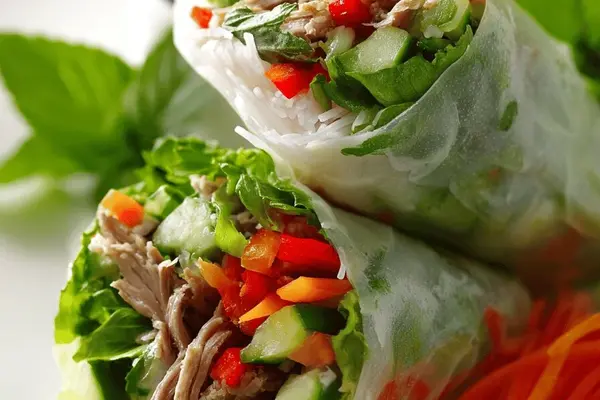
Duck confit spring rolls filled with rice vermicelli, cucumber, bell pepper, and fresh basil. Rice paper wraps deliver an elegant appetizer with hoisin-ginger sauce.
Prep:
45 min
Cook:
5 min
Total:
50 min
Servings:
12 to 14 rolls
Duck confit spring rolls are what happens when you stop overthinking it. Had half a container of duck confit sitting in the fridge, some rice paper, and 45 minutes before people showed up. This is the result. Crispy-bottomed rolls, cold and bright, with that rich duck playing against sharp ginger and lime. The kind of Vietnamese food that looks like you spent all day but didn’t.
Why You’ll Love This
Takes 45 minutes total and most of that is prepping vegetables. The actual rolling? Five minutes once you get the rhythm down. Serve them cold as an appetizer, no reheating, no mess.
Duck confit brings richness that chicken can’t match — it’s tender, it shreds clean, it doesn’t dry out. You get that fried-duck richness without actually frying anything.
Works for dinner, works for parties, works when you need something that looks impressive but tastes like home cooking. Asian flavors without being precious about it.
What You Need for Crispy, Fresh Spring Rolls
Rice vermicelli — the thin kind. Soak it just 6 to 7 minutes. It keeps a slight bite. Overcooked and it turns to paste inside the rolls. Rinse it cold after, drain hard. Clumps? Fork it apart.
Hoisin sauce. Water. Ginger grated fresh — not powdered. Lime juice, rice vinegar. Mix them, let it sit. The sauce gets better as flavors meld. Tastes thin at first. Wait an hour and it rounds out. Adjust if it’s too sweet — more lime. Too thick — thin it with water.
Rice paper wrappers. The 22 centimeter ones. They soften in hot water for 12 to 18 seconds. Watch the edges. Too long and they tear. Too short and they crack while you roll. No middle ground. You learn by feel.
Duck confit is the whole point. Shredded. About a cup and a half. No liquid. Pat it dry if it’s swimming in fat. Leftover roasted chicken works if that’s what you have — same amount, same prep. Turkey too. Just needs to shred clean.
Cucumbers. Lebanese ones. Julienne them thin. Bell pepper in strips. Fennel sliced lengthwise — sounds fussy, tastes like subtlety. Scallions thinly sliced. Watercress or spinach. Fresh basil leaves. Quick pickled carrots if you want tang. They’re optional but they add snap.
How to Roll Vietnamese Spring Rolls Without Tearing the Paper
Soak the vermicelli first. Boiling water, about 6 to 7 minutes until it’s soft but still has a tiny bit of resistance when you bite it. Drain it. Run it cold. Fork through any clumps. Soggy vermicelli = soggy rolls. Never skip that step.
Fill a bowl with very hot water. This is how you soften the wrappers. One wrapper at a time. Submerge it. Count to 12 seconds maybe, 18 at most. Pull it out when the edges start to give but before they tear. Lay it on a clean tea towel to drain. Excess water makes the paper slip around while you roll.
Lay the wrapper flat. At one edge — let’s call it the bottom — put down a line of cucumber julienne. About 2 tablespoons. Next to that, layer your shredded duck and vermicelli. On the other side, scatter your scallions, bell pepper, fennel, watercress, basil. Just two leaves per roll. Pickled carrots if you’re using them — don’t overdo it, they’re bright.
Fold the sides in. Tuck them over the filling. Roll tight from the cucumber side, like you’re wrapping a little parcel. Firm but not aggressive — the paper tears if you squeeze it. If the roll feels loose or flimsy, the wrapper wasn’t drained enough. Pat the next one drier.
Cover each finished roll with a damp cloth so the paper doesn’t dry out while you work. You can make them ahead — wrap individually in plastic, store in the fridge. They last a day. The vermicelli starts to rubberize after that. Better fresh.
Serve them cold or at room temperature. Make the sauce while you roll — it gets sharper the longer it sits. The ginger-lime cuts through the richness of the duck. Dip them or spoon sauce on top. Either way works.
Rolling Spring Rolls: Common Mistakes and How to Fix Them
Overloaded rolls tear the paper. Keep the filling light. Better a thinner roll that holds together than one that bursts apart while you’re eating it.
Rice paper that sits in water too long gets mushy and falls apart. Count those seconds. 12 to 18. No more. Your hands get wet? They’re too wet. Pat them dry before you roll.
Vermicelli that’s mushy ruins the texture. Six to seven minutes max in boiling water. If it’s still hard, add 30 seconds next time. But mushy happens faster than you think.
Ginger in the sauce that’s not fresh tastes like medicine. Grate it yourself. That powder is good for other things. Not this.
Fennel sounds weird if you’ve never had it. It’s licorice-forward, subtle, vital for the dish. If it genuinely isn’t your thing, use less scallion instead and call it done. Just don’t skip it without tasting first. Often overlooked but it adds complexity that people feel even if they can’t name it.
Leftover filling makes a salad. Duck and vermicelli, whatever vegetables are left, dress it with lime vinegar and a touch of hoisin. Better than throwing it out.
No duck confit in the house? Shredded roasted chicken. Turkey. Even leftover chicken from a rotisserie bird. Won’t have the depth of confit but rolls work fine. The technique is the same.
Duck Confit Spring Rolls Recipe
Prep:
45 min
Cook:
5 min
Total:
50 min
Servings:
12 to 14 rolls
Ingredients
- Sauce
- 100 ml (1/3 cup) hoisin sauce
- 80 ml (1/3 cup) water
- 15 ml (1 tbsp) freshly grated ginger
- 15 ml (1 tbsp) lime juice
- 5 ml (1 tsp) rice vinegar
- Rolls
- 70 g (2 1/2 oz) rice vermicelli
- 12 to 14 rice paper wrappers, 22 cm (8.5 in)
- 2 Lebanese cucumbers, julienned fine
- 375 ml (1 1/2 cup) shredded duck confit or shredded roasted chicken
- 2 scallions, thinly sliced
- 1 red bell pepper, cut into thin strips
- 1/2 bulb fennel, thinly sliced lengthwise
- 1 cup baby watercress or baby spinach
- 24 fresh basil leaves
- 30 g (1 oz) quick pickled carrots (optional, for tang and crunch)
Method
- Sauce
- 1 Combine hoisin, water, ginger, lime juice, and rice vinegar in a bowl. Stir until uniform. Refrigerate for flavors to meld. Adjust balance if too sweet or thick; add more lime for brightness or water to thin.
- Rolls
- 2 Soak vermicelli in boiling water until soft but with slight bite (about 6 to 7 minutes). Rinse under cold water to halt cooking, drain thoroughly. Clumps? Flick fork through. Never skip draining or rolls become soggy or sticky inside.
- 3 Fill large bowl with very hot water for softening wrappers. Submerge one wrapper at a time just 12 to 18 seconds. Watch the edges soften but not tear. Too long? Tears; too short? Breaks while rolling. Drain on clean tea towel or paper towel to remove excess moisture; soggy paper is a rookie mistake.
- 4 Lay wrapper flat on clean surface. At one edge, arrange a line of cucumber julienne (about 2 tbsp), then layer 2 tbsp shredded duck and vermicelli beside it. Scatter scallions, bell pepper strips, fennel slivers, handful of watercress, and two basil leaves opposite cucumber side. Sprinkle quick pickled carrots sparingly — adds snap and subtle acidity.
- 5 Fold sides of wrapper inward over filling, reduce gap for firm roll. Roll tightly from cucumber edge so filling held like little parcel. Firm but gentle pressure to avoid tearing. If roll feels flimsy, pat wrapper dryer next time. Cover each roll as you go with damp cloth to prevent drying.
- 6 Serve rolls cold or at room temperature with chilled sauce. Dip or spoon sauce generously, the sharp ginger-lime notes cut through richness of duck. Leftovers in fridge wrapped individually in cling’ll last a day; vermicelli can rubberize– best fresh.
- 7 Pro tip: If duck confit unavailable, swap for leftover shredded chicken or turkey roasted with herbs, same prep. Watercress substitutes basil’s peppery green note; pale green mint leaves work but reduce total quantity to avoid overpowering.
- 8 This rolling method saves time and makes assembly smooth. Texture contrast key: creamy duck, crisp cucumber and pepper, aromatic herbs. Fennel adds subtle licorice crunch, often overlooked but vital for complexity.
- 9 Heard sizzle? Nope. Still feel that fragrant steam rising off water? Sures the sign vermicelli is done. If vermicelli mushy, reduce soaking next time by couple minutes.
- 10 Avoid overloading rolls or rice paper breaks; better lighter filling, thicker wrapper for neatness. Leftover filling? Turn into salad or toss with vinaigrette for another use.
Nutritional information
Calories
250
Protein
14g
Carbs
20g
Fat
12g
Frequently Asked Questions
How long do spring rolls last once they’re made? A day, maybe a bit into day two if they’re wrapped tight. The rice paper stays supple. The vermicelli starts turning rubbery after that. They’re better the same day.
Can you make the duck confit filling ahead? Absolutely. Shred the duck, keep it in a container, make the rolls when you’re ready. Filling lasts three days in the fridge. Just bring it to room temperature before rolling or it’ll tear the paper.
What if the rice paper wrapper breaks while you’re softening it? Start over. Once it tears it keeps tearing. Toss it. The water cools every wrapper you dunk though — if your fifth wrapper is tearing when your first three weren’t, replace the water.
Do you fry these rolls or serve them fresh? Fresh. Cold. No frying. That’s the whole point. They’re not crispy-bottomed spring rolls you’d get at a restaurant. They’re summer rolls — that’s the thing.
Can you substitute the duck confit with something else? Roasted chicken works the same. Shrimp too, though the texture’s different. Tofu if you want vegetarian. Keep the amount the same. The rest of the roll doesn’t change.
What’s the deal with the ginger-lime sauce? It cuts through the richness of the duck. Without it the rolls taste flat. Hoisin’s sweet, so the sauce balances that with brightness. Let it sit before serving — it rounds out as flavors meld. Make it while you roll, chill it, taste before serving. Adjust to your preferences.
You’ll Love These Too
Explore all →
Roast Lamb Dinner with Garlic and Sage
Cold Sesame Noodles with Smoked Tofu
Beef Panini with Au Jus Dipping Sauce
Maple Blueberry Quick Bread Recipe
Vegetarian Lasagna with Ricotta and Zucchini

Breakfast Tater Tot Casserole with Bacon

Easy Crock Pot Chili with Ground Beef

Peanut Butter Jelly Sundaes with Berry Jam
White SOS: Béchamel Sauce with Olive Oil

Rice Noodle Salad with Tahini, Tofu & Mango

Almond White Blondies with Coconut Oil

Beef Stew Slow Cooker with Chuck Roast

Lemon Cream Cheese Pie No-Bake Recipe
Pineapple Blueberry Crisp with Cake Mix

Crab Smashed Potatoes with Garlic Butter

Grilled Chicken Sandwiches with Scallion Sauce

Creamy Rice Pudding with Lemon Zest

Cheesy Broccoli Potato Soup with Smoked Gouda

Berry Fennel Burrata Salad with Honey-Citrus