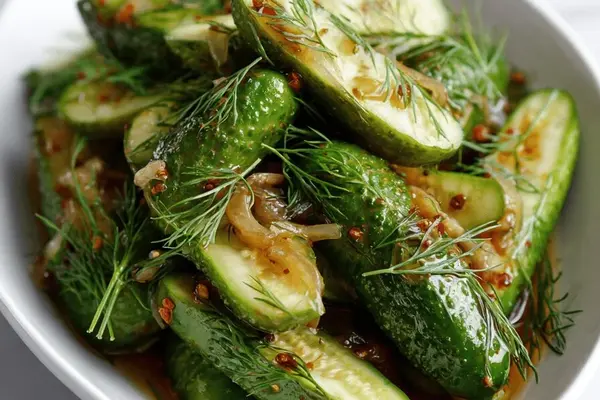
Dill Pickled Cornichons with Star Anise
By Emma
Certified Culinary Professional
·
Recipe tested & approved
Crispy dill pickle recipe using Kirby cucumbers, fresh dill, garlic, and star anise in a tangy vinegar brine. Ready in two weeks, stays fresh for months.
Prep:
35 min
Cook:
12 min
Total:
47 min
Servings:
3 liters (about 12 cups)
Kirby cucumbers. Dill. Star anise. That’s the combo that made three jars disappear in two weeks from my fridge. Had a glut of tiny cucumbers and some weird spice jars nobody touched. This happened.
These aren’t the flabby, mushy pickles that sit in grocery store jars for months. You’re making dill pickle spears that stay crisp, that taste like actual dill and garlic and star anise instead of vinegar fumes. Takes 47 minutes total. Most of that is just waiting for brine to cool.
Why You’ll Love This
Takes 47 minutes. Mostly waiting. You’re not standing there doing anything.
Homemade means you control the spices. Want more star anise? Add it. The store version doesn’t let you do that.
Works as a condiment on literally everything. Sandwiches, charcuterie, next to sharp cheddar, straight from the jar at midnight.
Vegetarian and keeps for months in your fridge. No fancy canning knowledge needed. Just boil, pour, cool, forget about it for two weeks.
Gathering Your Cucumbers and Spices
Kirby cucumbers. Small ones. The bumpy kind. Not the long English ones — they get mushy. Wash them well, cut lengthwise into halves or quarters depending on thickness. Thinner spears soften faster. Thicker ones stay crunchier longer.
One medium red onion sliced into rings. Color matters here. Adds sweetness. White onion doesn’t work the same way.
Fresh dill. Five sprigs. Not dried. Dried tastes like hay.
White vinegar. 400 ml. Apple cider vinegar makes this taste different — earthier, less clean. Save that for pickled beets or other things.
Water. 600 ml. Just regular water.
Star anise. Three pods. This is the weirdest ingredient and also the one that makes people ask what you did differently. The licorice note cuts through the vinegar bite.
Garlic. Four cloves halved. Fresh ginger sliced thin. Mustard seeds. Black peppercorns. Green cardamom pods. One bay leaf. Sugar and coarse salt.
Everything matters. Nothing’s filler.
Building the Brine and Packing Jars
Three 1-liter jars, clean. Sterilized if you’re paranoid about long-term storage. You’re not canning these — they live in your fridge — so clean is enough.
Divide cucumbers, red onion rings, and dill among the jars. Slip ginger slices in there too. Don’t pack them tight. They need room for brine to circulate.
Medium saucepan. Combine vinegar, water, sugar, salt, mustard seeds, peppercorns, cardamom pods, star anise, bay leaf, and garlic halves. Medium-high heat. Bring to a rolling boil.
You want to actually see it boil. Not just steam. Boiling matters — it opens up the spices, pulls the flavor out. Once boiling, drop heat to low. Simmer for 7 to 8 minutes. Not a hard boil. Just bubbles breaking evenly across the surface. The smell changes around minute 5. That’s when you know it’s working. Hints of licorice, peppercorn warmth, garlic softening.
Pour the hot brine directly over the cucumbers. Leave about 1 cm headspace. Cap tight.
The jars will be hot. Steam will fog the glass. Condensation pools inside. That’s right. Let them sit at room temperature until lukewarm. Don’t shake them. The infusion starts now.
Once cool, straight into the fridge. They’re safe to eat in 3 days but taste way better after 10 to 14 days. The flavors deepen. Cucumbers soften just enough but keep their snap.
Store up to 3 months. The brine keeps everything preserved as long as jars stay sealed and cold.
What Actually Matters When You’re Making These
Crunch is everything. Overcook them in the brine before you pour it over and you’ve wasted the cucumbers. You’re not simmering the spears — you’re making the brine separately, then pouring it over fresh cucumbers. That’s the secret. The brine is hot. The cucumbers aren’t. That’s what keeps them crisp.
Use a glass or ceramic knife to cut the cucumbers. Metal reacts with the vinegar over time, especially if jars stay open. Tastes weird. Not a huge deal but it matters.
Salt and sugar balancing. Don’t skimp. The sugar dampens the vinegar punch — makes it less aggressive. The salt is what keeps the texture firm. Both are necessary. Both do different jobs.
Brine turns cloudy sometimes. Just means minerals or particles from the spices are floating around. Re-boil it, let it cool, re-pour into jars. It clears up and stays fresh.
Dill for tarragon or basil works if you want something more herbal. But dill and cardamom is the classic. It’s classic for a reason.
These jars make a popping sound when you open them. That’s the seal that formed as they cooled. Means they sealed properly. Fridge pickles don’t actually need a tight seal — they’re in the cold — but it’s satisfying anyway.
Dill Pickled Cornichons with Star Anise
Prep:
35 min
Cook:
12 min
Total:
47 min
Servings:
3 liters (about 12 cups)
Ingredients
- 900 g (about 2 lb) Kirby cucumbers well washed, cut in halves or quarters lengthwise depending on thickness
- 1 medium red onion sliced into rings
- 5 fresh dill sprigs
- 400 ml (1 2/3 cups) white vinegar
- 600 ml (2 1/2 cups) water
- 4 garlic cloves peeled and halved
- 40 ml (roughly 2 1/2 tablespoons) granulated sugar
- 25 ml (nearly 1 1/2 tablespoons) coarse salt
- 15 ml (1 tablespoon) mustard seeds
- 5 ml (1 teaspoon) whole black peppercorns
- 4 green cardamom pods
- 3 star anise pods
- 1 dried bay leaf
- 1 small piece (about 2 cm) fresh ginger peeled and sliced
Method
- 1 Prepare three 1-liter clean jars, sterilized if you plan longer storage. Distribute cucumbers, red onion rings, and dill evenly among them. Add sliced ginger pieces among jars for a subtle zing.
- 2 In a medium saucepan, combine vinegar, water, sugar, salt, mustard seeds, peppercorns, cardamom pods, star anise, bay leaf, and garlic halves. Bring to a rolling boil over medium-high. Once boiling, reduce heat to low and simmer gently for about 7 to 8 minutes.
- 3 You want to see bubbles just breaking evenly across surface not furious rolling. Aromas should deepen, spices infuse liquid with hints of licorice and warm peppercorn crackle.
- 4 Immediately pour the hot brine over the jars’ contents until they’re covered, leaving about 1 cm headspace. Cap jars tightly. Let sit at room temperature until lukewarm — you’ll notice condensation inside jars. No shaking; infusion starts now.
- 5 Place jars in fridge next up to 3 months. Flavor intensifies over 10 to 14 days but safe to sample earlier — cucumbers soften slightly but keep crisp snap.
- 6 Use sturdy glass or ceramic knife to cut; metal can risk tainting flavors if jars opened long term.
- 7 If brine seems cloudy before use, re-boil and cool then re-fill jars to keep pickles fresh and safe.
- 8 Swap dill for tarragon or basil if you want a more herbal or summer vibe but remember the classic dill and cardamom combo is signature here.
- 9 Don’t skimp on salt or sugar balancing. Sugar dampens vinegar punch; salt is key to crisp texture.
- 10 Avoid overcooking cucumbers in brine before packing — that ruins crunch and texture. Adding fresh spices direct into jars keeps flavor fresher.
- 11 Expect a vivid green contrast against white and red from onions, an inviting homemade rustic look.
- 12 Ideal for sandwiches, snacks, or beside sharp cheeses. Makes fridge pop sounds when you open jars, that’s the ‘seal’ telling you all is good.
Nutritional information
Calories
18
Protein
0.5g
Carbs
3g
Fat
0g
Frequently Asked Questions
Can I use regular cucumbers instead of Kirbys? English cucumbers get mushy fast. Regular slicing cucumbers are worse. Kirbys are smaller, denser. That’s why they work. You want the bumpy little ones.
How long until they’re actually ready to eat? Three days and they’re fine. Taste young, bright, fresh. But wait 10 to 14 days and they’re better — flavors have time to settle into the cucumber. Do that if you can.
Why star anise specifically? Licorice note cuts the vinegar sharpness in a way nothing else does. Some people hate it. Those people skip the star anise. Most people taste it and ask what makes these different from store pickles. That’s the star anise.
Will these actually keep for 3 months? Yep. Cold fridge. Sealed jars. They’re fine. Flavor gets stronger over time, not worse. Just remember they’re refrigerator dill pickles — not shelf-stable canned pickles. They live in the cold.
What if I don’t have cardamom pods? Leave them out. These still work. You lose some warmth but the dill and star anise carry it. Mustard seeds matter more than cardamom.
Can I use dried dill instead of fresh? Dried tastes nothing like fresh. Don’t bother. Actually wait — if that’s all you have, use a quarter teaspoon per jar and accept it’s not going to taste the same. Fresh is way better.
Why is the brine cloudy sometimes? Mineral content in water, particles from the spices. Not unsafe. You can filter it by re-boiling and pouring through cheesecloth. Or just accept it — it doesn’t affect taste.
You’ll Love These Too
Explore all →
Corn Salad with Zucchini and Feta
Duck Gizzards with Thyme-Citrus Twist
Tuna Casserole with Egg Noodles
Cinnamon Toast Crunch Cookies Recipe

Chai Chai Tea Recipe with Oat Milk
Crunchy Quinoa Oat Bars with Pistachios
Herbed Ranch Salt Mix with Smoked Paprika
Sausage Balls Recipe with Cream Cheese
Pear Butter Recipe with Cinnamon
Grilled Pork Chops with Pineapple Orange Marinade
Pumpkin Cake Cheesecake Recipe
Pecan Sticky Roll with Caramel and Honey
Maple Blueberry Quick Bread Recipe
Milk Chocolate Mousse with Coconut Cream
Braised Beef with Peppers and Cherry Tomatoes
Apricot Jam Baked Brie with Pecans

Tuna Melt with Asparagus & Radish
Mexican Street Corn Chicken Rice Bowls
Mulling Spices For Cider With Rum