Crunchy Peanut Brittle with Maple Syrup
By Emma
Certified Culinary Professional
·
Recipe tested & approved
Make peanut brittle with dry roasted peanuts, maple syrup, and baking soda for a crunchy homemade candy. This nutty confection delivers satisfying texture.
Prep:
6 min
Cook:
12 min
Total:
18 min
Servings:
6 servings
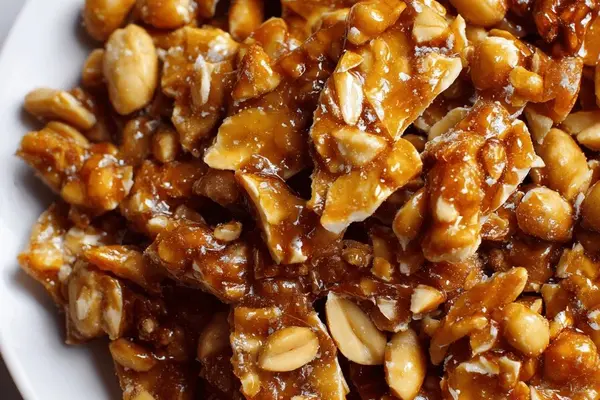
Three pounds of peanuts and a bottle of maple syrup. Figured why not make brittle. This happened in 18 minutes. Crunchy, shattered on your teeth like glass, peanuts still roasted and whole inside the caramel. The maple cuts through—not sweet like brown sugar brittle, something deeper. Burnt toast meets peanut meets that moment right before everything breaks.
Why You’ll Love This
Takes 18 minutes flat. Prep is mostly waiting for heat to do the work. No thermometer needed if you know what amber looks like—and you’ll know it when you see it.
Works as a snack straight from the pan, shattered into chunks. Also works crushed over ice cream, pressed into chocolate, sprinkled on cakes. One recipe becomes three things.
Maple changes everything. Not candy-sweet. Tastes like you actually made it, not like a box mix. Homemade brittle is faster than you think.
One bowl, one pan, one sheet. Airtight container keeps it for days. The crunch stays.
The Core Ingredients for Peanut Brittle Recipe
Water, sugar, maple syrup. That’s the caramel base. Dry roasted unsalted peanuts—not salted, not raw. Roasted means they hold their flavor when heat hits them again. Baking soda. That’s the crackle, the expansion, what makes it brittle instead of toffee.
Silicone baking mat instead of parchment. Parchment sticks. Mat releases clean. Water for the pastry brush—you’ll need it constantly, wiping those crystal edges so the whole thing stays smooth and glossy, not gritty.
How to Make Brittle Without a Thermometer
Medium-heavy saucepan. Mix water, sugar, maple syrup together. Stir just to combine, then stop stirring. Let it sit. Medium-high heat.
Watch the edges. Tiny bubbles first, clear like water boiling. Keep swirling the pan, not stirring—swirling just moves it around. Wet the pastry brush. Wipe down the sides constantly. Crystals form where the mixture touches the pan above the liquid line. You wipe them down. Constantly. This is the whole trick, really.
The color shifts. Pale, then pale amber, then amber. That’s when you add peanuts. Not before. Not after. That moment when it’s bright amber and smells like toast. Stir once, hard. The peanuts coat instantly, everything turns glossy and thick.
One more minute on heat. Bubbles get bigger. Crackling sound underneath, faint but there if you listen. Off heat. Fast.
Baking soda in immediately. It froths. White foam rises up. The texture changes—you feel it, the expansion happening right there in the pan. Pour it onto the mat before it cools even a second. Use an offset spatula. Scrape hard. Spread it thin but leave it uneven—edges thinner, middle thicker. That’s intentional. Creates texture.
Cool at room temperature. Don’t rush. Don’t refrigerate. Just wait. It cracks loudly when you break it. Good sign.
Breaking and Storing Peanut Brittle the Right Way
Half of it breaks into chunks—just use your hands, it shatters easy. The other half gets chopped fine on a wooden board. Chef’s knife, wide blade, rock gently. Don’t smash. Rock. Avoid the dust.
Chunky pieces decorate. Dust on top of chocolate cakes. Mixed into vanilla ice cream while it’s soft. Fine bits scattered over frosting.
Storage is simple—airtight container. Humidity kills it. Moisture makes it chewy, ruins the snap. Room temperature, sealed tight, lasts days. Some people say a week. Mine doesn’t last that long.
Crunchy Peanut Brittle with Maple Syrup
Prep:
6 min
Cook:
12 min
Total:
18 min
Servings:
6 servings
Ingredients
- 70 ml (about 1/3 cup) water
- 105 ml (roughly 7 tablespoons) granulated sugar
- 110 ml (just under 1/2 cup) maple syrup
- 160 ml (about 2/3 cup) dry roasted unsalted peanuts
- 3 ml (3/4 teaspoon) baking soda
Method
- 1 Start with a clean sheet pan lined with silicone baking mat, not parchment for better release. Set aside.
- 2 In a medium-heavy saucepan, mix water sugar and maple syrup. Stir briefly just to combine, then stop. Bring to medium-high heat, swirling pan occasionally. Watch closely. Tiny bubbles start around edges, clear at first.
- 3 Use a wet pastry brush to wipe down sides constantly. No crystals allowed to form; otherwise, the brittle turns gritty. Heat shifts from clear to pale amber; that’s key—late amber before burning. The smell deepens, hints of caramel toast but not sharp burnt sugar.
- 4 Add peanuts now. Stir once vigorously with wooden spoon. The mixture thickens fast, peanuts coated bright and glossy.
- 5 Cook one minute more. Bubbles grow bigger, crackling sound under the pan faint but steady. Take off heat quickly.
- 6 Stir in baking soda immediately. Mixture foams white, expands, sharp change in texture noticeable.
- 7 Pour fast onto mat. Use an offset spatula scraping hard to spread thin but uneven, edges thinner than center—this creates texture contrast.
- 8 Cool completely at room temp; brittle cracks loudly when tapped.
- 9 Break half into sizable chunks with your hands. Chop rest finely on wooden board with chef’s knife, wide blade rocking gently to avoid shattering glass-fine dust.
- 10 Use chunky shards to decorate chocolate cakes, dust fine bits on top or mix into ice cream. Store brittle airtight; moisture ruins crunch.
Nutritional information
Calories
220
Protein
5g
Carbs
26g
Fat
12g
Frequently Asked Questions
Can I skip the baking soda or use something else? No. Baking soda is the only thing that makes it brittle. It expands, creates air pockets, makes it shatter instead of chew. Nothing substitutes.
Why does my brittle turn gritty instead of smooth? Crystals. They formed on the sides while it heated. The brush prevents this. Actually—every few seconds, just wipe those sides down. Constantly. If you forget even once, crystals start and they spread. Ruins the whole batch.
What if my amber gets too dark? You’ll smell it. Sharp burnt sugar, not caramel toast. Pull it off heat immediately. Darker doesn’t mean better—means you’re seconds away from bitter and unusable. Takes practice. Your nose tells you more than any timer.
How thin should I spread it on the pan? Uneven is the point. Edges paper-thin, center thicker. Use the spatula to drag it, don’t smooth it obsessively. Breaks better with that texture variation. And it cools faster thin.
Why does the maple syrup matter—can I just use brown sugar? Different flavor entirely. Brown sugar gives you standard candy-sweet. Maple gives you depth, something toasty, less one-note. Not interchangeable. If you want that caramel-toast thing, maple does it.
How do I know when the peanuts are coated? One stir, hard stir. They coat instantly. You’ll see the gloss. Stop immediately after. Overstir and they break, release oil, texture gets weird. One stir. That’s it.
You’ll Love These Too
Explore all →
Sesame Cucumber Salad with Lime & Chili
Pasta Salad with Smoked Turkey & Rotini
Roasted Acorn Squash with Pecans & Date Syrup
Baked Zucchini With Parmesan Cheese
Herb Scones with Spelt and Oat Flour
Pork Medallions with Cherry Spice Sauce
Open Face Pizza Burgers with Mozzarella
Vegan Crème Brûlée with Chai Spices
Broccoli Cheddar Soup in Instant Pot
How to Cook Corn on the Cob
Fried Cashew Recipe with Smoked Paprika
Cream Wafers with Vanilla Buttercream
BBQ Chicken Quesadillas with Pineapple
Asian Style Sirloin BBQ with Soy & Ginger
Cheesy Pigs In A Blanket - 20 Minute
Classic Deviled Eggs Remix with Dijon
Mini Goat Cheese Quiche with Pine Nuts
Clementine Mint Water Infusion Recipe
Bread Pudding Recipe with Cinnamon & Caramel