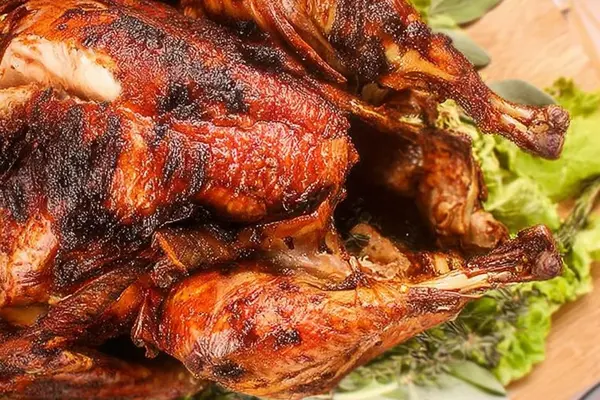
Crispy Fried Turkey with Smoked Paprika
By Emma
Certified Culinary Professional
·
Recipe tested & approved
Whole bird, hot oil, 45 minutes. That’s it. Had a friend’s holiday dinner ruined once—undercooked bird, panic, regret. Switched to frying after that. Never going back. Deep fried turkey with peanut oil stays juicy inside while the skin cracks like shattered glass under your teeth. Smoked paprika and cayenne smoke into every crevice. This is Southern eating at its peak.
Why You’ll Love This
Takes 2 hours 65 minutes total, but most of that is passive. You’re not hovering. Oil does the work.
Fried turkey tastes nothing like roasted. Skin fractures at the slightest bite. Meat stays almost steaming inside. There’s no comparison once you’ve had the real thing.
Holiday dinners need a centerpiece that lands. This turkey becomes the story people remember—not the dry bird, but the one that was actually good.
Cajun spices get into the meat itself through injection. You taste smoked paprika in every single bite, not just on the surface.
Deep Fried Turkey with Peanut Oil—The Prep
One whole turkey, 12–14 pounds fully thawed. Not partially. Fully. Ice inside = oil explosion.
Peanut oil or grapeseed oil. About 4 gallons. Neutral flavor. High smoke point. Peanut oil is the standard—reusable, works twice.
Smoked paprika. Three tablespoons. Ground ancho chili if you swap out. Kosher salt, two tablespoons. Black pepper, one tablespoon. Garlic powder, one tablespoon. Cayenne, one teaspoon. Dried thyme, two teaspoons. Mix these dry.
Savory injection marinade, one cup. Replace half the water with apple cider vinegar. Cuts through the richness.
Heavy gloves. Metal frying basket. Meat thermometer. Paper towels—a lot of them.
How to Fry Turkey in Peanut Oil—The Method
Pull out the neck, liver, heart, anything plastic inside. Dry the whole bird with paper towels until the skin feels like paper. Wet skin spits oil everywhere. Not a minor thing. Dangerous thing.
Water-fill test first. Place bird in basket, fill with cold water until just covered, pour that water into a measuring pot. Remember that number. Drain everything. Dry the bird again.
Mix your spice blend in a bowl—paprika, salt, pepper, garlic powder, cayenne, thyme. Rub it all over. Don’t be gentle. Work it into the joints, under the wings, inside the cavity. Load the injection syringe with marinade. Poke deep into the breast—multiple spots. Poke the legs. Poke the thighs. Squeeze marinade in. This is where flavor lives.
Bend the wings back against the breast. Tuck the tips under. Tight. Flapping wings catch oil, burn, cause problems.
Pour peanut oil into the fryer pot to that water line you measured. Heat slowly to 345°F. Not hotter. Not faster. Slow rise to temperature. Watch for tiny ripples on the surface, shimmer, almost a soft glow. Not smoke. That’s too hot.
Lower the basket slowly into the oil. No dropping. No splashing. Listen—you should hear a quiet, steady sizzle. Not violent. Not angry.
Fry for roughly 3 minutes per pound, plus about 6 minutes extra. A 13-pound bird takes around 45 minutes. Sounds of oil bubbling soften as the skin hardens and crisps. The smell changes. It becomes less raw-oil and more roasted-meat.
Check internal temperature. Probe the thickest part of the breast, then the thigh, then the leg. Avoid the bone. Need 167°F minimum. Some pink near the bone is actually fine—young turkeys sometimes show this even when cooked through.
Lift the basket slowly and steadily. Precision matters. Place the basket on a rimmed baking sheet outside or in the garage. Never in the kitchen. Hot oil stays dangerous for a long time. Keep kids and pets away.
Rest the turkey uncovered for 20 minutes minimum. Resting sets the juices. Skin tightens into deep crisp. Don’t carve early. Wait. It matters more than you think.
Deep Fried Turkey How To—The Mistakes
Wet bird is the first disaster. One drop of water hitting hot oil and it jumps. Splatters. Burns. Dry, dry, dry.
Oil temperature creeping too high happens when you’re not watching. Scorches the outside, raw inside. Use a thermometer. Check it twice. 345°F. That’s the number.
Wings flapping into the oil—avoidable. Tuck them tight before you fry. Takes 30 seconds.
Overcrowding the basket or tilting the basket in the oil causes uneven cooking. Turkey one way in there. Centered. Still.
Pouring hot oil down the drain. Just don’t. Clogs, grease fires, nightmares. Let it cool completely. Strain through cheesecloth. Store in a sealed jar for the next fried dinner.
Resting too early or carving too early ruins the texture. 20 minutes minimum. The skin needs that time to set. If you cut it while it’s still steaming everywhere, it comes apart wrong.
Crispy Fried Turkey with Smoked Paprika
Prep:
50 min
Cook:
2h 15min
Total:
2h 65min
Servings:
8 servings
Ingredients
- 1 whole turkey 12-14 pounds fully thawed
- about 4 gallons peanut oil or grapeseed oil
- 3 tablespoons smoked paprika substitute with ground ancho chili
- 2 tablespoons kosher salt
- 1 tablespoon black pepper
- 1 tablespoon garlic powder
- 1 teaspoon cayenne pepper
- 2 teaspoons dried thyme
- 1 cup savory injection marinade (replace half water with apple cider vinegar)
- Vegetable trimming or rack for frying basket
Method
- Prepping Bird
- 1 Move thawed turkey onto clean surface—pull out neck, liver, heart, plus any plastic bags or bindings inside. Dry turkey skin thoroughly with paper towels. Wet skin = oil spit hazard. Using the frying basket, place turkey inside. Fill basket with cold water until just covered. Pour water into large measuring pot to note volume. Drain water, dry bird again to powder dryness.
- 2 Mix paprika, salt, pepper, garlic powder, cayenne, thyme in a bowl. Rub this spice blend deep all over bird—don’t skimp around joints or inside cavity. Load injection syringe with marinade, poke deep into breast, legs, thighs, squirt liberally. Spices and marinade soak into meat for fireworks.
- 3 Bend wings backward tightly against breast, tuck tips under bird firmly. Avoid wing flop that catches oil leading to dangerous flare-ups or burnt spots.
- Oil and Heat Management
- 4 Pour measured oil into fryer pot to same water line—know your max. Heat oil slowly to 345°F not hotter—fast temp spike scorches outside skin leaving inside raw. Watch oil shimmer, tiny ripples forming like a soft oil ripple, not smoky yet. Temperature consistency is the unsung hero here.
- Frying Process
- 5 Put on heavy gloves. Slowly lower basket holding turkey into oil—do not drop or splash. Immediate quiet sizzle—no violent bubbles or hisses. Fry for roughly 3 minutes per pound, plus about 6 minutes to be safe. For 13 pounds, ~45 minutes. Sounds of oil bubbling soften as skin crisps and meat cooks internally.
- 6 Check internal temp after main cook with digital meat thermometer. Probe thickest parts of breast, thigh, and leg—avoid bone contact. Need consistent 167°F for safe eating; under 165 risks bacteria. Some pink near bone is fine if temp is right—young birds sometimes show this.
- Post-Fry Work
- 7 Lift basket with care and precision. Slow steady rise prevents oil slosh or spill disasters. Place basket on rimmed baking sheet outdoors or in garage—never inside kitchen while hot oil cools. Oil stays hot long; keep pets, kids away.
- 8 Rest turkey uncovered for 20 minutes minimum. Resting sets juices, skin tightens to a deep crisp, and meat texture perfects. Carve only when resting done—fight urges!
- 9 Serve with hearty gravy that cuts through the fried richness—wine-based is my go-to for balance. Fried skin crunch, moist interior, aroma of smoking spices fills kitchen.
- Cleanup and Safety
- 10 When oil fully cools, strain through fine sieve or cheesecloth. Store in sealed jar for reuse on next fried feast. Dispose only when no longer usable. Never pour hot oil down drain—clogs and fires around the corner.
- 11 Store leftover turkey wrapped tightly. Reheat cautiously—skin won’t crisp back but meat stays juicy under foil.
Nutritional information
Calories
600
Protein
45g
Carbs
2g
Fat
45g
Frequently Asked Questions
Can you use a deep fried turkey fryer from the store, or do you need special equipment? Standard fryer pots work. Outdoor burner recommended—safer than inside. Metal basket is essential. The basket keeps the bird from touching the bottom and scorching. One-handed lowering and raising saves your hands from heat damage.
What’s the difference between frying turkey with peanut oil versus other oils? Peanut oil has the high smoke point you need. Stays stable at 345°F. Grapeseed works too. Olive oil burns. Vegetable oil is fine but less flavorful for reuse. Peanut’s the standard for deep fried turkey because you can reuse it multiple times without degradation.
How long does a deep fried turkey in peanut oil actually take? About 2 hours 65 minutes total. 50 minutes prep, 45 minutes frying for a 13-pound bird. Every pound adds roughly 3 minutes. Bigger turkey, longer fry. Smaller bird, less time. It’s not complicated once you’re in the oil.
Why inject the turkey instead of just rubbing spices on? Injection gets the smoked paprika and cajun flavors deep into the meat. Surface seasoning stays on the outside. Injection goes where people actually taste it—the thigh, the breast interior, the leg. Flavor distribution is exponentially better. Rub alone is surface noise.
What’s the actual internal temperature safe for eating—is 165°F or 167°F the right number? USDA says 165°F minimum in thickest parts. I go 167°F because the bird keeps cooking slightly after you pull it out. Interior carryover is real. Check breast, thigh, leg. Avoid bone contact with the thermometer.
Can you reheat fried turkey skin without it getting soggy? Skin loses its crisp on reheat. Doesn’t come back. Wrap the meat loosely in foil, warm at low temp. Meat stays juicy. Skin won’t crunch like it did fresh. That’s why serving it hot matters.
You’ll Love These Too
Explore all →
Cheesy Chile Relleno Bites with Wonton Wrappers
Lemon Blueberry Cheesecake Bites No Bake
Roasted Root Vegetables with Tofu & Barley
Cajun Chicken Pasta with Shrimp & Andouille
Beef Macaroni Bake with Cheddar Mozzarella
Sea Buckthorn Fruit Chutney Recipe
Christmas Cocktails with Melon Liqueur
Pumpkin Chocolate Brownies with Spice
Slow Cooker Cranberry Meatballs Recipe
Chipotle Mayo Recipe with Lime & Cilantro
Beef Chili with Beer and Carrots
Strawberry Lemon Bars with Buttery Crust
Cauliflower Gratin with Spelt Grains
Dill Pickled Deviled Eggs Recipe
Truffle Aioli Recipe with Garlic & Mayo
Oyster Gratin with Citrus Hollandaise
Crispy Potato Rösti with Spinach Recipe
Ginger Orange Tofu with Sesame Spinach
Caramel Desserts with Maple Syrup