Dairy-Free Polenta with Coconut Cream
By Emma
Certified Culinary Professional
·
Recipe tested & approved
Creamy dairy-free polenta made with vegetable broth and coconut cream. Uses nutritional yeast instead of parmesan for a savory, umami flavor. Ready in minutes.
Prep:
5 min
Cook:
12 min
Total:
17 min
Servings:
4 servings
Boil the broth first. Pour polenta in slow—whisking hard the whole time or it lumps instantly. That’s the whole fight right there.
Why You’ll Love This Dairy-Free Polenta
Seventeen minutes total. No dairy, no compromise on that creamy, almost buttery texture. Tastes like comfort food because it is. Nutritional yeast does what cheese would do—adds umami, adds salt, adds richness. Coconut cream keeps it silky without the milk taste taking over. One pot. You stir it, it’s done, you eat. Works as a side or the main thing depending on what you throw on top. Burns a little easier than regular polenta, but watch it once and you’re fine forever.
What You Need for Dairy-Free Polenta
Three cups vegetable broth—hot the whole time makes a difference. Two-thirds cup quick-cook polenta. Not instant, not the five-minute stuff. Quick-cook. There’s a difference. Nutritional yeast flakes, a third cup. Sounds weird if you’ve never used it. Tastes nutty, salty, brings everything forward. Coconut cream—warm it first or it breaks the polenta when it hits. Salt and pepper. That’s it. Coconut cream can swap for cashew cream if you want. Haven’t tried oat milk. Probably too thin.
How to Make Dairy-Free Polenta
Get the broth boiling in a heavy pot. The weight of the bottom matters—thin pans scorch everything. Pour the polenta in slow, not all at once. Whisk like you mean it. Lumps form in seconds if you dump it. Heat goes down to low right after—gentle bubble, not a roar. The polenta will look thin for like six minutes. Don’t panic. That’s normal.
Grab a wooden spoon. Stir constantly. Scrape the bottom and sides every few seconds because that’s where it burns first. Around eight minutes the whole thing starts thickening. You’ll hear a soft popping sound when you stir—that’s the polenta opening up, getting creamy. Keep going. If it looks like it’s thickening too fast or getting gluey, splash in more broth. Not water. Broth.
Watch the bottom. Dry patches brown fast and ruin the whole batch. Honestly. I’ve done it. Twelve minutes total from the heat being low—that’s when you pull it off. Should feel creamy. Firm but creamy. Not runny. Not stiff.
How to Get Dairy-Free Polenta Silky and Rich
Off heat. Fold in the nutritional yeast and the warm coconut cream. Fold. Don’t beat it. Over-stirring kills the silky thing—makes it gluey and dense. Minimal motion. Just combine. The warmth of the polenta will finish cooking the yeast in.
Taste it. Salt it more than you think you need to. Nutritional yeast is milder than cheese. Vegetable broth is milder than chicken stock. It needs seasoning to actually taste like something. Pepper. Crack it fresh. Goes in now.
Serve right away. Polenta sets as it cools—gets stiff. If you wait ten minutes it’s different. Eat it hot. Leftovers reheat with a splash of broth or water stirred in over low heat. Gets creamy again. Not quite the same but close.
Dairy-Free Polenta Tips and Common Mistakes
Lumps happen if you pour too fast or don’t whisk hard. Can’t fix lumps after. Pour slow. Whisk hard. That’s it.
Under-stirring makes it thick and stiff—seizes up. Over-stirring makes it gluey and loses that silky thing. Constant stirring but not aggressive. Just steady. Wooden spoon. Scrape the bottom.
Burned polenta smells like burnt popcorn and tastes like it. Heavy pot, low heat, don’t rush. Takes twelve minutes. That’s the time. Nothing burns faster.
Coconut cream cold breaks the polenta. Warm it first. Or use warm broth to thin the polenta before folding it in—works too.
The yeast adds flavor but if you don’t like it, pecorino works if dairy’s back on the table. Finely grated. Not too much. Quarter cup. Fold it in the same way.
Dairy-Free Polenta with Coconut Cream
Prep:
5 min
Cook:
12 min
Total:
17 min
Servings:
4 servings
Ingredients
- 750 ml (3 cups) vegetable broth
- 110 g (2/3 cup) quick-cook polenta
- 30 g (1/3 cup) nutritional yeast flakes
- 80 ml (1/3 cup) coconut cream, warm
- Salt and freshly ground black pepper
Method
- 1 Heat vegetable broth in a heavy-bottomed saucepan until just boiling. Pour polenta in a slow stream, whisking vigorously to prevent lumps. Reduce heat to low immediately; polenta should bubble gently, not roar.
- 2 Stir constantly, using a wooden spoon to scrape the bottom and sides. Texture will start thickening at about 8 minutes; listen for a soft popping sound, signaling solubilization.
- 3 Add a splash more broth if it thickens too fast or looks gluey. Be wary of dry patches on the pot’s bottom—they burn fast and ruin texture.
- 4 Cook for total 10-12 minutes, stirring steadily. When polenta feels creamy but firm, pull off heat.
- 5 Off heat, fold in nutritional yeast and warm coconut cream with minimal stirring; avoid over-mixing or it loses silkiness.
- 6 Taste for salt and pepper. Needs seasoning since yeast and veg broth are milder than cheese and chicken stock.
- 7 Serve immediately—polenta firms quickly as it cools. For leftovers, reheat gently with splash of broth or water.
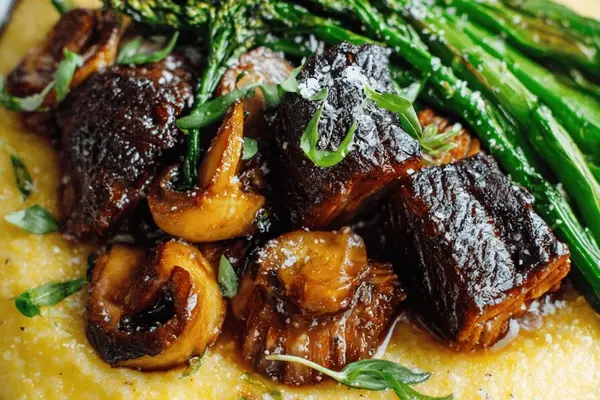
- 8 Pair with robust braised short ribs, sausage-wrapped involtini, or roasted root vegetables; avoids dairy but keeps umami punch.
- 9 Common pitfall: under-stirring leads to lumps; over-stirring yields gluey mess. I’ve burned polenta trying to rush—patience is key here.
- 10 Substitute coconut cream with cashew cream if preferred; nutritional yeast can be replaced by finely grated pecorino if dairy isn’t an issue.
Nutritional information
Calories
210
Protein
5g
Carbs
28g
Fat
7g
Frequently Asked Questions About Dairy-Free Polenta
Can I make this ahead? Not really. Polenta’s a right-now food. Cooks in twelve minutes. Easier to just make it when you need it. Leftovers work reheated but it’s not the same silky thing.
What if I don’t have nutritional yeast? Then use pecorino if you can do dairy. Half a cup, grated fine. If not—salt it more, add a splash of good olive oil at the end. Less umami but it works.
Why does mine always get lumpy? Pouring too fast or not whisking hard enough. Both happen at the same time usually. Pour it thin. Whisk constantly. Takes thirty seconds of pouring and whisking at full speed.
Does the pot really matter? Yeah. Thin pans burn the bottom. Heavy bottoms distribute heat even. Cast iron works. Stainless steel that’s thick works. Cheap thin pots will scorch it.
Can I use regular polenta instead of quick-cook? Takes longer. Maybe 30 minutes. Same technique. Stir the whole time. Quick-cook is honestly better for this because you’re done fast.
What should I serve it with? Roasted vegetables. Braised short ribs. Sausage. Mushrooms. Anything with sauce. The polenta’s a platform. Soft enough to soak up liquid, sturdy enough to hold toppings.
You’ll Love These Too
Explore all →
Crispy Fried Eggplant Pita Sandwich
Snicker Salad with Apples and Vanilla Pudding
Whole Wheat Bran Loaf with Honey & Apricots
Vasilopita: Traditional Greek Cake Recipe
Dijon Glazed Fish with Maple and Lemon
Spiced Rum Affogatos with Coconut Ice Cream
Grilled Vegetables: Charred Three Bean
Red Velvet Brownies with Mascarpone Swirl
Candied Sweet Potatoes With Pecans

Crispy Chicken with Spicy-Sweet Glaze

Cookie Monster Cupcakes with Buttermilk
Chewy Peanut Butter Cookies Recipe
Cauliflower Pistachio Biryani with Basmati Rice
No-Bake Berry Cheesecake Bars with Lemon
Clapshot Twist with Rutabaga & Parsnip

Crispy Dill Pickle Fritters with Cornmeal
Homemade Seasoned Salt with Smoked Paprika
Savory Mushroom Rice with Butter & Wine
Parmesan Cream Balls with Balsamic