Creamy Asparagus Mussel Soup Recipe
By Emma
Certified Culinary Professional
·
Recipe tested & approved
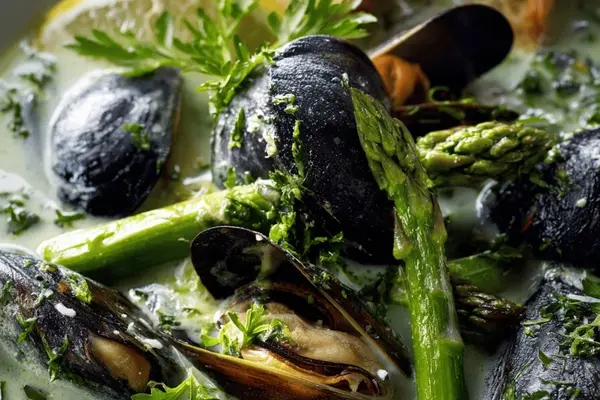
Creamy asparagus mussel soup with white wine, leeks, and garlic croûtons. Velvety broth enriched by mussel juice, finished with lemon zest and fresh parsley for brightness.
Prep:
25 min
Cook:
30 min
Total:
55 min
Servings:
6 servings
Shallots and garlic hit the pan first—oil crackling before you even smell them. White wine goes in next, sharp and bright, and suddenly you’ve got mussels popping open like tiny fireworks. Then the real magic: asparagus and leek break down into something silky, something that tastes like it took hours but didn’t. Forty minutes from start to finish, and you’re eating a seafood soup that feels like it came from somewhere fancy.
Why You’ll Love This Creamy Asparagus Mussel Soup
Takes 55 minutes total and tastes like it was all day in a pot.
Mussels are cheap. Asparagus tastes better when blended into something creamy instead of just steamed and salted.
White wine cuts through the richness so it doesn’t sit heavy—comfort food that doesn’t leave you stuffed.
Makes garlic croûtons on the side, which you can actually use for other soups instead of having them sit around.
Doesn’t need cream or butter. The yam and asparagus do the work. It’s what real velvety asparagus bisque tastes like without the cream.
What You Need for Creamy Asparagus Mussel Soup
Baguette—thin slices work better than thick ones. Get the kind that actually crisps instead of turning chewy.
Olive oil. Good stuff. You use it three times so it matters.
One shallot minced fine. Not red onion. Red is too sweet and the flavor doesn’t dissolve the same way.
Two cloves of garlic split between the croûtons and the mussels. Fresh. The smell should be sharp when you cut it.
Dry white wine—Sauvignon Blanc or Pinot Grigio, something you wouldn’t be embarrassed to drink. Cheap cooking wine tastes cheap.
Two pounds of mussels. Live. They should close when you tap the shell. Any that stay open—throw them out before you cook. Any that don’t open while cooking—throw those out too.
One leek, white part only. The green tastes bitter when you puree it. Slice it thin so it softens fast.
Four cups of vegetable broth. Chicken works but it competes with the seafood broth you’re making.
One medium yam, peeled and diced small. This is what makes it velvety without cream. Potatoes are thinner—yam is richer.
Thirty ounces of green asparagus, trimmed and cut into pieces. White asparagus is pale and watery. Don’t use it.
Fresh parsley. Half a lemon. Salt. Black pepper. That’s the finish.
How to Make Creamy Asparagus Mussel Soup
Start with the croûtons because they take the longest to cool. Heat your oven to 445°F. Line a tray. Brush those thin baguette slices with olive oil on both sides—not drenched, just coated. They go in for 7 minutes until the edges are golden and you can actually hear them crackle a little when you move them. Not dark. Not burnt. Just that precise tan. Cool them enough to handle—this takes maybe 3 minutes—then rub a clove of garlic on each one. Light pressure. You’re not trying to make garlic bread. You want a hint. A whisper of raw sharpness under the toasted bite. Break them roughly when they’re cool. Set them aside.
Now the mussels. Warm a large deep pan with a tablespoon of olive oil over medium-high heat. Mince your shallot fine and mince your garlic. When the oil shimmers—that’s the signal—add both. Stir constantly for 3 minutes until they go transparent and soft. You’ll smell it shift from raw onion to something sweet and cooked. Pour in two-thirds of a cup of white wine. It’s going to steam aggressively. That’s right. Let it come to a boil fast. Add your two pounds of mussels. Cover the pan. Five minutes exactly. That’s how long it takes for them to pop open. Don’t peek. Don’t stir. Just wait. When you lift the lid, they should look like tiny fans, all gaping. Any that stayed closed get thrown out—they were already dead. Pull the mussels out with a slotted spoon and set them on a tray to cool. Leave that liquid in the pan. Strain it through a fine sieve into a bowl so you catch all the sediment and keep just the broth—this is your base, it’s loaded with brine and seafood flavor now.
Shell the mussels while they’re still warm but not hot. It’s faster that way. Set the meat aside in a bowl.
Same pan. Add your leek slices—thin, remember—with a tablespoon of olive oil. Medium heat. Stir every minute or so. You’re not rushing this. Seven minutes until it’s soft and pale and the pan smells sweet. Pour in that strained mussel broth plus four cups of vegetable broth. Add your diced yam. Bring it to a gentle boil and let it simmer for 12 minutes. The yam should be fork-tender. Stir occasionally so nothing sticks to the bottom and burns.
Add the asparagus pieces. Seven minutes. That’s enough time to make them bright green and tender but not mushy. You want a slight bite when you bite one—not crunchy, just not falling apart.
Let it cool just enough that you won’t burn yourself. Puree it in batches in a blender until it’s completely smooth. This is where you get the velvety texture. Nothing gritty. Nothing coarse. Smooth.
Pour it back into the pot. Stir in the fresh parsley and lemon zest. The zest wakes everything up—makes it taste sharper, brighter, less one-note. Taste it now. Salt it. Pepper it. You know what it needs better than anyone else does.
If it’s thicker than you want, add water or broth. If it’s too thin, let it simmer for a few minutes without a lid—it’ll reduce.
White Wine Seafood Soup: Tips and Common Mistakes
Don’t skip the straining step with the mussels. That sediment tastes gritty when it’s pureed. The clear broth is the difference between restaurant-level and home-kitchen.
The yam matters more than you think. Potatoes are thinner. They puree into something almost watery. Yam is dense and creamy and that’s what gives you the bisque texture without cream.
Cool the puree a little before blending or it’ll superheat and explode your blender top off. Not catastrophic but annoying. Give it 3 minutes.
Don’t cook the asparagus longer than 7 minutes. More than that and it loses the bright color and starts tasting like something boiled to death. You want it tender but still actually green.
Garlic croûtons get soft if you make them hours ahead. Make them fresh or store them in an airtight container and crisp them again in the oven for 2 minutes just before serving.
The lemon zest goes in at the very end. Heat breaks down the bright citrus oils. Add it after you take the pot off the flame.
Some mussels won’t open. That’s normal. They were already dead or something was wrong. Discard them without hesitation. Eating a closed mussel is a gamble you don’t want to take.
Creamy Asparagus Mussel Soup Recipe
Prep:
25 min
Cook:
30 min
Total:
55 min
Servings:
6 servings
Ingredients
- Garlic Croûtons
- 10 thin baguette slices
- 40 ml (3 tbsp) olive oil plus extra for finishing
- 1 clove garlic
- Mussels in White Wine
- 1 shallot minced
- 1 clove garlic minced
- 15 ml (1 tbsp) olive oil
- 150 ml (2/3 cup) dry white wine
- 900 g (2 lb) mussels cleaned
- Asparagus Velouté
- 1 leek white part, sliced thin
- 1 litre (4 cups) vegetable broth
- 1 medium yam, peeled diced
- 850 g (30 oz) green asparagus, trimmed, cut in pieces
- 15 ml (1 tbsp) chopped fresh parsley
- Zest of half a lemon
Method
- Garlic Croûtons
- 1 Rack in center position. Heat oven to 230°C (445°F). Line tray with parchment or silicone mat.
- 2 Brush baguette slices evenly with olive oil. Roast 7 minutes until just golden edges appear, not too dark. Can hear subtle crackle.
- 3 Cool enough to handle. Rub garlic clove lightly on each slice—avoid overpowering raw sharpness; just hint.
- 4 Break croûtons roughly for texture contrast during service.
- Mussels in White Wine
- 5 Warm olive oil in large deep pan over medium-high heat.
- 6 Sweat shallot and garlic gently until transparent, not browned—about 3 minutes, smell releases sweet onion base.
- 7 Add white wine; bring quickly to boil; sharp steam bursts aroma.
- 8 Toss mussels in, cover, cook 5 minutes or until shells fling open like tiny fans, no less, no mussels left closed.
- 9 Remove mussels with slotted spoon to tray; discard unopened shells.
- 10 Shell all mussels while still warm but manageable, set aside.
- 11 Strain cooking liquid through fine sieve into bowl; discard solids for clear broth.
- Asparagus Velouté
- 12 In same pan, add leek slices with 15 ml olive oil; cook medium heat, stirring till soft and sweet-smelling, about 7 minutes—patience here builds deeper flavor.
- 13 Pour in reserved mussel broth and vegetable stock. Add diced yam. Bring to gentle boil; simmer 12 minutes until yam is tender to fork, stirring occasionally to prevent sticking or burning.
- 14 Add asparagus pieces; cook 7 minutes until bright jade and tender but not mushy. You want a slight bite.
- 15 Transfer soup in batches to blender, puree until luxuriously smooth; adjust seasoning with salt and cracked black pepper.
- 16 Return to pot to warm through. Stir in fresh parsley and lemon zest—zest wakes up the palate, brightens dish.
- 17 Check consistency; add bit of water or stock if too thick. Heat off once just hot before serving.
- 18 Serve soup hot in bowls; scatter shelled mussels promptly atop.
- 19 Sprinkle with garlic croûtons and fresh parsley.
- 20 Drizzle good olive oil over all—a silky finish.
- 21 Optional squeeze lemon wedges tableside for those who want sharper acidity.
- 22 Eat immediately while textures stand out—smooth, briny, crisp toasted.
- 23
Nutritional information
Calories
280
Protein
22g
Carbs
26g
Fat
12g
Frequently Asked Questions About Seafood Soup Recipe
Can you make this ahead and reheat it? Yeah. Puree everything, store it in the fridge, reheat gently on the stove. Don’t boil it or the flavor gets thin. The mussels are better fresh but they’re fine cold the next day if you want to add them in at the last second. Croûtons go stale so make those fresh.
What if you can’t find live mussels? Frozen ones work. Thaw them first. They’ll be less firm but the soup tastes almost the same. Skip the whole steaming step—just add them at the end after you puree, let them heat through for 2 minutes. Don’t have mussels? Shrimp. Clams. Either one works. Different flavor but the same idea.
Can you use chicken broth instead of vegetable? You can. It’s richer. Might overpower the asparagus. Vegetable is cleaner. Chicken makes it taste more like a traditional chowder than a light seafood bisque.
Does the yam have to be there? Not technically. But it’s what makes the velvety texture without cream. You could use potato but it’s thinner. You could use nothing but then it’s just pureed asparagus soup and it tastes watery and sad.
White wine—what kind exactly? Something dry. Sauvignon Blanc is perfect. Pinot Grigio works. Unoaked Chardonnay. Anything you’d actually drink. Don’t use cooking wine or something with added salt. It tastes different. And it matters because you’re tasting that wine in every spoonful.
Can you make this without the yam and cream both? Sure. It’ll be more brothy than velvety. More like a clear asparagus soup with mussels floating in it. Nothing wrong with that but it’s different. Add an extra handful of asparagus to make it taste less thin.
You’ll Love These Too
Explore all →
Vasilopita: Traditional Greek Cake Recipe

Millionaire Bars with Coconut Sugar Caramel

Zucchini Fritters with Ricotta and Fresh Basil

Pumpkin Spice Latte Pancakes Recipe

Ground Beef Chili Recipe with Beans

Steaks Filet Mignon with Roasted Root Vegetables

Greek Yogurt Strawberry Dip with Lemon

Bacon Cheese Ball with Ranch & Walnuts
Crunchy Cabbage Salad with Yuzu Dressing

Peach White Chocolate Risotto Recipe
Instant Pot Chicken Burrito Bowl Recipe

Homemade Chick Fil A Chicken Sandwich

King Cake Recipe with Crescent Rolls
Lobster Pasta with Cherry Tomatoes & White Wine

Zucchini Appetizers with Hummus and Feta

Corn Flour Savory Crêpes with Smoked Paprika
Spinach Pesto Egg Dollops with Pecorino

Shrimp Quiche with Leeks and Tarragon

Candy Cane Lush with Golden Oreo Crust