Cranberry and White Chocolate Bread
By Emma
Certified Culinary Professional
·
Recipe tested & approved
Cranberry and white chocolate bread with tart dried cranberries and semisweet chocolate. Overnight fermentation creates a chewy crumb and crisp crust.
Prep:
25 min
Cook:
1h 5min
Total:
1h 30min
Servings:
1 loaf about 700 g
Overnight fermentation sitting in a bowl, cranberries and chocolate already mixed in. That’s the whole secret. Just cold water, flour, salt, yeast — nothing fancy. Come morning, you’ve got dough that’s basically ready to bake.
Why You’ll Love This Cranberry White Chocolate Bread
Takes an hour and a half total, but most of that’s waiting. You’re actually working maybe 25 minutes. The overnight part does the heavy lifting while you sleep.
Homemade bread that tastes like something from a bakery but you made it in your kitchen. Sounds harder than it is.
Cranberry and white chocolate go together in a way that doesn’t feel accidental. Sweet, tart, a little bit of richness. Not too much chocolate. Not cloying.
Comfort food that keeps for days. Toasts well. Cold the next morning with coffee, still good.
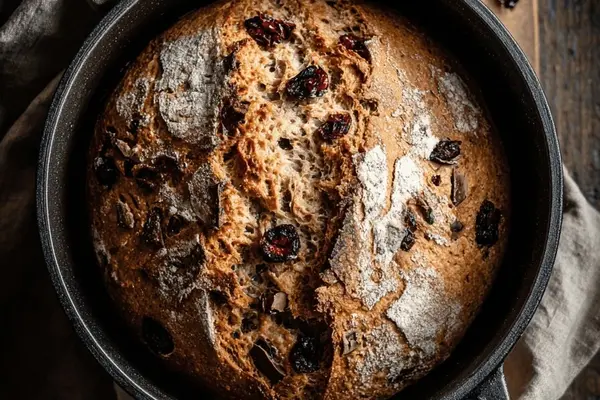
The crust crackles. Like actually crackles when you cut it. That’s the covered pot doing its job.
What You Need for Cranberry and White Chocolate Bread
All-purpose flour — 520 grams. That’s most of it. Whole wheat flour, 40 grams, just at the end for dusting and structure. Not the main thing.
Dried cranberries, 140 grams. They plump up in the dough. Use the regular kind, not the sugary ones.
White chocolate — well, semisweet here actually, 60 grams chopped. You could use white if that’s what you have. Melts into pockets. Not evenly distributed, which is kind of the point.
Cold water, 425 milliliters. Cold matters. Slows fermentation, lets flavor develop overnight.
Instant yeast, 3 milliliters. Just a tiny amount. Long fermentation doesn’t need much.
Sea salt, 8 milliliters. Kosher works too. Controls fermentation, brings out the fruit flavor.
How to Make Cranberry and White Chocolate Bread
Dump the all-purpose flour, cranberries, chocolate, salt, and yeast into a pot or bowl. Heavy-bottomed pot is better — holds heat later. Mix it with a fork. Add the cold water. Stir until everything’s wet but clumpy. Shaggy texture. Don’t try to smooth it out. That’s not happening yet and it’s fine.
Cover loosely. Leave it on the counter overnight. Eight to ten hours minimum. The dough rises, bubbles form, smells sour and good. That’s fermentation working.
Next morning, dust your counter or a large bowl with the whole wheat flour. Punch the dough — not hard, just enough to deflate it. Fold it over itself five or six times. You’re building structure. The dough gets less sticky, smoother, but still wet.
Dust it again with whole wheat flour. Make sure no wet spots stay on the outside. Sticky dough sticks to the pot.
Line your pot with parchment. Drop the dough in, cover it, let it sit for 40 to 50 minutes. It should roughly double. Longer proof means better flavor but watch it — overproofed dough collapses when you bake it.
How to Get Cranberry and White Chocolate Bread Crispy and Done
Heat the oven to 235°C. Rack in the middle.
Cover the pot. Bake for 28 minutes. Listen to it. The moisture inside decreases, crust starts forming. You’ll hear the difference.
Uncover. Bake another 25 to 30 minutes. The loaf gets deep brown — mahogany almost, with cracks across the top. Tap the bottom. Should sound hollow. That means done.
Pull it out. Leave it in the pot for 15 minutes. Still cooling. Then transfer to a rack and wait for it to fully cool before cutting. If you slice it warm, the crumb falls apart. Cold loaf slices clean.
The crust-to-crumb ratio matters. The covered pot traps steam early — that’s what makes the crust shatter. Then uncovering lets it brown and crisp.
Cranberry and White Chocolate Bread Tips and Common Mistakes
If the dough feels too sticky during the fold, add flour but barely. A little flour goes a long way. Dough should feel tacky — like it wants to stick but doesn’t quite.
Underbaked bread tunnels. Big holes instead of even crumb. Means the bake time wasn’t long enough. Or the oven’s cooler than it says. Go longer next time. Listen to the crust sounds — they change when it’s actually done.
Don’t skip the Dutch oven or covered pot. Cast iron traps moisture, and moisture is how you get crust. Heavy roasting pan with foil works. Regular baking sheet doesn’t.
Humidity changes everything. High humidity means the dough’s wetter than the recipe assumes. Add a bit more flour next time. Low humidity, add water. Altitude too — different air pressure means different results. Adjust as you go.
Parchment prevents scorching on the bottom. Matters. Especially with a dark crust and deep oven heat.
Chocolate chunks don’t distribute evenly. They settle. That’s fine. Means some bites have chocolate, some don’t. Not a problem.
Cranberry and White Chocolate Bread
Prep:
25 min
Cook:
1h 5min
Total:
1h 30min
Servings:
1 loaf about 700 g
Ingredients
- 520 g unbleached all-purpose flour
- 140 g dried cranberries
- 60 g chopped semisweet chocolate
- 8 ml sea salt
- 3 ml instant yeast
- 425 ml cold water
- 40 g whole wheat flour
Method
- Dough Preparation
- 1 Mix flour, cranberries, chopped chocolate, salt, and yeast in heavy-bottomed pot or large bowl. Add cold water. Stir with fork until mixture moistened but expect clumps. Don’t overwork; shaggy is good here. Cover loosely. Rest 8-10 hours at room temp — overnight fermentation is key. Dough will rise, bubbles visible.
- Pre-Shaping
- 2 Sprinkle whole wheat flour on clean counter or in large bowl. Punch dough gently to deflate, folding over itself 5-6 times — rhythm, not aggression. Dough texture should feel aerated, less sticky, smooth but still moist.
- 3 Dust dough generously with whole wheat flour, ensuring no wet spots on surface. This prevents sticking later.
- 4 Line clean pot with parchment paper. Place dough ball in center, cover, let rest 40-50 minutes until doubled. Warmth speeds proof; slower rise means richer flavor but watch so no overproofing.
- Baking
- 5 Preheat oven to 235°C with rack mid-level.
- 6 Cover pot, bake 28 minutes. Listen for reduction in moistness inside, crust forming. Uncover, bake 25-30 more minutes. Loaf should be deep mahogany brown, crackled crust. Tap bottom: hollow thump signals done.
- 7 Cool bread inside pot for 15 minutes then transfer to rack. Wait for full cooling before slicing to keep crumb intact.
- 8 Remove excess flour dust before serving if undesired.
- Notes & Substitutions
- 9 Use maple syrup solids instead of chocolate chunks for sweetness and texture contrast if avoiding chocolate. Dried cherries or raisins swap for cranberries. OK to use bread flour interchangeably with AP flour but texture slightly denser. Whole wheat flour adds nuttiness; can substitute with spelt for mild change.
- 10 Too sticky? Add flour sparingly during folding. Dough should feel tacky yet manageable. Underbaked bread tunnels or gummy crumb means prolong bake time; italicize listening to crust sounds.
- 11 If oven lacks covered pot, use heavy Dutch oven or deep roasting pan with lid or foil. Cast iron traps moisture, crucial for crust.
- 12 Higher humidity or altitude may require hydration adjustments — more flour or water respectively.
- 13 Parchment placement critical to avoid scorching bottom and enable gentle dough transfer.
Nutritional information
Calories
310
Protein
8g
Carbs
58g
Fat
6g
Frequently Asked Questions About Cranberry and White Chocolate Bread
Can I use white chocolate instead of semisweet? Yeah. It’ll be sweeter, obviously. White chocolate melts softer, so it might almost disappear. Semisweet holds its shape better. Both work.
How long does this keep? Three days easily, wrapped. Four if you’re careful. After that it starts to stale. Toast it then. Actually works better toasted.
Can I use dried cherries or raisins instead of cranberries? Cherries work great. Sweeter but still tart. Raisins are sweeter again. Changes the flavor — less sharp, more mellow. Both fine.
What if my dough’s still sticky after the fold? Dust more whole wheat flour on it. A little at a time. Don’t drown it. Dough should feel like it’s barely holding together, not like Play-Doh.
Does the overnight ferment have to be exactly 8 to 10 hours? Longer is okay. I’ve gone 12 hours. Flavor gets deeper, more sour. Shorter and it won’t rise as much. Eight to ten is the sweet spot.
Do I need a Dutch oven or can I use a regular baking pan? Need something covered. Dutch oven’s best. Heavy roasting pan with foil works. Regular sheet pan doesn’t trap steam — you won’t get crust. Not worth it.
Why does the recipe say to cover loosely for overnight fermentation? Loose cover lets some air circulation but stops the dough from drying out. Tight cover makes condensation, makes it wet. Loose is better. Cloth works fine too.
You’ll Love These Too
Explore all →
Cranberry Syrup with Fresh Lemon Juice
Savory Cherry Tomato Tart with Goat Cheese
How to Make Boiled Peanuts in Pressure Cooker
Chocolate Swirl Babka with Espresso

Crispy Asparagus Appetizer with Herb Yogurt Sauce

Deviled Eggs Recipe with Dijon & Smoked Paprika

Oven Roasted Corn with Fresh Basil

Crab Rangoons with Cream Cheese & Jalapeños
Honey Coconut Cream Sauce with Vanilla

Caramelized Figs with Greek Yogurt & Honey

Cajun Chicken Alfredo with Fettuccine
Sausage Pasta with Spinach and Tomatoes

Piquante Pepper Sauce Recipe
Creamy Cucumber Salad with Sour Cream

Celery Cheese Shooters with Cheddar & Walnuts

Miniature Brownies with Peanut Butter Frosting

Grilled Red Snapper with Lemon and Garlic

Artichoke Frittata with Goat Cheese
Pear Almond Muffins with Cinnamon