Beef Tenderloin With Crab Stuffing
By Emma
Certified Culinary Professional
·
Recipe tested & approved
Lay the tenderloin flat. Slice it halfway down lengthwise—careful here, the goal’s a big flat piece, not confetti. You’re about to stuff it with crab and caramelized onion, which means this beef roast gets an upgrade that tastes like it took all day.
Why You’ll Love This Beef Tenderloin With Crab Stuffing
Looks impossible. Isn’t. Takes 55 minutes total—25 to prep, 30 to roast—and tastes like you spent hours on it. Crab and beef together. Sounds weird until you taste it. The sweetness of caramelized onion holds them both up. Seafood stuffed beef tenderloin that actually stays together. The twine matters. So does letting the butter coat the crab before it goes in. Medium-rare roasted beef tenderloin, every time. Not guesswork—you’re watching the crust, the juices, the color. That’s how you know. One pan. One roasting situation. Everything else is just prep. Leftovers don’t exist. If they do, they’re better cold the next day.
What You Need for Butter Garlic Crab Beef Tenderloin
Two pounds of beef tenderloin. The shape matters—relatively even thickness, not a weird taper. Saves you from burning the thin end while waiting for the thick end to cook.
Four crab legs, shell off, chopped rough. Don’t make them tiny. Chunks hold up better to the heat and the butter.
One large onion, sliced thin. Not diced. Thin slices caramelize into actual sweetness instead of just getting soft.
Three tablespoons butter. Melted, mixed with a teaspoon of garlic powder. The butter keeps the crab moist. Garlic powder—not fresh, not here—dissolves into it and flavors everything evenly.
Two tablespoons olive oil. One teaspoon fine sea salt. Fresh cracked black pepper. That’s your crust. Nothing fancy.
Kitchen twine. Not optional. Tight enough that the filling doesn’t ooze out, loose enough that you can still tie it without tearing the meat.
How to Make Caramelized Onion Stuffed Tenderloin
Heat a skillet over medium-low. Barely any oil—maybe a teaspoon, that’s it. Lay the onion slices in and just leave them for a minute. Don’t stir constantly. Let them sit, get some color, then stir. This is the rhythm.
Twenty minutes. Maybe twenty-five if your pan runs cool. You’re looking for deep golden. Smell matters here more than the clock. When it smells sweet and a little bit toasted, it’s done. Too pale and it’s just soft. Too dark and you’ve burned the sugar.
While that’s happening, lay your tenderloin on a cutting board. Slice it lengthwise, but only halfway down. Keep about an inch and a half of meat at the bottom intact—that’s your hinge. You want a big flat piece to work with, not two separate pieces.
Melt the butter in a bowl. Add the garlic powder. Stir it around until it’s mixed in. Toss the crab in there, coat it gently. Butter keeps it from drying out in the oven. It needs that fat.
Lay the butterflied beef cut side up on a clean surface. Spread the crab down the middle in a line. Not piled high. Just a line. Layer the caramelized onion on top of that.
Pull the flaps over to close it up. Don’t worry if it looks tight. It should be tight. Use your kitchen twine and tie it tight every inch and a half or so along the whole log. Three, maybe four ties depending on how long it is. The filling wants to stay inside.
How to Get Beef Tenderloin Roasted Perfectly
Rub the whole thing with olive oil. Not drenched. Just a coating. Then salt and pepper the entire surface. Let it sit at room temperature for about twenty minutes. The salt actually draws flavor into the meat instead of just sitting on top.
Preheat your oven to 410 degrees. Hotter than you’d normally go for tenderloin but you want a crust and you only have 30 minutes.
Slide it in. Don’t poke it. Just roast. You’re looking for a deep brown on the outside—not burned, but really developed. The juices should start pooling on the surface. When you press the thickest part, it should feel slightly firm but still give. That’s medium-rare. Internal temp around 130 degrees if you use a thermometer.
Probably 28 to 32 minutes depending on how thick your tenderloin actually is. Thicker means longer. Thinner means watch it or it dries out.
Pull it out. Tent it loosely with foil. Let it rest for ten minutes. The juices redistribute. Everything firms up just enough to slice without losing moisture all over the plate.
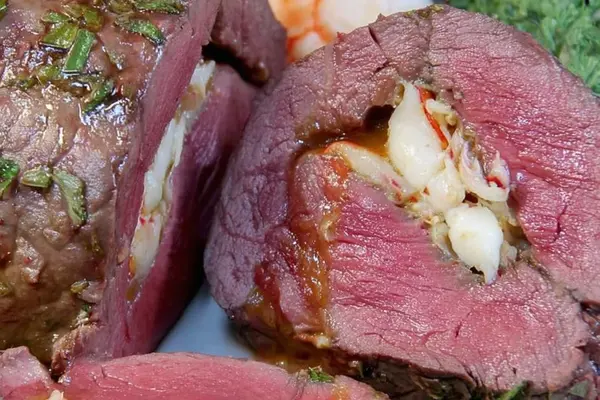
Cut the twine. Slice it thick. You’ll see the crab and onion in the middle, still moist, still sweet, against the beef’s robust flavor.
Beef Tenderloin With Crab Meat Tips
Don’t rush the onions. Twenty minutes minimum. People always want to crank the heat and do it in five. Doesn’t work. Low heat, patience, smell.
Don’t grill or cook the crab beforehand. Just chopped and raw. The butter will cook it enough while it roasts with the beef. Pre-cooking dries it out no matter what.
Don’t tie it loose. Sounds silly but the filling does ooze out if there’s slack. Tight every inch and a half. You’ll thank yourself when you slice it and everything’s still there.
Butterflying might rip a little. Doesn’t matter. Just tuck the edges when you tie and it seals up fine. Not the end of the world.
Tenderloin thickness varies. A thin one might need 25 minutes. A really thick one might need 35. Watch it the first time. The crust and the color tell you more than the timer does.
Herb crusted stuffed beef tenderloin versions exist. You could add fresh herbs to the olive oil before rubbing. Thyme. Rosemary. Works fine. Doesn’t change the core thing.
Beef Tenderloin With Crab Stuffing
Prep:
25 min
Cook:
30 min
Total:
55 min
Servings:
4 servings
Ingredients
- 1 2-lb beef tenderloin
- 4 crab legs with shell removed, roughly chopped
- 1 large onion, thinly sliced
- 3 tbsp butter
- 1 tsp garlic powder
- 2 tbsp olive oil
- 1 tsp fine sea salt
- fresh cracked black pepper
- kitchen twine
Method
- 1 Caramelize onion in a skillet over medium-low heat with a bit of oil and patience, stirring often so the slices turn golden and smell sweet. This takes 20 minutes but trust the smell and color, not just time.
- 2 Butterfly tenderloin: Lay flat, slice lengthwise halfway down keeping 1.5 inches at bottom intact. The goal is a big flat piece to roll into a log but avoid ripping it apart here.
- 3 Melt butter in bowl, add garlic powder, then toss chopped crab gently to coat. Butter adds moisture, garlic deepens flavor; raw crab needs that fat hit.
- 4 On a clean surface, lay butterflied beef cut side up, spread crab in center lengthwise, layer caramelized onion over crab. Pull flaps over to enclose filling—don’t worry if it looks tight. Tie tightly every 1.5 inches with twine so it holds shape.
- 5 Rub entire beef log with olive oil, then sprinkle salt and pepper. Let sit at room temp 20 minutes. Salt draws flavor in, oil helps crust form.
- 6 Preheat oven to 410°F for slightly faster roast. Slide in beef, roast 28-32 minutes for medium-rare depending on thickness. Look for deep brown crust, juices starting to pool on surface, slight firmness when pressed gently. Internal temp about 130°F.
- 7 Remove from oven, tent loosely with foil, rest 10 minutes. Juices redistribute, meat firms up slightly making slicing easier without losing moisture.
- 8 Cut twine, slice thickly. Crab and onion filling moist and sweet against beef’s robust flavor. If crab replaced, lobster or shrimp chunks with a splash of lemon zest work. If tenderloin is thick, add few minutes; if thin, watch carefully or risk drying.
- 9 Note: avoid rushing caramelized onions or grilling filling beforehand—they dry crab out. Also if tying is loose, filling oozes out. If beef breaks while butterflying, partial cuts still work but tuck edges to seal with twine.
Nutritional information
Calories
480
Protein
48g
Carbs
6g
Fat
28g
Frequently Asked Questions About Roasted Beef Tenderloin With Crab Filling
Can you use a different seafood instead of crab? Lobster chunks work. Shrimp too. Coat them the same way in the butter. Maybe add a splash of lemon zest if you go shrimp. Keeps it from being too heavy.
What if the tenderloin tears when you butterfly it? Doesn’t matter. Just tuck the edges under when you tie it and move on. Twine holds it together fine. You’re not making art here.
How do you know when it’s done roasting? Deep brown crust. Juices pooling on the surface. When you press the thickest part, it feels slightly firm but still gives a little. That’s medium-rare. Or use a meat thermometer. 130 degrees internal temp.
Do you have to rest it? Ten minutes, yeah. The juices redistribute and everything stays juicier when you slice it. Skip it and you’ll see juice all over the plate. Ten minutes changes everything.
Can you make this ahead? Stuff and tie it the morning of. Keep it in the fridge until you roast it. Add a few minutes to the cook time if it goes in cold. The caramelized onion keeps fine overnight covered.
What temperature should the beef be for medium-rare? 130 degrees internal. Pull it out there. It keeps cooking while it rests. Lands right around 135 to 140 by the time you slice it.
Is the butterflying step actually necessary? Yeah. Creates a flat surface to stuff, keeps everything in the same package instead of separate pieces. Also means the filling cooks evenly with the beef instead of one or the other coming out raw or overdone.
Can you use frozen crab legs? Thaw them first. Pat them dry. Frozen crab oozes water when you cook it straight. Takes the moisture out of the butter and the beef both.
You’ll Love These Too
Explore all →
Roasted Chicken With Couscous and Harissa
Apple Pecan Sheet Cake with Caramel Sauce
Salmon With Mushroom Cream Sauce
Peppermint Chocolate Shards with Candy Canes
Pan Roasted Turkey Breast with Pear Stuffing
Baileys Fudge Recipe with Chocolate Chips
Vegan Banana Oat Biscuits with Chocolate
Easy Tomato Soup with Roasted Red Peppers
Pulled Pork Bites with Cornbread Mix
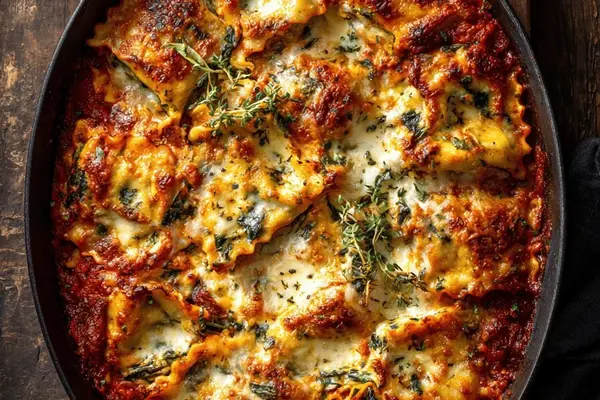
Ricotta Spinach Fazzoletti with Plum Tomatoes
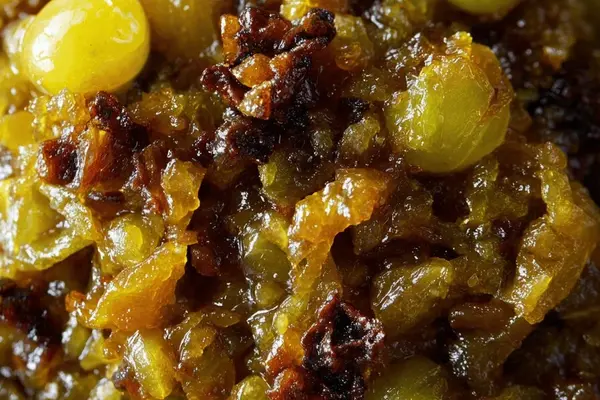
Ginger Chutney Recipe with Fresh Grapes
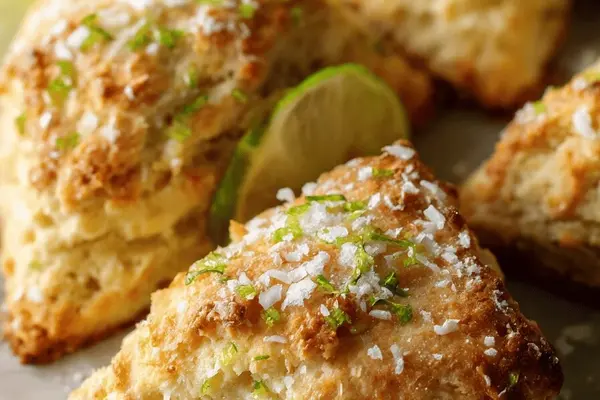
Coconut Lime Scones Recipe with Coconut Cream
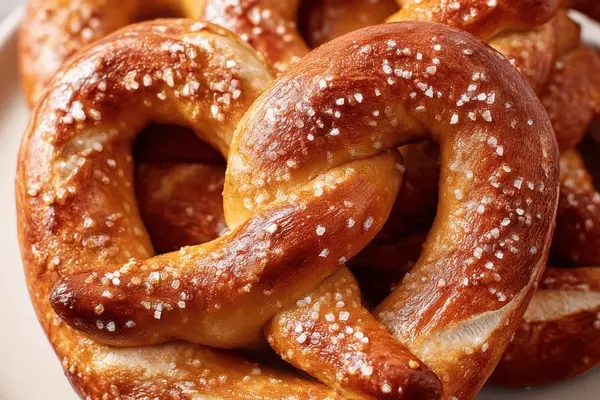
Homemade Pretzels Recipe with Agave Syrup
Beef Stew Slow Cooker with Rotel & Cheese

Cheesy Garlic Meatball Bites with Pizza Dough
Creamy Rice Pudding with Lemon Zest
White Chicken Chili with Green Chiles
Beef Tartare with Bone Marrow & Crispy Potatoes
Snicker Salad with Apples and Vanilla Pudding