Chorizo Baked Oysters with Gouda Cheese
By Emma
Certified Culinary Professional
·
Recipe tested & approved
Bright steam rises. Smell hits first—shallot going sweet, vermouth sharp and alive. Oysters on salt. Chorizo sizzle from the sausage. This happens in 50 minutes total, 35 minutes of prep if you move steady, 15 in the broiler and you’re done. No complicated technique. Just heat, fold, bake. Tried it first with tomato and breadcrumbs. Too heavy. Too safe. Swapped in zucchini and andouille sausage instead, and it became something else—spicy, creamy, briny all at once.
Why You’ll Love These Baked Oysters
Takes 50 minutes start to finish. Fifteen of that is broiler time while you stand there watching. Seafood appetizer that works. Not fussy. Actually tastes good. Spicy sausage cuts the briny. Sharp aged gouda melts into a crust. Two layers working at once. Shuck them yourself or ask the fishmonger—either way, no magic required. The zucchini keeps it from getting watery like tomato baked oysters do.
What You Need for Chorizo Baked Oysters
Shallot. One small one, minced fine. Red or regular—doesn’t matter much. Garlic. One clove. Crush it instead of slicing. Releases faster. Olive oil. Three tablespoons. Not extra virgin. Just regular olive oil. The heat matters more. Dry vermouth. 70 milliliters, about a quarter cup. No vermouth? Dry white wine works. Sherry too, but less vermouth-sharp. Zucchini. Medium one, grated. Swap tomato if you want—it’ll be wetter. That’s the only real difference. Spicy andouille sausage. 58 grams. That’s about two ounces. Diced small. This is the protein that matters. Smoky kielbasa works if andouille doesn’t show up. Regular chorizo too, but it needs to be spicy. Cilantro. Fresh. 30 milliliters chopped. Parsley works. Cilantro’s better. Oysters. 24 of them. Scrubbed and shucked. Buy them pre-shucked if shucking stresses you out. Sharp aged gouda. 130 grams. That’s almost a half pound grated. Gruyère works. Aged cheddar. The point is sharp. Mild gouda doesn’t have enough going on. Sea salt. Coarse. For the baking sheet. Keeps them level.
How to Make Chorizo Baked Oysters
Heat the oil over high heat. Large nonstick skillet. Watch it shimmer. Shallot goes in. Then garlic. Stir until the edges brown. You’ll smell it shift—from raw to sharp and sweet. That takes maybe three minutes.
Pour in the vermouth. It hisses. Boil it down almost dry. You’re concentrating it. Bright steam rises. The smell sharpens again. Two minutes, maybe three. Don’t let it totally vanish—leave a tiny bit of liquid, not a dry pan.
Stir in the grated zucchini. It releases water immediately. That’s fine. Add the andouille sausage now. Lower the heat to moderate. Simmer for four minutes. You’re cooking the zucchini soft and letting the sausage flavor spread. Stir it once, twice. Salt. Black pepper lightly. Fold in the cilantro. Pull from heat.
Let it cool. Not ice cold. Just room temperature before it hits the oysters. This matters—you don’t want it breaking the oyster meat.
Oysters on the baking sheet bedded with coarse sea salt. Level and steady. This prevents them from tipping. Oysters tip, the liquid spills, everything gets dry. Salt holds them still.
Spoon the sausage-veg mixture onto each oyster. About 20 milliliters. A rounded tablespoon. Don’t overstuff. It’ll run off during the broil. Scatter grated gouda on top of each one. Pack it just enough for melting and browning.
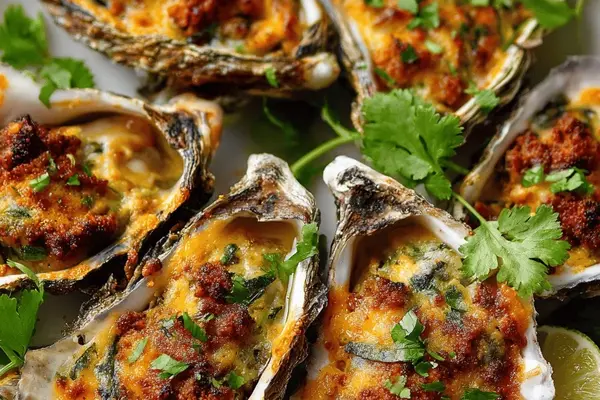
Preheat the broiler. Rack set high. Slide the pan in. Watch it. The cheese bubbles and browns in three to four minutes. Every broiler runs different. Some hotter, some slower. The sign is when the gouda looks golden and the oyster edges just barely curl. Don’t overcook. Cheese gets dry. Oyster gets tough. Pull it out.
Serve piping hot. The spice pops from the sausage. Creamy cheese crust on top. Briny meat under. One bite—all of it at once.
Chorizo Baked Oysters Tips and Common Mistakes
Don’t over-shuck. The oyster knife scrapes the meat from the shell. But leave the liquor in the shell. That liquid keeps the oyster tender during broiling. Lose it, you lose texture.
If no andouille in your store, sub spicy chorizo. Or smoky kielbasa. Something that brings heat and smoke. Regular sausage is too mild. Doesn’t carry.
No vermouth? Dry white wine. Sherry. Sauvignon Blanc. Something crisp. Not sweet. Sweet wine throws off the whole thing. The briny oyster needs sharp.
Leftover oysters—reheat gently. Don’t broil them again. The second heat makes them rubbery. Low oven, 275 degrees, covered with foil. Five minutes. They come back okay, not perfect.
Zucchini instead of tomato changes the thing. Zucchini’s earthy. Releases less water. Tomato baked oysters taste heavier. More like a sauce sitting on top. This one integrates.
The salt bed isn’t decoration. It holds the oyster level. Tilted, the liquid runs off. Flat, it stays. That liquid is part of what keeps the meat from getting tough.
Chorizo Baked Oysters with Gouda Cheese
Prep:
35 min
Cook:
15 min
Total:
50 min
Servings:
24 servings
Ingredients
- 1 small shallot, minced
- 1 clove garlic, crushed
- 30 ml olive oil
- 70 ml dry vermouth
- 1 medium zucchini, grated
- 58 g spicy andouille sausage, finely diced
- 30 ml chopped fresh cilantro
- 24 oysters, scrubbed and shucked
- 130 g sharp aged gouda, grated
- Coarse sea salt for stabilizing
Method
- 1 1 Heat oil over high heat in a large nonstick skillet. Toss in shallot and garlic; stir until edges brown, smells sharp and sweet. Splash vermouth, boil down almost dry. Bright steam rises; aroma sharpens.
- 2 2 Stir in grated zucchini — swaps tomato for earthier, less watery. Add diced andouille sausage. Lower heat to moderate, simmer 4 minutes until thickening. Adjust salt, black pepper lightly. Fold in cilantro, pull from heat.
- 3 3 Shuck oysters carefully: use stiff cloth and oyster knife; detach meats; save liquor. Place oysters on a baking sheet bedded with coarse sea salt so they sit level and steady.
- 4 4 Transfer the sausage-veg mix onto each oyster, spoon about 20 ml (a rounded tablespoon). Scatter grated gouda on top, packing just enough for melting and browning.
- 5 5 Preheat broiler, rack set high. Slide pan in; watch cheese bubble and brown—takes 3 to 4 minutes depending on broiler strength. Avoid overcooking—cheese dry, oyster tough, signs to pull out.
- 6 6 Serve piping hot. Savor spice pop, creamy cheese crust, briny meat under. If no andouille, sub spicy chorizo or smoky kielbasa. No vermouth? Dry white wine or sherry do.
- 7 7 Leftover oysters? Reheat gently; avoid broiler or rubbery doom. Also—don’t over-shuck; juices keep oyster tender during cooking.
Nutritional information
Calories
120
Protein
8g
Carbs
4g
Fat
9g
Frequently Asked Questions About Baked Oysters with Sausage
Can I make the sausage mixture ahead of time? Yeah. Make it the morning of, stick it in the container. Stays good in the fridge for maybe eight hours. Let it come to room temperature before spooning it onto the oysters—cold mixture on hot broiler means uneven cooking.
What if I can’t find andouille sausage? Spicy chorizo works. So does kielbasa if you can find the smoky kind. The point is sausage that tastes like something. Regular breakfast sausage isn’t enough.
How do I know when the oysters are done broiling? Cheese bubbles. Edges of the gouda turn golden. The oyster meat just barely curls at the edges—that’s when you pull it out. Over three to four minutes and you’re probably over. Every broiler’s different.
Do I really need to shuck them myself? No. Buy them pre-shucked if shucking stresses you. They come in containers at most fishmongers. Same result. Shucking yourself saves money and you get the liquor, which matters.
Can I use a different cheese? Gruyère works. Aged cheddar. Something sharp and melts fast. Mild gouda doesn’t have enough flavor. Mozzarella’s too neutral. The cheese needs to carry something.
What’s the deal with the zucchini instead of tomato? Tomato’s watery. Zucchini’s earthy and stays firmer when it cooks. Less liquid means less soggy. Try it both ways—you’ll feel the difference.
You’ll Love These Too
Explore all →
Bacon Lettuce Tomato Sandwich Recipe
Spaghetti Recipe Baked with Meat Sauce
Beef Eggplant Pleurote Ramen Recipe

Miso Tomato Tofu Stir Fry with Snap Peas
Crunchy Chicken Potato Bake Recipe
Chicken Soup With Wild Rice Recipe

White Port Cocktail with Grapefruit
Whipped Cream with Rum Extract and Cocoa

Crispy Mexican Tortilla Pie with Chorizo
Slow Braised Pork Chops with Caramelized Onions
Pan Roasted Turkey with Cranberry Sausage
Peach Cobbler Muffins with Crumb Topping
5 Vinaigrette Recipes: Olive Oil & Balsamic
Coffee Cake Recipe with Lemon Cream Cheese
Chicken & Bacon Wrap with Ranch Dressing
Banana Blondie Bars with Cream Cheese Frosting
Creamy Onion Soup with Gruyère & Sourdough
Rustic English Scones with Sour Cream
Slow Cooker Chocolate Brownies with Hazelnuts