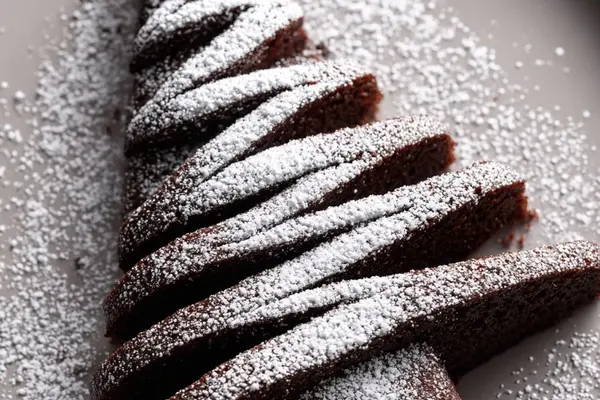
Chocolate Pine Tree Cake with Buttermilk
By Emma
Certified Culinary Professional
·
Recipe tested & approved
Rich chocolate pine tree cake made with Dutch-processed cocoa powder, buttermilk, and cake flour. Creamed butter and sugar create a moist, elegant dessert. Dusted with powdered sugar for a festive finish.
Prep:
20 min
Cook:
55 min
Total:
1h 15min
Servings:
8 servings
Tap the pan lightly. That’s when you know the batter’s settled right. Fifty-five minutes in a 350-degree oven and this thing comes out dark, almost black from the Dutch-processed cocoa, dense in a way that feels intentional—not heavy. Pine tree shape or regular tube pan, doesn’t matter. What matters is the crumb.
Why You’ll Love This Chocolate Cake
Takes an hour and 15 minutes total, and most of that’s just waiting. Twenty minutes of actual work. Actually homemade chocolate cake without the fuss of tempering or folding anything weird into anything else. The buttermilk and crème fraîche make it stay moist for days—literally tastes better on day two. Chocolate flavor gets deep because Dutch-processed cocoa does that. Not bright, not acidic. Deep. The pine tree shape makes it look like you spent hours. You didn’t. Dusting it with powdered sugar takes three seconds and transforms it into something that looks like a bakery made it. Kids get excited about the shape. Adults eat three pieces.
What You Need for This Homemade Chocolate Cake
Cake flour. Not all-purpose. The starch is lower and that matters here—keeps it tender instead of cakey-textured. Two-thirds cup of Dutch-processed cocoa powder, sifted. It’s darker than regular cocoa, slightly smoother. Changes everything. One and a half cups buttermilk plus a third cup of crème fraîche whisked together—the crème fraîche is the secret. Not just milk. Not just buttermilk. The combination. Seven-eighths cup softened butter and seven-eighths cup sugar creamed together until it’s pale and fluffy. Three eggs. A teaspoon and a half of vanilla. Two teaspoons baking powder, an inch and a half of baking soda. Powdered sugar for dusting at the end. Optional: chocolate sauce on the side, but it’s honestly not needed.
How to Make a Chocolate Cake That Actually Stays Moist
Oven to 350. Middle rack. Pine tree mold or a 9.5-inch tube pan—grease it well, really well. Sift the dry stuff together in one bowl: cake flour, cocoa, baking powder, baking soda. Don’t skip the sifting. The cocoa clumps and you’ll feel it in the batter if you do.
Whisk buttermilk and crème fraîche in another bowl. That’s it. Just together.
Big bowl, beat the butter and sugar until it looks pale and fluffy. Takes about four minutes. Add vanilla. Then add eggs one at a time, beating after each one. The mixture should look smooth and pale when you’re done. Not yellow. Not white. Pale.
Here’s where people mess up: alternating. Dry, wet, dry, wet, dry. Start with dry, end with dry. Mix until it just comes together. Don’t overmix. That’s when you get a dense, tough cake instead of a tender one.
Pour into the pan. Tap it lightly on the counter so the batter levels out. Fifty to 55 minutes. The toothpick should come out clean. Maybe one tiny crumb. Not wet batter.
Dutch-Processed Cocoa and Buttermilk Make the Difference
The buttermilk and crème fraîche mixture does something specific: it adds acid that reacts with the baking soda, helps the cake rise evenly, and keeps moisture locked in. Skip the crème fraîche and it’s fine but flatter. Skip the buttermilk and it tastes one-dimensional. Together they make it dense but tender—not a paradox, just balance.
Dutch-processed cocoa is alkalized, which means it’s darker and smoother than natural cocoa. Less cocoa butter, more cocoa solids. That’s why the flavor goes so deep. Regular cocoa is brighter, sharper. This cake needs deep. Sift it because unsifted cocoa clumps and you’ll taste grittiness in the finished cake. Takes 30 seconds.
The creaming step—butter and sugar beaten until pale—that incorporates air. That air expands during baking and makes the cake rise. Don’t skip it. Four minutes minimum.
Chocolate Pine Tree Cake Tips and What Goes Wrong
Cool it in the pan for 15 minutes, then flip it out. Too soon and it falls apart. Too long and it sticks. Fifteen is the window. The cake should be warm but not hot when you flip.
If the top cracks—it happens, especially with a tube pan—the powdered sugar covers it completely. That’s the whole reason for the dusting.
If it’s dense, you overmixed. If it’s dry, you overbaked it. Mine usually takes 52 minutes, not the full 55. Ovens vary. Start checking at 50.
Can you use a regular round pan instead of a tube pan? Yes. Cooking time might be slightly different, maybe 50-60 minutes. The center just needs to test clean.
Crème fraîche can’t really be swapped. Sour cream is thinner, Greek yogurt is too thick. Crème fraîche has the right fat content and acid balance. Worth finding.
Chocolate Pine Tree Cake with Buttermilk
Prep:
20 min
Cook:
55 min
Total:
1h 15min
Servings:
8 servings
Ingredients
- 400 ml cake flour (about 1 2/3 cups)
- 150 ml Dutch-processed cocoa powder, sifted (about 2/3 cup)
- 10 ml baking powder (2 teaspoons)
- 8 ml baking soda (1 1/2 teaspoons)
- 350 ml buttermilk (about 1 1/2 cups)
- 100 ml crème fraîche
- 200 ml unsalted butter, softened (about 7/8 cup)
- 200 ml granulated sugar (about 7/8 cup)
- 8 ml pure vanilla extract (1 1/2 teaspoons)
- 3 large eggs
- powdered sugar for dusting
Method
- 1 Position oven rack in middle. Preheat oven to 175 °C (350 °F). Grease a 24 cm (9.5 inch) tube pan or pine tree shape mold well. If using pine tree mold, place on baking sheet to stabilize during baking.
- 2 In medium bowl, sift together cake flour, cocoa powder, baking powder, and baking soda. Set aside.
- 3 In another bowl, whisk buttermilk and crème fraîche together. Set aside.
- 4 In large bowl, beat softened butter and sugar until creamy and light, about 4 minutes. Add vanilla and eggs one at a time, beating well after each addition, until smooth and pale.
- 5 Alternately add the dry ingredients and the buttermilk mixture to the creamed butter mix, starting and ending with dry ingredients. Mix until just combined. Avoid overmixing.
- 6 Pour batter into prepared pan. Tap lightly to level surface. Bake 50-55 minutes, or until center tests clean with a toothpick.
- 7 Let cake cool in pan 15 minutes. Invert onto wire rack and cool completely before dusting with powdered sugar.
- 8 Serve slices dusted with powdered sugar. Optional: chocolate sauce on the side.
Nutritional information
Calories
350
Protein
5g
Carbs
40g
Fat
20g
Frequently Asked Questions About Chocolate Cake
Can I make this chocolate cake without a pine tree mold? Use a 9.5-inch tube pan instead. Bakes the same way, takes the same time. Looks less fancy but tastes identical.
How long does this Dutch-processed cocoa cake stay fresh? Three days in an airtight container, maybe four. Day two it’s actually better—the flavors settle and it gets moister. Doesn’t dry out like some cakes do.
What if I don’t have buttermilk? Mix milk and lemon juice or vinegar, let it sit for five minutes. Works fine. The crème fraîche is the part you shouldn’t skip.
Can I substitute the crème fraîche? Not really well. Sour cream is too thin, yogurt is too thick. Greek yogurt even worse. Crème fraîche has this specific balance of fat and acid that makes the texture work. Not worth compromising on.
Why does the recipe use both baking powder and baking soda? The baking soda reacts with the buttermilk’s acid and creates lift fast. The baking powder works slower and steadier. Together they give you even rise and a tender crumb. One alone doesn’t do it right.
How do I know when the chocolate cake is actually done baking? Toothpick in the center comes out clean or with maybe one tiny crumb clinging to it. Not wet batter. Not completely dry either. That specific middle ground. If you’re unsure, give it another two minutes and check again.
You’ll Love These Too
Explore all →
Make Ranch Dressing with Lemon & Lime

No-Bake Pumpkin Brownies with Chocolate

Saffron Aioli with Tomato Paste & Garlic

Cheesy Macaroni Recipe with Sweet Potato

Crispy Fried Spring Rolls with Pork
Recipe For Bean Salad With Wild Rice
Classic Apple Pie with Cinnamon and Nutmeg
Butter Board Recipe with Roasted Garlic
Lemon Strawberry Shortcake with Fresh Berries

Buffalo Chicken Nachos with Avocado
Beet Pomegranate Sorbet with Ginger

Make Twice Baked Potato with Chorizo
Easy Peach Cobbler with Cinnamon Sugar

Pasta with Roasted Peppers and Asparagus
Crispy Brownie Brittle with Pecans Recipe

Best Ways To Make Lobster Tails
Goat Cheese Appetizers with Beets and Arugula
Pineapple Cake with Coconut Crumb Topping

Hasselback Potatoes with Cheddar and Pancetta