Chicken Marbella Recipe with Olives & Prunes
By Emma
Certified Culinary Professional
·
Recipe tested & approved
Chicken Marbella recipe features bone-in thighs with garlic, oregano, prunes, green olives, and capers in a savory-sweet glaze. Brown sugar and red wine vinegar create caramelized perfection.
Prep:
15 min
Cook:
50 min
Total:
8h 55min
Servings:
8 servings
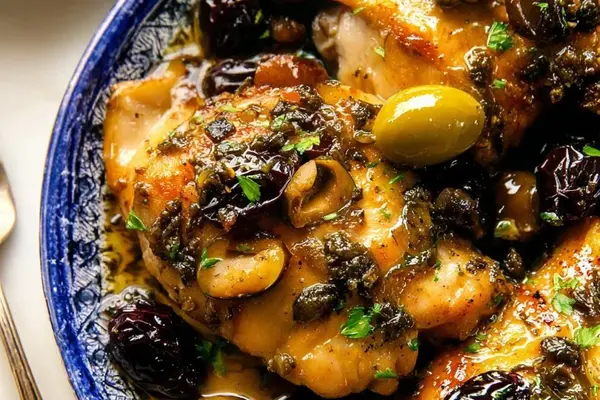
Chicken thighs in a bowl with olives, prunes, capers, bay leaves, red wine vinegar. That’s the whole move. Eight hours later you roast it. Skin goes dark and crispy. The pan juices are sweet and sharp at the same time.
Why You’ll Love This Chicken Marbella
Takes 15 minutes of actual work—the rest is marinating while you do something else. The flavors sound weird together (prunes? olives? on chicken?) but they’re not. They’re this whole thing that works. Leftover chicken tastes better the next day. The skin gets even more crunchy if you reheat it hot. Mediterranean-style dinner that feels fancy but you didn’t stress about it. Main dish that works with literally any side—rice, bread, roasted vegetables, nothing.
What You Need for Chicken Marbella
Eight bone-in skin-on chicken thighs. Not breasts. The dark meat stays juicy and the skin gets actually crispy. Five minced garlic cloves. Dried oregano—a full 2 tablespoons. Red wine vinegar for the sharp part, a third cup. Extra virgin olive oil, a quarter cup. Ten prunes, halved. Soak them first if they’re hard. A cup of green olives, pitted. Castelvetrano works. Manzanilla too. Three tablespoons capers with some brine still attached. Two bay leaves. Kosher salt, a teaspoon. Black pepper, fresh ground, three quarters teaspoon. A cup of dry white wine instead of the original red—smooths things out. Two packed tablespoons of light brown sugar. Fresh parsley at the end.
How to Make Chicken Marbella
Toss everything except the wine and brown sugar into a big bowl. The chicken, garlic, oregano, vinegar, olive oil, prunes, olives, capers, bay leaves, salt, pepper. Really mix it so the marinade clings to the skin. Transfer to a zip-top bag or cover the bowl tight. Refrigerate minimum 3 hours. Overnight is better. More than 8 hours is actually the move—the prunes plump, the olives soften, the whole thing settles into itself. Stir it if you remember. You don’t have to.
Heat the oven to 410°F. Line a roasting dish or heavy oven-safe skillet. Nestle the chicken in there skin-side up. Pour the marinade around it—the olives, prunes, capers, all of it. Careful pouring the wine around the edges so you don’t wash the seasoning off the skin. Sprinkle the brown sugar evenly across the top. Don’t skip this. It caramelizes and gives you a crust.
Slide it in. After 18 to 20 minutes, baste the chicken with the pan juices. Use a spoon or a bulb baster. Repeat at 18-minute intervals or whenever the skin looks dry. The whole thing takes 50 minutes total. The skin should be dark gold with crisped edges. The meat hits 165°F but the skin tells you when it’s actually done—wrinkled, shattering slightly when you poke it.
How to Get Chicken Marbella Golden and Crispy
Basting matters. You’ll hear it sizzle when it hits the pan and again when you baste. That’s the sound of skin rendering. Don’t skip the brown sugar sprinkle—it browns faster than the chicken itself, creates this caramelized layer that snaps. If the sugar starts blackening too fast, cover loosely with foil for the last 10 minutes. The skin underneath stays tender. Skin-on thighs are non-negotiable. Breasts dry out. Dark meat doesn’t.
The marinade time is real. Three hours is the minimum. Eight is better. Overnight is ideal. More than that, the acids start breaking down the meat too much—it gets mushy. But one night in the fridge is perfect. The prunes absorb the vinegar and wine, plump, become almost jammy. The olives hydrate. The chicken seasons itself because the salt and everything else has time to penetrate.
Chicken Marbella Tips and Common Mistakes
Don’t bother with boneless thighs. They cook faster but dry out and taste like nothing. Use legs if thighs are gone. Takes maybe 5 minutes longer. Prunes are the thing. Cherry juice works as a substitute but it’s tarter, less jammy. The prunes add sweetness that balances the vinegar. Can’t skip it. White wine instead of red smooths the acid. Red wine vinegar is already sharp—red wine on top is a lot. White tastes cleaner. Some recipes call for red wine and red vinegar. That’s one direction. This is another.
Green olives, not black. Black olives go mushy. Green ones keep their texture through the roast. Castelvetrano are buttery. Manzanilla are firmer. Both work. Capers with brine matter—the brine is salty and adds umami. The capers themselves are almost floral. Don’t drain them. The brine goes in too.
Basting keeps the skin from drying but also keeps the meat underneath tender. If you skip it, the skin crisps fast but it’s on a dry chicken. Not worth it. Two or three basts over 50 minutes takes maybe 2 minutes total. Watch the pan juices. They should be glossy and reduce slightly. If they’re evaporating too fast, lower the oven 25 degrees. If they’re not reducing enough, pull the foil off 10 minutes early.
Brown sugar is a layer. Don’t mix it in. Sprinkle it dry across the skin. It caramelizes separately, becomes a crust.
Chicken Marbella Recipe with Olives & Prunes
Prep:
15 min
Cook:
50 min
Total:
8h 55min
Servings:
8 servings
Ingredients
- 8 bone-in skin-on chicken thighs
- 5 cloves garlic minced
- 2 tbsp dried oregano
- 1⁄3 cup red wine vinegar
- 1⁄4 cup extra virgin olive oil
- 10 dried prunes (soaked if too hard), halved
- 1 cup pitted green olives
- 3 tbsp capers with some brine
- 2 bay leaves
- 1 tsp kosher salt
- 3⁄4 tsp freshly ground black pepper
- 1 cup dry white wine (substituting original red)
- 2 tbsp packed light brown sugar
- Chopped fresh flat-leaf parsley for garnish
Method
- Marinate the Chicken
- 1 Toss chicken, garlic, oregano, vinegar, olive oil, prunes, olives, capers, bay leaves, salt, pepper in big bowl. Really mix well so everything clings. Transfer to zip-top bag or cover bowl airtight. Refrigerate minimum 3 hours to overnight for deep flavor; more than 8 is better. Stir or shake bag every few hours if you remember. Prunes hydrate, olives plump; smell sharp tang and sweet dark fruit melding.
- Prep and Oven
- 2 Heat oven to 410°F. While warming, line big roasting dish or heavy oven-proof skillet. Nestle chicken plus every bit of marinade. Notice how prunes and olives arrange around thighs, bay leaves nestled for bonus aroma. Pour wine carefully around—avoid washing chicken tops to keep seasoning. Sprinkle brown sugar evenly on skin. Don’t skip this—it adds caramelized crust, slight crunch.
- Roast and Baste
- 3 Slide into oven. Hear gentle sizzle as meat hits heat. After 18-20 minutes, baste juices with spoon or bulb baster. Repeat twice more at 18-minute intervals or when you see skin dry out. Look for dark golden edges with bits crisping. Internal temp to 165°F, but skin tells story—should wrinkle and shatter slightly when poked.
- Finish and Serve
- 4 Once cooked through, transfer chicken, prunes, olives, juices carefully on a platter. Pour pan juices over chicken to keep moist. Sprinkle bright parsley. Serve hot, but not blistering, sides like roasted root veg, couscous or crusty bread help soak juices. Leftovers reheat well. Prunes soften more next day, flavor settles.
- Tips
- 5 Use chicken legs if thighs unavailable. For olives, green Manzanilla or Castelvetrano work; swap black olives for punchier notes. Dried cherries can replace prunes for different sweetness—tart with chewy punch. White wine swap smooths acidity but if stuck with red, use a fruity lighter style. Don’t forget basting—you’ll mute dryness, keep skin crisp but tender underneath. Watch sugars on top don’t burn; if browning too fast cover loosely with foil for last 10 minutes.
Nutritional information
Calories
380
Protein
28g
Carbs
10g
Fat
26g
Frequently Asked Questions About Chicken Marbella
Can you use chicken breasts instead of thighs? You can. They’ll cook in maybe 35 minutes instead of 50. They’ll be dry. Dark meat stays juicy because of the fat. Breasts don’t have it.
How long can you marinate the chicken? Three hours minimum. Overnight is standard. Up to 24 hours is fine. Past that the acids start breaking down the meat structure and it gets mushy.
What if you don’t have prunes? Dried cherries work. Raisins work if you’re stuck. They’re sweeter, less jammy. Prunes are the move because they get almost pudding-like in the marinade.
Can you make this ahead? Marinate it overnight, roast it fresh. Leftovers reheat hot at 350°F for about 15 minutes. The skin recrispens. Flavor actually settles and gets deeper the next day.
Does it have to be red wine vinegar? Red wine vinegar is the classic. Apple cider vinegar is too sweet. White wine vinegar works but it’s sharper. Stick with red.
What’s the internal temperature supposed to be? 165°F at the thickest part. But the skin tells the real story. It should wrinkle and shatter slightly when you touch it. That’s when it’s done.
You’ll Love These Too
Explore all →
Pecan Caramel Sauce with Sea Salt
Rotini Tuna Avocado Salad with Lemon

Baked Pumpkin Donuts with Maple Glaze
Creamy Poblano Chicken with Corn & Avocado

Olive Oil Orange Rosemary Muffins

Coconut Cream Pie with Toasted Coconut Flakes
Chorizo Corn Macaroni Bake with Cheddar
Grilled Lamb Chops with Honey Mustard Glaze
Neapolitan Pine Nut Pizzas with Ricotta
Cherry Chip Cake with Orange Zest & Pecans
Beef Steak Marinade with Spice Rubs
Homemade Chick Fil A Chicken Sandwich
Baked Mostaccioli with Italian Sausage
Braised Veal Cheeks in Red Wine Reduction

Green Fizz Twist Cocktail with Mezcal
Salisbury Steak Meatballs with Mushroom Gravy

Monster Rice Treats with Candy Eyes
Braised Beets with Grapefruit Zest

No Bake Cheesecake with Lemon & Strawberries