Pan Seared Chicken Livers with Radishes and Peas
By Emma
Certified Culinary Professional
·
Recipe tested & approved
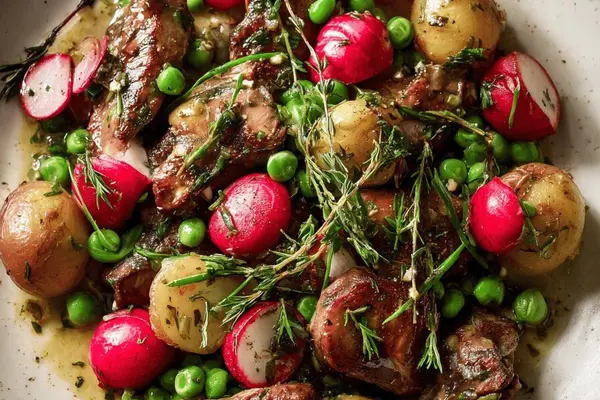
Pan seared chicken livers with crisp radishes, frozen peas, and fingerling potatoes in a tangy vermouth sauce. Quick, rustic comfort food ready in minutes.
Prep:
12 min
Cook:
20 min
Total:
32 min
Servings:
4 servings
Butter foams in a wide skillet and you’re already halfway there. Cold cubes waiting on the counter, radishes cut, everything moves fast once the pan gets hot. This is one pot and 32 minutes from start to plating — comfort food that tastes like you’ve been cooking all afternoon.
Why You’ll Love This Chicken Livers Dinner
Takes 12 minutes prep, 20 minutes cooking. No second dish. One pot handles radishes, potatoes, peas, then the livers finish everything off.
Tastes richer than it should for how simple it is. The vermouth reduces to something almost syrupy, butter gets whisked in at the end and clings to everything.
Radishes stay crisp on the edges. Most people skip them, but they cut through the richness of chicken livers and make the whole plate lighter than comfort food usually feels.
Works cold the next day — maybe better cold. Not something you’d expect from something this savory.
What You Need for Seared Chicken Livers with Radishes and Peas
Chicken livers. 300 grams. Trimmed. The ones that still have a little connective tissue clinging to them work fine — just pull it off as you go.
Cold unsalted butter in small cubes. 50 milliliters total. Room temperature butter won’t work here. It needs to stay in pieces so the sauce emulsifies instead of breaking into a greasy puddle.
Radishes. 200 milliliters sliced into quarters. Red or watermelon. Doesn’t matter much. They soften without going mushy if you catch them right.
Frozen petit pois. 200 milliliters. Not fresh. Frozen breaks down less and holds texture better through the cooking. Fresh peas get grainy when they heat through twice.
Fingerling potatoes. 4 small ones, boiled and halved already. You could use Yukon Gold if that’s what you have. They need to be cooked before the pan comes out — raw potatoes won’t soften in 4 minutes.
Dry vermouth or white wine vinegar. 100 milliliters. Vermouth tastes better. Vinegar makes it sharper, less glossy, but it still works. Either one scrapes the fond off the bottom and reduces down to something that sticks to the spoon.
Fresh thyme chopped. One tablespoon. Not dried. Dried tastes like wood shavings here. Fresh thyme has a subtle perfume that balances livers.
Salt and cracked black pepper.
How to Make Chicken Livers with Vermouth Sauce
Slice the radishes first. Into quarters. Get that done before heat goes on because once the pan starts, everything moves fast.
Put cold butter cubes on a small plate near the stove. Keep them cold. This matters more than it sounds.
Wide skillet, medium-low heat. Let a cube of butter sit there and watch it foam. Not brown. Just foam — that milky-looking foam that means the water’s cooking out but the milk solids haven’t burned yet. Should take 2 minutes.
Add radishes. They’ll sizzle but not aggressively. Stir them around. Edges start going translucent after about 4 minutes but the center keeps its bite and snap. That’s the window — don’t overcook them into mush.
Toss in the potatoes and peas. Stir once. You want the pan hissing just right — steam rising but nothing aggressive. 4 minutes. Maybe 5 if they seem cold still. Cover the bowl loosely and keep them warm while you work on the livers. Don’t cover tight or they’ll sweat and get mushy.
Same pan. Don’t wash it. The brown bits stuck to the bottom are flavor — fond. Wipe with a paper towel if there’s excess moisture but that’s all.
Turn heat to medium-high. Add another small knob of butter — less than before. Let it foam again.
Pat the livers dry. Lay them flat in the pan. Don’t crowd them. They need space or they steam instead of sear. 3 minutes on the first side. The surface should go golden and crusty but the inside stays tender. They jiggle when you poke them.
Flip. Another 3 minutes. Same thing — golden crust, jiggle inside. Don’t go longer or they get tough and grainy.
Tip them into the bowl with the vegetables. Stir gently so you don’t break them apart.
How to Get Chicken Livers Tender and That Glossy Sherry Sauce
Pour the vermouth straight into the hot pan without hesitation. It fizzles immediately. Scrape the bottom with a wooden spoon — all that brown stuff dissolves into the liquid and turns it dark and rich.
Let it sit there and reduce. The bubbling slows down and the sauce gets thicker. When it coats the spoon and barely drips off, you’re done. 2 minutes maybe. 3 if the heat’s lower.
Off heat completely. Take the pan off the stove.
Whisk in the cold butter cubes one at a time. A few pieces go in, you whisk until they’re gone, then add more. This is emulsifying — the water in the butter mixes with the vermouth and makes something glossy and thick that clings instead of pooling. If you dump all the butter in at once, it breaks and goes greasy. One piece at a time matters.
The sauce should look shiny. When you tilt the spoon, it should coat the back and drip slowly.
Taste it. Salt and pepper now if it needs it.
Pour the sauce over the livers and vegetables. Sprinkle with thyme. The fresh herb adds something subtle that dried thyme can’t touch — a little earthiness, a little perfume.
Chicken Livers Tips and Roasted Potato Mistakes
Don’t buy pre-trimmed livers if you can help it. They sometimes sit in a plastic tray and get weepy. Look for whole ones still attached to gall bladders — it sounds worse than it is. The gall bladder’s just a small green sac. Pull it off and rinse. Takes 30 seconds and the livers taste better for it.
Overcrowding the pan is the biggest mistake. Livers need space or they steam. Steam makes them gray and grainy. Sear them means golden and crisp outside, still pink and soft inside.
The vermouth isn’t optional. White wine vinegar works in a pinch but it tastes sharper and less glossy. Vermouth has this subtle herbal thing that balances the richness of liver and butter.
Cold butter really does matter. Room temperature won’t emulsify. It just melts and breaks into fat and water again.
Radishes are easy to overcook. Once the edges go translucent, stop. They should still have a sharp bite. That’s the whole point. If you want soft vegetables, use something else.
The potatoes have to be boiled ahead. Raw fingerlings won’t soften in 4 minutes in a low-heat pan. Boil them first, then halve them. Takes 8 minutes in boiling salted water.
Pan Seared Chicken Livers with Radishes and Peas
Prep:
12 min
Cook:
20 min
Total:
32 min
Servings:
4 servings
Ingredients
- 200 ml radishes sliced into quarters
- 50 ml cold unsalted butter in small cubes
- 4 small fingerling potatoes boiled and halved
- 200 ml frozen petit pois
- 300 g trimmed chicken livers
- 100 ml dry vermouth or white wine vinegar
- 1 tablespoon fresh thyme chopped
- Salt and freshly cracked black pepper
Method
- 1 Start with cold butter cubes ready near stovetop; radishes sliced. Heat a wide skillet on medium low; let butter start to foam but not brown yet. Add radishes making gentle sizzling sounds; softening without losing crunch is the goal. Watch edges turn translucent but keep bite. About 6 minutes. Toss in potatoes and peas; give them a quick stir, you want steam hissing just right. Another 4 minutes max. Season smartly; salt should be light at this stage since livers add richness. Keep vegetables warm in bowl; cover loosely so they don’t sweat and get mushy.
- 2 Same pan, wipe if needed but don't wash; fond is flavor gold. Turn heat to 180°C moderate-high. Butter again, but less. Toss in livers, lay flat; no crowding. Sear 3 minutes one side until surface gets a golden crust but still tender inside; flip and do the same. They should jiggle slightly when poked rawness balanced. Remove to join veg mix, stir gently to avoid breaking livers.
- 3 Pour vermouth (or white wine vinegar for sharp twist) without delay; it fizzles and bubbles, scraping bottom releases caramelized bits. Let it reduce slowly till syrupy glaze forms, shiny and thick. Off heat, whisk in remaining butter cubes piece by piece; emulsifies sauce giving a glossy, rich sheen that clings to spoon.
- 4 Plating—spoon mixture evenly on plates so radishes peek through green peas and creamy potatoes. Lay livers on top, drizzle sauce over everything. Sprinkle with chopped fresh thyme versus usual chives; thyme adds earth and a subtle perfume. Final seasoning check with pepper and touch more salt if needed.
Nutritional information
Calories
320
Protein
22g
Carbs
20g
Fat
18g
Frequently Asked Questions About Chicken Livers Dinner
Can you make this ahead? Boil the potatoes, slice the radishes, chop the thyme, cube the butter. Everything else happens in the pan. The whole point is speed. Once you start cooking, it’s done in 20 minutes.
Why frozen peas and not fresh? Fresh peas go grainy when they heat twice — once in the pan early, then again when you stir them with the livers. Frozen ones hold texture better. Thaw them first or they’ll bring the pan temperature down.
Is there a substitute for vermouth? Dry white wine works. So does white wine vinegar but it tastes sharper and less herbal. Sherry would be good too if you have it. Don’t use sweet vermouth. Just don’t.
Do the livers have to be rare inside? Not rare exactly. They jiggle slightly when you poke them. That means they’re still tender. Cook them much longer and they get tough and grainy, which defeats the whole purpose. This isn’t a food safety thing — it’s a texture thing.
What if you overcook the radishes? You get soft mush. Start over with fresh radishes. They’re cheap and the whole dish is fast anyway. There’s no fix for mushy radishes.
Can you use regular potatoes instead of fingerlings? Yukon Gold works. So does red potato. Russets are too starchy — they fall apart. Fingerlings are waxy so they hold together but that’s not a dealbreaker with other types. Boil whatever you have until just tender, then halve them.
You’ll Love These Too
Explore all →
Mexican Street Corn Chicken Rice Bowls
Crock Pot Chicken Spaghetti
Easy Blackberry Cobbler with Cake Mix
Cucumber Red Onion Salad Recipe
Cream Cheese Frosting with Lemon

Cookie Dough Truffles with Bittersweet Chocolate
Corned Beef Cabbage Soup with Barley
Lamb Chop Recipe with Pomegranate Glaze
Shortbread Millionaire Bars with Pecans
Roasted Pumpkin Side Dish with Fennel Seeds
Pear Butter Recipe with Cinnamon
Maple Lattice Tart with Puff Pastry
Peanut Butter Cookies with Honey

Orange Marmalade Chicken with Cherry Tomatoes
Pumpkin Muffins with Cream Cheese

Dough for Pizza with Smoked Provolone
Cajun Chicken Alfredo Pasta
No-Cook Berry Jam with Honey and Pink Pepper
Vermicelli Noodle Salad with Spicy Tuna