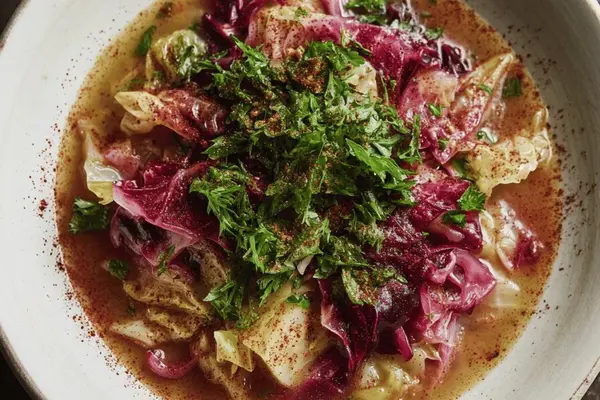
Cabbage Beet Soup with Caramelized Onions
By Emma
Certified Culinary Professional
·
Recipe tested & approved
Cabbage beet soup featuring tender beets, potatoes, and caramelized onions in vegetable broth with white wine vinegar. Naturally gluten-free comfort food ready in 40 minutes.
Prep:
25 min
Cook:
35 min
Total:
60 min
Servings:
4 to 6 servings
Slice the onion thin. Get the oil hot—not smoking, just moving around the pan. This is where it starts.
Why You’ll Love This Cabbage Beet Soup
Takes an hour total, most of it just sitting there simmering. You’re not hovering over it.
Comfort food that actually tastes alive. Beet and cabbage borscht sits heavy in a good way—not like it’s trying to comfort you, just does.
Works for vegetarian dinners, meal prep, or when you open the fridge and need to do something with beets before they wrinkle. Gluten free by default.
The smell halfway through cooking changes your entire kitchen. Sweet from the caramelized onions, sharp from the vinegar, earthy from the beets. That’s the whole thing right there.
Leftovers taste better the next day. The flavors actually marry overnight. Not a lot of cleanup either—one pot, one knife, done.
What You Need for Beet and Cabbage Soup
Onion. One medium one, sliced thin. Matters because you need the surface area for that initial golden-edged cook.
Olive oil. Thirty milliliters. Not extra virgin—regular olive oil handles the heat better. Extra virgin burns and tastes bitter.
Brown sugar. Just ten milliliters. This isn’t dessert. The point is caramel depth, not sweetness. White sugar works too. Doesn’t matter much.
White wine vinegar. Thirty milliliters. This is the sharp part. Red wine vinegar works if that’s what you have—stronger tang, slightly different edge. Don’t use white vinegar, it’s too aggressive.
Vegetable broth. One point two liters. Cold from the carton or warm, doesn’t matter. Chicken broth would work but loses the earthiness you’re after here.
Potatoes. Two medium ones, peeled and diced into chunks. Not too small or they disappear. Half-inch cubes, maybe.
Beets. Two medium beets—about two cups once you julienne them. That means thin matchsticks. You could slice them thinner or thicker. Thinner cooks faster. Thicker keeps more texture. Your call.
Green cabbage. Five hundred milliliters shredded. Not red cabbage. Red turns the whole thing purple and tastes different. Green stays green and tastes brighter.
Flat-leaf parsley. Sixty milliliters chopped. Fresh. The dried stuff won’t do a thing here. Dill works. Cilantro too if you like it.
Salt and pepper. You know this part.
Smoked paprika. Half a teaspoon, optional. Not regular paprika. Smoked gives it a deeper, almost woodsmoke note. Skip it if you don’t want that.
How to Make Beet and Cabbage Borscht
Get the heavy pot—something with a thick bottom. Pour in thirty milliliters olive oil. Medium-high heat. You want it to shimmer, not smoke. Takes about a minute.
Onion goes in. Thin slices, so they cook fast. Stir it around. You’re looking for golden edges after about seven minutes. Not brown. Not burnt. Golden. There’s a difference and you’ll see it.
This is when the sweetness comes in. Sprinkle the brown sugar over everything. Stir fast. It melts and sticks to the pan—a sticky amber layer coating the bottom. Smell it. That’s caramel. Takes maybe two minutes.
The vinegar deglazes. Pour all thirty milliliters in. It hisses. That’s right. Scrape the bottom with a wooden spoon to lift all those stuck bits. The sharp tang cuts through the sweet. This is balance.
Dump in the potatoes, beets, cabbage. Salt it. Pepper it. Half a teaspoon paprika if you’re using it. Stir everything until it’s coated and blended—you want all the flavors touching each other.
Pour the broth in. Should come up to cover the vegetables by about an inch. Not drowned. Not stingy. Just enough. Bring it to a boil—you’ll see the bubbles rise and the steam coming off hard.
Lower the heat. It should bubble gently, not aggressively. Cover it loosely. This is the thirty-minute wait. Stir it once or twice. Check the vegetables around the twenty-five-minute mark.
The beets deepen the broth color. Cabbage turns translucent but shouldn’t be mushy yet. Potatoes should give when you push them with a spoon but still hold their shape. Taste the broth. The acid and sugar balance might need adjustment. More salt? More vinegar? Depends on your vegetables.
The parsley goes in near the end—last minute, really. Chopped, fresh. This keeps the green bright and the aroma sharp. Stir it through. Cover it again. Wait maybe two minutes. This is when everything settles and marries together.
Beet Borscht Tips and Common Mistakes
Don’t skip the caramel step. People do. They think it’s extra. It’s not. That’s where the depth comes from. Brown sugar melts fast—keep stirring so it doesn’t burn.
The vinegar deglaze matters too. It sounds fancy. It’s not. It’s just scraping the pan while the liquid hisses. Gets all the good stuck bits off the bottom and into your soup. Those bits taste like something.
Beetroot and cabbage soup changes color as it cooks. If your beets are very earthy and dark, the broth goes deep purple-red. If they’re sweeter and lighter, it stays brighter. Both are right. Doesn’t taste different, just looks different.
Don’t overcrowd the pot. If you cram everything in there, it steams instead of simmers. Vegetables should be mostly submerged but have some room to move. Space matters.
Temperature-wise, thirty-five minutes is the number, but your stove might be hotter or cooler. Check at twenty-five. If the vegetables are still hard, give it more time. If they’re falling apart at thirty, you’re done. Listen to the soup, not the timer.
Mashing potatoes at the end thickens it naturally. Push a few against the side of the pot with your spoon. Breaks them down. Makes the broth creamier without adding cream. Optional. Some people like it thick. Some like it brothier.
Storage is easy. Fridge for about four days. Freezes fine. Tastes better the next day actually. The flavors keep settling and deepening.
Cabbage Beet Soup with Caramelized Onions
Prep:
25 min
Cook:
35 min
Total:
60 min
Servings:
4 to 6 servings
Ingredients
- 1 onion sliced thin
- 30 ml olive oil
- 10 ml brown sugar
- 30 ml white wine vinegar
- 1.2 litres vegetable broth
- 2 potatoes peeled and diced
- 2 medium beets peeled julienned (about 2 cups)
- 500 ml shredded green cabbage
- 60 ml chopped flat-leaf parsley
- Salt and pepper
- 1/2 tsp smoked paprika (optional)
Method
- 1 Heat olive oil in a heavy pot until shimmering. Add sliced onions and stir until they start to soften and color, about 7 minutes. Look for golden edges, not burnt spots.
- 2 Sprinkle brown sugar over onions. Stir quickly while it melts and caramelizes; a sticky amber layer will coat the pan. Smell the sweet notes rising.
- 3 Pour in the vinegar to deglaze, scraping the bottom to lift caramel bits. The sizzling hiss and sharp tang cut through the sweetness — essential contrast.
- 4 Add diced potatoes, julienned beets, shredded cabbage to the pot. Season with salt, pepper, and smoked paprika if using. Stir all for even coating and blending flavors.
- 5 Pour the vegetable broth in, enough to cover vegetables by about a finger. Don’t drown the color and texture. Bring just to a boil — bubbling and rising steam.
- 6 Lower heat to maintain a gentle simmer. Cover loosely and cook, stirring occasionally, for roughly 30 minutes. Check vegetables, they should be tender enough to pierce but keep some bite.
- 7 Look for softened beets deepening broth color and cabbage turning translucent but not mushy. Taste broth for seasoning adjustment; acid-sugar balance may need tweak.
- 8 Add chopped parsley near the end to preserve bright green notes and fresh aroma. Stir through, turn off heat, let sit covered a couple minutes for flavor marriage.
- 9 Serve hot with crusty bread or as is. If thicker soup preferred, mash some potatoes against the side of the pot for natural body.
- 10 Possible substitutions: use red wine vinegar for stronger tang, swap parsley with dill or cilantro for different herbaceous lift, vegetable broth hosts better earthiness than chicken stock, can omit paprika if no heat desired.
Nutritional information
Calories
130
Protein
3g
Carbs
18g
Fat
5g
Frequently Asked Questions About Beet and Cabbage Borscht
Can I use red cabbage instead of green? You can. It turns everything purple. The taste is slightly earthier, less bright. Not bad. Just different. Some people prefer it.
What if I don’t have smoked paprika? Skip it. The soup works fine without it. Regular paprika is basically nothing. Not worth it.
How long does this actually take? Twenty-five minutes prep if you’re slow with a knife. Thirty-five minutes cooking. So sixty minutes total. Most of that time the pot just sits there.
Can I make it less vinegary? Start with twenty milliliters instead of thirty. You can always add more at the table. Can’t take it out once it’s in.
Do I have to use vegetable broth? Chicken broth works. Tastes less earthy. Beef broth would be weird. Homemade broth is better than boxed but boxed is fine.
What’s the difference between this and a regular beet soup? The cabbage. It adds texture and a slight sweetness that balances the earthiness. Also makes it cheaper and goes further.
Can I add meat to this? Yeah. Kielbasa, ground beef, whatever. Brown it first, then do the onions. It’s vegetarian as written though.
Should I peel the beets before or after cooking? Before. Raw beets are easier to julienne. Cooked ones are slippery and harder to hold.
You’ll Love These Too
Explore all →
Green Bean Casserole with Bacon & Monterey Jack
Microwave Chocolate Mug Cake Recipe
Crispy Tofu Avocado Wraps with Arrowroot
Ginger Cookies Recipe with Chai Spice

Bacon Wrapped Scallops with Paprika
Cranberry Chocolate Pull-Apart Bread

Rainbow Layer Cake with Buttercream Frosting

No Bake Cheesecake Recipe with Fried Banana

No-Bake Pumpkin Brownies with Chocolate

Apple Crumble Recipes with Walnuts
Herbed Spicy Olive Dip with Fresh Garlic

Slow Cooker Turkey Breast with Herb Butter

South Carolina Mustard BBQ Sauce with Molasses

Crispy Phyllo Cheese Bundles with Apples

Ham and Swiss Cheese Breakfast Bake

Crispy Yukon Gold Fries with Pancetta
Beef Tartare with Bone Marrow & Crispy Potatoes
Chick Pea Salad with Greek Yogurt Dill
Ginger Cookies Recipe: Layered Butter & Chocolate