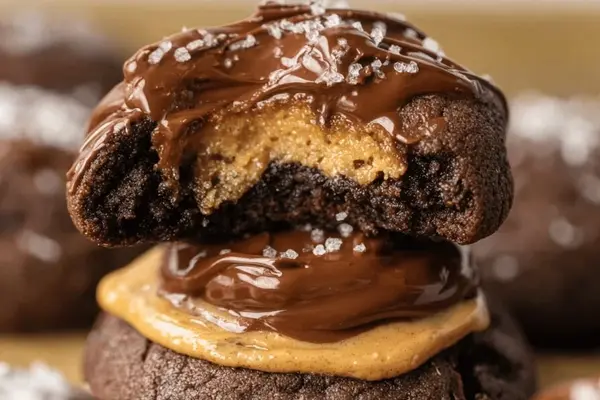
Brownie Buckeyes with Peanut Butter
By Emma
Certified Culinary Professional
·
Recipe tested & approved
Brownie buckeyes combine thick chocolate cookies with creamy peanut butter centers, dipped in chocolate and topped with flaky salt. Rich coffee flavor.
Prep:
15 min
Cook:
15 min
Total:
30 min
Servings:
10 servings
Thirty minutes. That’s it. Brownie base, peanut butter disk pressed into the top while it’s still warm, then a chocolate dip that looks like the Ohio state flag—the buckeye. Comfort food, basically made edible.
Why You’ll Love These Brownie Buckeye Cookies
Tastes like two desserts stacked on top of each other. The brownie part actually chewy. Peanut butter layer melts a tiny bit into the warm cookie, so it’s not just stuck on top. No fancy equipment. Mixer helps but your hands work fine. Takes 30 minutes total—15 to prep, 15 to bake. Way faster than actual brownies. They’re the kind of thing you bring somewhere and people eat three before they realize. Comfort food that doesn’t feel heavy. Works cold, room temp, slightly warm. Keeps for days if you don’t stack them in the fridge, which changes the texture. Don’t do that.
What You Need for Buckeye Brownie Cookies
Butter and peanut butter—half a cup each. Not natural peanut butter. Regular creamy. The oil separation in natural stuff makes these fall apart. Powdered sugar. Sifted. Takes two minutes, prevents lumps in the peanut butter layer. Flour, cocoa powder, cornstarch, baking powder. Standard brownie dry stuff. Instant coffee granules or espresso powder. A half teaspoon. Sounds weird. Makes the chocolate taste like chocolate instead of just sweet. Salt twice—once with the peanut butter, once in the dry mix. Matters. Two eggs, granulated and brown sugar. The eggs get beaten with sugar for like five minutes to trap air. Chocolate twice. Bittersweet for the dough (part of it), semisweet for the dip. Both matter because one’s darker. Coconut oil. Just a tablespoon. Thins the dip so it actually coats instead of clumping. Vanilla. Flaky salt for the top.
How to Make Brownie Buckeye Cookies
Cream butter and peanut butter together first. Add salt right away—cuts the sweetness before it gets out of hand. Mix until it looks creamy but don’t go crazy trying to make it fluffy. It won’t. Powdered sugar goes in slowly on low speed or you’ll have powder everywhere. The mixture should be thick. Workable. Not dry like sand. Scoop roughly a tablespoon into balls, then flatten them into disks. Same thickness all over. Lay them on parchment, stick them in the fridge for at least twenty minutes. Longer is fine. You need them cold.
Whisk flour, cocoa, instant coffee, cornstarch, baking powder, salt in a bowl. The coffee isn’t optional. It does something to the chocolate. Hard to explain but it works. Whisk until there’s no lumps. That’s it.
Melt bittersweet chocolate and three tablespoons butter in a small pan over low heat. Stir constantly. It’ll go glossy when it’s done—don’t wait until it’s thin because that means it’s hot enough to burn. Pull it off heat immediately. Stir in vanilla. It should smell insane. If it smells burnt, start over.
Eggs and both sugars go in a mixer with the whisk attachment. Beat for four to five minutes until it’s pale and thick—like a ribbon when you lift the whisk. The color actually changes. This step is annoying but skip it and the cookies get dense.
Fold the chocolate mixture into the eggs slowly with a spatula. Fold deliberately. Not stirring aggressively. Then fold in the dry ingredients in batches. The dough should look satiny and shiny. Doesn’t fall apart but it’s not stiff either.
Chill the dough minimum fifteen minutes. Preheat to 345 degrees—not 350. The lower temp keeps them from cracking on top and gives a gentler rise.
How to Get Brownie Buckeye Cookies Perfect
Scoop with a 2.5-tablespoon cookie scoop for even sizing. Roll into balls. Space them out because they spread a little and rise a little. Bake twelve to fourteen minutes. The edges should feel set. The center still soft. The top should be cracked but not dry. Pull them out. Let them sit on the sheet for seven minutes. This matters. The insides keep cooking from the heat. They set up properly. Transfer to a wire rack after that. Don’t move them when they’re hot or they fall apart.
Melt the semisweet chocolate and coconut oil in the microwave in thirty-second bursts. Stir between each one. The coconut oil thins it so it dips smooth instead of thick. If it gets too thick, add half a teaspoon more coconut oil. Carefully.
Press the peanut butter disks onto the cooled cookie tops. If they’re too stiff, flatten them slightly with your fingers so they warm up and melt a little when the chocolate hits. Spoon melted chocolate over the peanut butter. Don’t fully submerge. You want to see the peanut butter layer—that’s the whole point. That’s the buckeye. Sprinkle flaky sea salt right after. The salt adds texture snap and makes the chocolate taste darker. Let it set at room temp. Avoid the fridge unless you don’t care about the texture.
Brownie Buckeye Cookie Tips and Mistakes
If the peanut butter mixture crumbles, add milk or heavy cream a teaspoon at a time. Just needs smoothing. Overheated chocolate seizes. It goes grainy and separated. If that happens, add warm cream very slowly while stirring. Sometimes it comes back. Sometimes it doesn’t. The egg and sugar whipping step. People skip it. Don’t. It makes the cookies chewy instead of dense. Chilling matters twice—the peanut butter disks and the dough. Both need time or everything melts and spreads wrong. Watch the edges of the cookies. Firm at the edges, soft in the middle. That’s done. Hard edges means overbaked. The instant coffee isn’t a joke. It’s a half teaspoon in the dry mix. Adds bitterness without tasting like coffee. Oven temps vary. Go lower and slower if your oven runs hot. Better to underbake slightly and have chewy than overbaked and hard. Natural peanut butter changes the game. It’s drier. It won’t work the same way. If you use it anyway, add extra butter to the mixture.
Brownie Buckeyes with Peanut Butter
Prep:
15 min
Cook:
15 min
Total:
30 min
Servings:
10 servings
Ingredients
- 1/2 cup (115g) unsalted butter, softened
- 1/2 cup (130g) creamy peanut butter, not natural style
- 1/4 tsp fine sea salt
- 1 3/4 cups (210g) powdered sugar, sifted
- 1 cup (125g) all-purpose flour
- 1/3 cup (35g) Dutch-processed cocoa powder
- 1/2 tsp instant coffee granules (sub for espresso powder)
- 1 tbsp cornstarch
- 1/2 tsp baking powder
- 1/4 tsp salt
- 4 oz (115g) bittersweet chocolate chips
- 3 tbsp butter
- 1 tsp vanilla extract
- 2 large eggs
- 1/2 cup (100g) granulated sugar
- 1/4 cup (50g) light brown sugar
- 1 tbsp coconut oil
- 4 oz (115g) semisweet chocolate chips
- Flaky sea salt for garnish
Method
- Peanut Butter Layer
- 1 Start by creaming together butter, peanut butter, and salt until creamy but not fluffy. Adding a pinch of salt cuts peanut butter’s natural sweetness.
- 2 Add powdered sugar gradually on low speed to avoid airborne clouds; mixture should be thick and workable, not dry like sand.
- 3 Scoop roughly 1 tablespoon (about 14g) and roll into balls. Press each ball flat into disks—a uniform thickness helps melting and final appearance.
- 4 Lay disks onto parchment-lined plate or sheet. Refrigerate at least 20 minutes; longer chills prevent melting in next steps.
- Dry Mix
- 5 Whisk flour, cocoa powder, instant coffee granules, cornstarch, baking powder, and salt in a medium bowl. Coffee heightens chocolate’s complexity, though espresso powder is a fine substitute.
- 6 Whisk lightly but ensure no lumps or clumps.
- Chocolate Butter Melt
- 7 Melt chocolate chips and butter in a small saucepan over low to medium-low heat. Stir constantly; the mixture will gloss over and thicken slightly when ready.
- 8 Remove from heat promptly to avoid scorched bitterness. Stir in vanilla extract; aroma should explode—if burnt, start over with fresh batch.
- Egg and Sugar Whip
- 9 Use hand or stand mixer with whisk attachment. Beat eggs and sugars for 4-5 minutes till pale, light, and thick—this traps air, giving rise and chew.
- 10 Look for a soft ribbon when you lift the whisk—the color changes from yellow to near white.
- Combine Wet and Dry
- 11 Fold cooled chocolate mixture into the egg batter with a rubber spatula. Cause fading color and glossy shine.
- 12 Add dry ingredients in batches; fold deliberately to prevent overworking gluten. Dough should look satiny, slightly shiny, hold shape but tender to touch.
- Chill and Shape
- 13 Fridge dough minimum 15 minutes to thicken (this stops spreading during bake). Preheat oven 345°F (instead of 350°F) for gentler rise and to avoid cracking.
- 14 Scoop dough with 2.5 tablespoons or cookie scoop for even sizing. Roll into balls, place on parchment or silicone mat, spaced a bit apart to allow rise.
- Bake Cookies
- 15 Bake 12-14 minutes. Cookies should feel set at edges, slightly soft in center, with surface cracked but not dry.
- 16 Remove from oven; cool on sheet 7 minutes before transferring to wire rack—carryover cooking finishes interiors. Avoid moving hot or fragile cookies.
- Chocolate Dip
- 17 Melt semisweet chocolate chips and coconut oil in microwave-safe bowl in 30-second intervals, stirring each time until smooth. Coconut oil thins chocolate making dipping easier and adds subtle fragrance.
- 18 If chocolate thickens too much, add teaspoon coconut oil or cocoa butter carefully.
- Assemble Final Cookies
- 19 Press chilled peanut butter disks gently onto cooled cookie tops. If disks feel thick or stiff, flatten slightly with fingers so they melt in sync with chocolate dip.
- 20 Spoon melted chocolate over peanut butter layer; do not fully submerge—maintain partial visibility for signature buckeye look.
- 21 Sprinkle flaky sea salt immediately after dipping. The salt heightens contrast, and texture snap. Let chocolate set at room temp till firm.
- 22 Store in cool place, avoid fridge if possible to maintain chew.
- Notes
- 23 If peanut butter mixture is too crumbly, add a teaspoon milk or heavy cream to smooth texture. Natural peanut butter can be swapped but expect drier consistency; add extra butter accordingly.
- 24 Watch chocolate melt carefully; overheated chocolate seizes quickly, turning grainy. If that happens, add warm cream spoon by spoon.
- 25 Eggs and sugar whipping step often skipped but crucial. They trap air, lighten texture, prevent heaviness.
- 26 Chilling dough and peanut butter disks is a repeat lesson—museum smooth cookies flop without this patience.
- 27 Pay attention to cookie edges—firm but not hard is the sign, centers slightly soft means chewy insides when cooled.
- 28 Adding instant coffee gives bitter backbone without bitterness.
- 29 Oven temperatures vary; lower temp and longer time preferred here for gentle rise and uniform bake.
Nutritional information
Calories
320
Protein
5g
Carbs
28g
Fat
22g
Frequently Asked Questions About Brownie Buckeye Cookies
Can I make the peanut butter layer ahead of time? Yeah. Roll and chill them up to two days early. Keep them in a container in the cold.
What if my chocolate gets thick while dipping? Add coconut oil or cocoa butter a half teaspoon at a time. Warm it gently if it’s too thick.
Do these need to go in the fridge? No. Room temp is better for keeping them chewy. The fridge makes them dense.
Can I use natural peanut butter? Not really. The oil makes it too loose. Regular creamy is what these need.
How long do they last? Four or five days in a container at room temp. They dry out slower if you don’t refrigerate.
Why instant coffee in a brownie recipe? It deepens the chocolate flavor without tasting like coffee. Sounds weird. Just works.
Do I have to let the dough chill? If you skip it they spread more and bake less evenly. Fifteen minutes minimum. Don’t rush it.
What’s the difference between bittersweet and semisweet chocolate here? Bittersweet goes in the dough—darker, adds depth. Semisweet is the dip—smoother to work with, less bitter.
Can I make these without a mixer? Yeah. Cream the butter and peanut butter by hand. Eggs and sugar are harder—need five minutes of beating. A fork works if you’re patient.
Why does the recipe call for 345 degrees instead of 350? Gentle heat, longer time prevents cracking and gives even bake. Your oven might run different. Adjust if needed.
You’ll Love These Too
Explore all →
Pineapple Blueberry Crisp with Cake Mix

Green Salsa Mussels with White Wine Sauce
Roast Lamb Dinner with Garlic and Sage

Cookies With Lemon Glaze: Vegan Royal Icing

Green Juice with Kiwi, Orange & Kale

Warm Potato Salad with Escargots

Cajun Chicken Pasta with Creamy Tomato Sauce

Chive Blossom Butter Recipe

Potato Gratin with Rosemary and Piave Cheese

Cocktail Meatball Recipe with Tangy Sauce
Herbed Ranch Salt Mix with Smoked Paprika
Banana Foster French Toast with Dark Chocolate
Ham Waffles with Poached Eggs & Béarnaise
Chocolate Swirl Babka with Espresso
Sesame Cucumber Salad with Lime & Chili
Peach Cobbler Muffins with Crumb Topping
Mugcake Recipe: Chocolate in Minutes
Avocado Appetizer with Greek Yogurt

Fluffy Omelette with Ricotta Salata