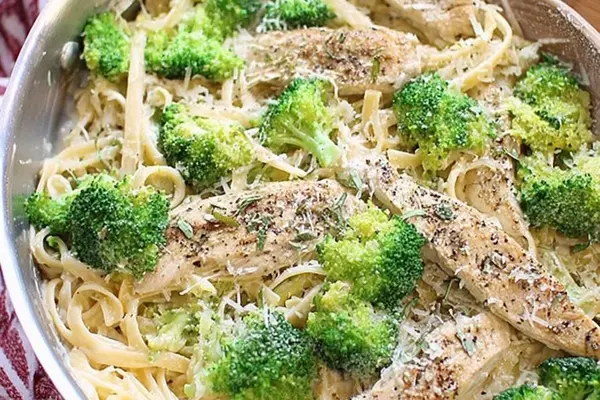
Fettuccine Alfredo With Chicken and Broccoli
By Emma
Certified Culinary Professional
·
Recipe tested & approved
Tender marinated chicken breast and fresh broccoli florets tossed with linguine in a silky Parmesan cream sauce made with heavy cream and garlic. Ready in 30 minutes.
Prep:
12 min
Cook:
22 min
Total:
34 min
Servings:
4 servings
Slice the chicken breasts in half first, pound them flat—not paper thin, just thin enough they cook through in minutes without drying out. Red wine vinegar goes in the marinade, not the sauce. That’s the thing people mess up. Overnight is better than an hour, but don’t leave it longer than 24 because the acid starts breaking the meat down too much and it gets weird and soft.
Why You’ll Love This Chicken Alfredo Fettuccine With Broccoli
Takes 34 minutes total if you’ve marinated the chicken already. No hours at the stove. One pot for sauce, one for pasta, one skillet for chicken—cleanup’s not nothing, but it’s fast and worth it. Broccoli stays bright green and crispy instead of turning into mush like it does in most pasta dishes. Works as a weeknight dinner because it’s simple enough you don’t need skills, but tastes like you tried. Tastes like something. Chicken marinates overnight so flavors actually go somewhere instead of sitting on the surface. Cold Tuesday night and you’ve got dinner ready in 22 minutes.
What You Need for Chicken Alfredo Broccoli Pasta
Two chicken breasts—boneless, skinless. Pound them. That matters. Vegetable oil and red wine vinegar for the marinade, plus dried minced onions and garlic powder mixed in. The acid does the work. Extra virgin olive oil for the skillet, just a couple teaspoons. Linguine or fettuccine—doesn’t matter which, pick whichever’s in your cabinet. A whole head of broccoli cut into florets, small ones so they cook even. Water for steaming. Butter—three tablespoons, real butter, not margarine. Three fresh garlic cloves minced, not powder this time. Heavy cream, full fat. Don’t cheap out here. A cup of finely grated Parmesan, the good kind you grate yourself if you can. Maldon sea salt and fresh black pepper for finishing. That’s it.
How to Make Chicken Alfredo With Broccoli
Slice those chicken breasts horizontally so you’ve got four thinner pieces instead of two thick ones. Pound each piece between plastic wrap or in a zip-top bag until they’re roughly half an inch thick. Not paper. Not mushy. Just thin enough to cook fast.
Mix vegetable oil, red wine vinegar, dried minced onions, and garlic powder in a zip-top bag. Throw the chicken in. Seal it. Marinate overnight if you’ve got the time—24 hours max. The vinegar’s doing something to the chicken, softening it, getting flavors inside instead of just on top.
When you’re ready to cook, heat a skillet over medium heat. Add two teaspoons of that extra virgin olive oil. The chicken should sizzle the second it hits the pan. That sizzle means the pan’s hot enough. Let it sit for a minute or two before you move it around—you want a crust, a little color, something to bite into. Cook about four to six minutes per side depending on thickness. Thin pieces go faster. You’re looking for golden edges and juices that run clear when you poke it. Don’t keep poking it. Stop checking.
Pull the chicken out, put it on a cutting board. Let it rest while you make the sauce. Cut it against the grain into strips after a couple minutes.
Get a pot of salted water going for the linguine. It should taste like the ocean but not be undrinkable. Boil until it’s just shy of done—al dente means it still has a slight bite to it, not soft all the way through. Drain it but keep a cup of that starchy water. You’ll need it if the sauce gets too thick.
How to Get Fettuccine Alfredo With Chicken and Broccoli Crispy and Creamy
While the pasta’s going, cut broccoli into small florets. Put them in a microwave-safe bowl with a cup of water, cover it loosely, microwave on high for two to four minutes. You want it bright green and crisp-tender, not soggy and dark. Drain it really well—excess water ruins the sauce.
In a large deep pot, melt the butter over low heat. Once it’s melted, add the minced garlic. Don’t brown it. Brown garlic tastes bitter and burnt. You want it soft and fragrant, maybe 2-3 minutes of gentle heat. You’ll smell it before you see much change. That’s when you know.
Pour in the heavy cream, stir gently. Then add the Parmesan slowly, whisking as you go. It should go glossy and thick but still pourable. If you dump all the cheese in at once it clumps. If the heat’s too high it breaks. Low and slow. Sauce should lightly coat the back of a spoon without running off immediately. Too thick? Add a splash of that reserved pasta water. Too thin? Let it sit on low for another minute but watch it—it can break if it gets too hot.
Toss in the broccoli and stir gently to coat the florets. The sauce should turn them glossy. Add the hot linguine immediately—the heat keeps everything luscious. Toss with tongs or forks to get everything coated without crushing the pasta into bits. Do this fast while it’s hot.
Divide into bowls or plates, top with chicken strips, finish with more grated Parmesan, Maldon salt flakes, and freshly cracked black pepper. Salt brings out the mild flavors in the cream and chicken. Pepper cuts the richness. Both matter.
Chicken Alfredo With Broccoli Tips and Mistakes
Don’t skip the marinade. The vinegar does actual work—it’s not just flavor, it’s texture. Overnight beats rushed.
Broccoli timing is everything. Two minutes and it’s bright. Four minutes and it’s still good. Five minutes and you’ve got mush. Bright green means you nailed it.
Garlic burns faster than you think. Watch it constantly. The second it goes brown, pull back. Brown equals bitter.
Sauce lumps mean you added cheese too fast or the heat was cranked. Next time, lower the heat, add cheese in small batches, whisk between each addition. If it happens, strain it through a fine mesh and start over. Not worth salvaging.
Chicken that comes out mushy means you pounded it too thin or marinated it too long. Thin but not paper. 24 hours max on the marinade.
Pasta that’s overcooked ruins everything. Al dente means it’s still got bite. If you’re not sure, taste it earlier than you think you should.
Fettuccine Alfredo With Chicken and Broccoli
Prep:
12 min
Cook:
22 min
Total:
34 min
Servings:
4 servings
Ingredients
- 2 boneless skinless chicken breasts
- 1/4 cup vegetable oil
- 2 tablespoons red wine vinegar
- 2 teaspoons dried minced onions
- 1 teaspoon garlic powder
- 2-3 teaspoons extra virgin olive oil
- 1 pound linguine pasta
- 1 head broccoli, cut into florets
- 1 cup water
- 3 tablespoons butter
- 3 garlic cloves, minced
- 1 1/2 cups heavy cream
- 1 cup finely grated Parmesan cheese
- Extra Parmesan cheese for garnish
- Maldon sea salt
- Freshly ground black pepper
Method
- Chicken
- 1 Slice chicken breasts into halves to make four thinner pieces before pounding. Pound meat to about 1/2 inch thickness but don’t overdo it or chicken turns mushy. Suppose one large chicken breast; slice then pound equally.
- 2 Mix vegetable oil, red wine vinegar, dried minced onions, and garlic powder in a zip-top bag. Toss chicken pieces inside, seal. Marinate minimum 1 hour, best overnight in fridge. Avoid longer to prevent mushy texture.
- 3 Heat skillet on medium, add 2 teaspoons olive oil. Chicken should sizzle on contact; wait a minute or two before moving—letting crust form is key. Cook 4-6 minutes per side until juices run clear. Thin pieces cook quicker, eyeball for golden edges.
- 4 Remove chicken, place on chopping board. Cut against grain into strips. Set aside while sauce cooks.
- Alfredo Sauce and Assembly
- 5 Boil linguine salted water until just shy of done—al dente means slight bite, not mushy. Drain but reserve cup of pasta water, could use if sauce seems thick.
- 6 Cut broccoli into small florets, place in microwave-safe bowl with 1 cup water. Cover loosely. Microwave high for 2-4 minutes. Should be crisp-tender, bright green, not soggy. Drain well.
- 7 In large deep pot, melt butter low heat. Garlic goes in once butter melts but before color changes; cook soft and fragrant 2-3 minutes. Garlic browned equals bitterness; watch closely.
- 8 Pour heavy cream next, stir gently. Add Parmesan gradually, whisk until creamy, glossy, thickened but still pourable. Sauce should lightly coat back of spoon. If too thick, add reserved pasta water.
- 9 Toss in broccoli. Stir gently to coat florets with sauce. Add hot linguine immediately. Toss with tongs or forks to avoid crushing pasta. Coating everything quickly while hot keeps sauce luscious.
- 10 Serve pasta divided among plates. Top evenly with chicken strips.
- 11 Sprinkle grated Parmesan, finish with Maldon sea salt flakes and freshly cracked black pepper. Salt enhances mild cream and chicken; pepper cuts richness.
- 12 Listen for sizzling chicken, smell garlic butter sweetness during cooking. Broccoli’s bright green and tender snap show timing. Sauce texture clues—too thick, thin with pasta water; too thin, simmer gently but watch for burning.
- 13 Variations: Swap red wine vinegar for fresh lemon juice in marinade. Try avocado oil instead of vegetable oil for healthier fat profile. For cheesier punch add Pecorino Romano to Parmesan. Using fresh garlic over powder in marinade can lift flavor but dries faster—watch closely.
- 14 If marinade smells off or chicken slimy, discard and start fresh. Don’t rush pounding or cooking to retain texture. Undercooked pasta ruins dish; overcooked broccoli dulls bright crisp contrast. Sauce lumps mean cheese added too fast or heat too high; adjust accordingly.
Nutritional information
Calories
620
Protein
38g
Carbs
43g
Fat
38g
Frequently Asked Questions About Chicken Alfredo Fettuccine With Broccoli
Can I use a different pasta for chicken and broccoli alfredo? Fettuccine or linguine work best because they hold sauce. Penne works. Spaghetti works. Doesn’t really matter. Pick whatever’s there.
How long should I marinate the chicken? Overnight is ideal. Minimum one hour if you’re in a rush. Don’t go past 24 hours or the chicken gets mushy from the vinegar. It’s still edible after 24 but texture suffers.
Can I swap the broccoli for something else? Asparagus works. So does spinach—add it at the end raw, let the heat wilt it. Peas work too. Not mushrooms though. They release water and thin the sauce.
What if my sauce breaks or gets lumpy? Too much heat usually. Start over with fresh cream and butter, add the cheese slowly, keep the heat low. Broken sauce isn’t salvageable. Just do it again. Takes five minutes.
Can I use pre-made alfredo sauce instead? You could. Won’t taste like much. Homemade’s four ingredients and ten minutes. Worth the effort.
How do I store leftovers? Container in the fridge, three days max. The sauce gets thick when cold. Reheat low and slow with a splash of cream or milk to loosen it. Don’t nuke it—heat matters. Freezing breaks the sauce so skip that.
Can I make this without heavy cream? Half-and-half works if that’s what you’ve got. Whole milk gets thinner. Greek yogurt added at the end works but tastes different. Not worse, just different. Haven’t tried anything else.
You’ll Love These Too
Explore all →
Marshmallow Hot Chocolate Cubes Recipe
Chipotle Turkey Chili with Sweet Potatoes
Celery Pimento Cheese Bites: Easy No-Bake

Raspberry Cream Cheese Pie Recipe

Grilled Shrimp On Grill with Smoked Paprika
Pan Seared Chicken Livers with Radishes and Peas

Chicken Cheese Ball with Pecans & Ranch

Apple Turnover With Puff Pastry
Sesame Salmon Wonton Soup Recipe
Yellow Cake Recipe with Buttermilk
Dark Chocolate Chip Muffins with Sour Cream
Honey Citrus Lamb Racks with Grapefruit

Peanut Butter Pretzel Chocolate Cookies

Eggnog Chai Cheesecake Recipe
Rustic Grape Galette with Lemon & Vanilla

Cheese Casserole Potato with Gruyère

Ground Turkey Sloppy Joes Recipe

Brunch Salad with Creamy Italian Dressing
Salted Caramel Bacon Monkey Bread Recipe