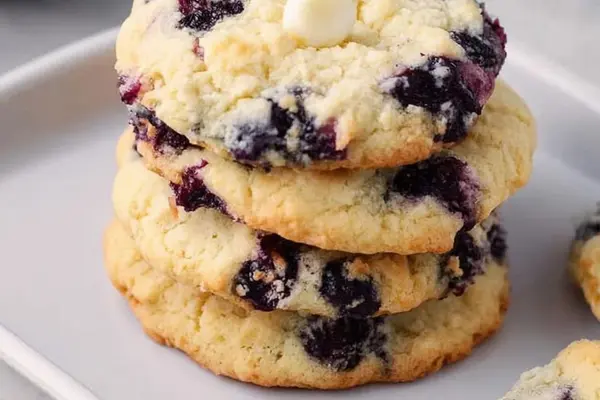
Blueberry Cheesecake Cookies
By Emma
Certified Culinary Professional
·
Recipe tested & approved
Blueberry cheesecake cookies made with cream cheese, white chocolate chips, and fresh blueberries. Soft, tender cookies with creamed butter for a perfect homemade treat.
Prep:
15 min
Cook:
17 min
Total:
32 min
Servings:
28 servings
Soft before you pull them out. That’s the thing nobody tells you about these — they look underbaked, but that’s the whole point.
Why You’ll Love These Blueberry Cheesecake Cookies
Tastes like actual cheesecake but you don’t have to bake for an hour or wait overnight. Nobody knows what’s in them. You’ll tell them, they won’t believe you. The cream cheese is invisible but it’s doing everything. Takes 32 minutes total — 15 to prep, 17 in the oven. Homemade cookies faster than frozen ones thaw. Still soft the next day. Better, maybe. Cold straight from the container hits different. Cleanup isn’t nothing, but it’s one bowl if you don’t care about getting dishes involved early.
What You Need for Blueberry Cheesecake Cookies
Flour — 2 1/4 cups. The standard kind.
Baking powder and baking soda. 1 teaspoon and 1/2 teaspoon. They work together, one leavens fast, one slow. You need both here.
Salt. 1/2 teaspoon. Balances the sweet. Doesn’t make it taste salty if you use the right amount.
Butter — 3/4 cup, soft. Not melted. Soft is the whole thing. Cold butter makes dense cookies. Melted butter makes flat cookies. Soft butter creams and holds air.
Cream cheese — 4 ounces, also soft. This is what makes them taste like cheesecake without the graham cracker base. It tangles with the sugar and creates this texture that’s almost — not quite, but almost — like biting into actual cheesecake filling.
Sugar — 1 cup granulated. Not brown. Brown sugar changes everything here.
Sour cream. 1/2 cup. Or Greek yogurt if that’s what you have. The tang matters more than which one. Sour cream’s easier.
One large egg. Binds everything. That’s it.
Vanilla extract. 1 teaspoon. Use real. Imitation changes the flavor profile in a way that makes people ask what’s different.
White chocolate chips — 3/4 cup. Or chop up a bar. Chips sometimes have stabilizers that stop them from melting totally, so they hold their shape better in the cookie. Chopped chocolate gets more integrated.
Fresh blueberries. 3/4 cup. Not frozen. Frozen ones leak color and fall apart. Fresh ones stay whole and bright.
How to Make Blueberry Cheesecake Cookies
Oven goes to 340 degrees. Maybe 345 if your oven runs cool. Line two trays with parchment or silicone mats — stops the bottoms from browning too fast and sticking. Spray if you want, but parchment handles it.
Whisk flour, baking powder, baking soda, and salt in a bowl. Just mix them thoroughly. Air gets incorporated when you whisk, stops the dough from being dense. Set it aside somewhere the mixer can’t touch it.
In the stand mixer or with a hand mixer — doesn’t matter which — put the soft butter, cream cheese, and sugar. Medium-high speed for about a minute, maybe a minute and a quarter. You’re looking for pale and smooth. No sugar granules visible. No gritty texture. Once it gets shiny and starts holding peaks, stop. You can’t un-overmix it. Overwhipped cream cheese dough loses the tender texture and gets tough.
Add the sour cream, egg, and vanilla. Medium speed, mix until it looks uniform. The sour cream brings moisture and that slight tang that makes cheesecake taste like cheesecake. The egg is the glue. Mix until there’s no streaks.
Drop to low speed. Add the dry mixture. Stir until it just combines — you want small flour clumps still visible. Overmix and you’re making tough cookies. Use a rubber spatula to finish folding if the mixer’s getting lazy. Fold in the white chocolate, gentle. Fold in the blueberries last — really gentle. You want them whole, not smashed into purple streaks.
How to Get Blueberry Cheesecake Cookies Perfectly Soft
Scoop with a tablespoon — a heaping one, or use an actual cookie scoop. Space them 2 1/2 inches apart. They spread more than you’d expect because of the cream cheese moisture. They’re not a dense dough.
Bake on the center rack for 13 to 16 minutes. You’re watching for the edges to go from pale cream to soft golden tan. The top gets matte and a few subtle cracks form. The center’s still soft — like, if you poked it, it would give. Not jiggly. Not raw. Just soft.
This is the hardest part: pulling them out before they look done. They’re still setting up. The residual heat keeps cooking them even after you pull the sheet out. Leave them in and they get cakey.
If the bottoms are browning too fast, move the rack up next batch. Oven temperature matters — some ovens lie about their temperature. A $20 oven thermometer fixes this permanently.
Leave them on the sheet for 6 to 9 minutes. Just sitting there. The edges firm up, the center stays tender. Then gently move them to a wire rack. If you do it too fast they break — they’re fragile while still warm. The parchment helps because you can pick up the parchment, let the cookie slide onto the rack slowly.
Blueberry Cheesecake Cookie Tips and Mistakes
Fresh blueberries. Always. Frozen ones burst mid-bake and turn the dough purple and wet.
Soft butter and cream cheese matter more than anything else here. Room temperature. Actually soft, not hard. Hard ones don’t cream properly and you end up with gritty dough.
Don’t overbake them. This recipe lives on the edge between underbaked and done. Underbaked is the target. If they look slightly raw on top — they’re perfect. If they look fully set — they’re already past it.
The sour cream can be replaced with Greek yogurt. The cookies come out a touch more crumbly but still work. Haven’t tried it with regular yogurt. Probably not the same.
White chocolate. Some people use milk chocolate or dark chocolate. Neither tastes right here. White chocolate’s sweetness matches the blueberry and cheesecake flavor. Dark chocolate fights it.
Blueberry Cheesecake Cookies
Prep:
15 min
Cook:
17 min
Total:
32 min
Servings:
28 servings
Ingredients
- 2 1/4 cups all-purpose flour
- 1 teaspoon baking powder
- 1/2 teaspoon baking soda
- 1/2 teaspoon salt
- 3/4 cup unsalted butter softened
- 4 ounces cream cheese softened
- 1 cup granulated sugar
- 1/2 cup sour cream (can substitute Greek yogurt)
- 1 large egg
- 1 teaspoon vanilla extract
- 3/4 cup white chocolate chips (substitute chopped white chocolate)
- 3/4 cup fresh blueberries (avoid frozen)
Method
- 1 Set oven to 340-345 degrees Fahrenheit. Line two trays with parchment. Spray lightly or use silicone mats. This keeps bottoms from overbrowning or sticking.
- 2 Whisk flour, baking powder, baking soda, and salt thoroughly. Air incorporates, stops dense dough. Set aside out of mixer reach to prevent contamination.
- 3 Cream softened butter, cream cheese, and granulated sugar in stand or hand mixer at medium-high speed for 1 to 1 1/4 minutes. Look for smooth, pale mixture, no gritty sugar bits. Avoid over-whipping once shiny peaks form or texture fades; it breaks fat emulsion.
- 4 Add sour cream, egg, and vanilla extract. Mix medium speed until just uniform. Egg aids binding, sour cream brings moisture and slight tang. Visual cue: batter should look homogeneous, thick but slightly loose.
- 5 Drop speed to low before adding dry mix. Stir flour mixture until just combined; stops gluten developing tough dough. Small clumps okay. Overmix — stiff, tough cookies. Use rubber spatula to finish if needed. Fold in chocolate chips next. Gently fold in blueberries last to keep them mostly whole, preserve shape and avoid bleeding color.
- 6 Use one tablespoon scoop or heaping tablespoon to portion dough. Leave 2 1/2 inches between mounds. They spread more than expected because of cream cheese moisture.
- 7 Bake on center rack. Look for edges shifting from pale cream to soft golden tan, tops matte, subtle cracks forming. Centers still soft but not jiggly. Check 13-16 minutes. If bottoms brown too fast, lower rack next batch.
- 8 Cool cookies on sheet 6 to 9 minutes before gently transferring to wire rack. Cooling on parchment sets edges firm but is forgiving to gently lift. Immediate transfer risks breaking fragile cookies still warm inside.
Nutritional information
Calories
178
Protein
2g
Carbs
20g
Fat
10g
Frequently Asked Questions About Blueberry Cheesecake Cookies
How long do these stay soft? Two days easy. Maybe three if you keep them in an airtight container. After that they get stale like any cookie does.
Can I freeze the dough? Yeah. Scoop it, freeze on a tray, then bag them. Bake from frozen — add 2 or 3 minutes. Actually comes out more tender that way because the centers don’t overcook while edges set.
What if I use frozen blueberries? They bleed. The dough turns purple and the blueberries fall apart during baking. You’ll still get a cookie but it won’t look like the picture and the texture’s wetter. Not worth it.
Can I make these without the cream cheese? Technically yes. But then they’re just blueberry cookies. The cream cheese is what makes them taste like the actual cheesecake filling. The whole point.
Why are mine spreading too much? Butter or cream cheese was too warm. Or you overmixed the dough. Or the oven’s running cool and they’re baking slower, so they spread longer. Check your oven temperature with a thermometer.
Do I need a stand mixer? Hand mixer works. Takes longer to cream the butter and cream cheese — maybe 2 minutes instead of 1 — but it gets there. Just takes patience.
You’ll Love These Too
Explore all →
Homemade Strawberry Syrup with Honey
Tortellini Casserole with Sausage & Pepperoni
Zucchini Boats with Ground Beef & Mozzarella
Charcuterie Board with Chorizo, Cheese & Fruit
Fruit Skewers with Pineapple & Marshmallows
Steaks Filet Mignon with Roasted Root Vegetables
Almond Joy Cookies Recipe with Coconut
Condensed Milk Fudge with Pecans
Honey Puffed Quinoa Vanilla Yogurt Bowl
Sweet Potato Cake with Walnuts & Marshmallow
Apple Pecan Sheet Cake with Caramel Sauce

Creamy Chicken Stew with Potatoes & Dill

Ground Beef Pasta Recipes with Southwestern Twist

Tteokbokki Recipe with Pork and Gochujang

Butternut Squash Fritters with Couscous

Pierogi Kielbasa Bake with Cheddar
Grilled Butter Fries with Melted Cheddar

Pimento Cheese Appetizers with Bacon

Cheesy Garlic Meatball Bites with Pizza Dough