Blood Orange Chiffon Cake with Cardamom
By Emma
Certified Culinary Professional
·
Recipe tested & approved
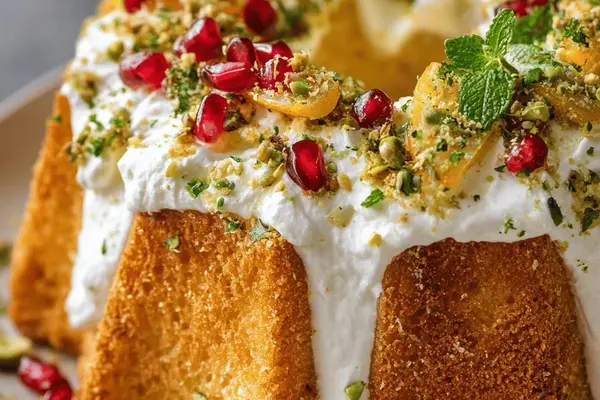
Fluffy blood orange chiffon cake made with fresh zest, juice, olive oil and cardamom. Whipped egg whites create an airy crumb topped with blood orange Chantilly cream, pistachios and pomegranate.
Prep:
35 min
Cook:
50 min
Total:
1h 25min
Servings:
10 servings
Two blood oranges at room temp. Separate the eggs while you’re thinking about it. This cake doesn’t happen fast, but it happens clean—one bowl for whites, one for yolks, and the whole thing balanced on air and cardamom and the faint scent of olive oil browning just slightly.
Why You’ll Love This Blood Orange Chiffon Cake
Tastes lighter than it looks. Olive oil keeps it from feeling heavy, and the citrus cuts through everything so you can eat a whole slice and still want more.
No mixer required—the meringue works with a whisk and patience. Takes maybe 8 minutes of actual work. Your arm gets tired. Worth it.
Cardamom’s doing something here. Not obvious. Just makes the blood orange taste more like itself.
Cold cream piped on top. The contrast between airy cake and stiff chantilly matters. One’s fluffy, one’s dense. They shouldn’t work together but they do.
Pomegranate arils burst. Pistachios crunch. It’s a vegetarian dessert that feels like it took actual effort, and then you realize the only fancy thing was separating eggs and not deflating them.
What You Need for Blood Orange Chiffon Cake
All-purpose flour—unbleached. One cup. That’s it.
Two blood oranges. Wash them. You’re using both the zest and juice, so they need to be clean. The juice should give you about a third of a cup. If it doesn’t, get a third orange.
Eggs. Six large. Room temperature matters. Cold whites won’t whip properly. Let them sit on the counter while you prep everything else.
Light brown sugar. A cup and a quarter, divided in half. One half goes into the meringue, one half goes into the yolks. Don’t mix this up.
Olive oil. Extra virgin. Half a cup. It browns faster than neutral oil, so the oven temp is lower than a normal cake. This isn’t a flaw. It’s the point.
Cream of tartar. A half teaspoon. Stabilizes the whites so they don’t collapse halfway through baking.
Vanilla extract. Baking powder. Salt. Cardamom pods—grind them fresh if you have them. Store-bought works.
For the cream: two cups of heavy cream, cold. A third of a cup of sugar. One more blood orange for zest and segments.
Pistachios. Pomegranate arils. Just for the top.
How to Make Blood Orange Chiffon Cake
Heat the oven to 320°F. Middle rack. Lower than normal because olive oil browns too fast and the edges get dark while the center’s still underbaked. It’ll look slow. It’s not.
Sift the flour, baking powder, cardamom, and salt together. Multiple times if you want—even distribution means the spice won’t clump. Keep it close to where you’re working.
Separate the eggs carefully. Whites go in a large metal bowl. No yolk anywhere near them. One speck of yolk and the whites won’t whip. Not because they’re delicate—because egg yolk has fat, and fat breaks foam. Yolks go in a separate bowl.
Add cream of tartar to the whites. Start whipping slow. The foam builds gradually. Don’t rush. Once it’s foamy all over—takes maybe 3 minutes—start adding half the brown sugar slowly. Keep whipping. This takes time. The whites should look glossy and thick, holding stiff peaks without drooping. Don’t overbeat—it gets grainy and weird.
Whisk the yolks with the remaining brown sugar. Whisk until thick and pale. Add the blood orange zest, juice, olive oil, and vanilla. Whisk until smooth. The color shifts from yellow to something warmer. That’s the citrus doing its thing.
Fold the dry ingredients into the yolk mixture. Use a rubber spatula. Fold from the bottom up, not stirring. This takes maybe 20 turns. Until you can’t see the flour streaks.
Take about a third of the meringue. Fold it into the yolk batter. Be gentle. This batch loosens the whole thing so you can fold the rest without destroying the air bubbles.
Fold in the remaining meringue in two batches. Slow, careful turns from the bottom. Lift and fold. The streaks of white disappear. When you see just a few white streaks left, stop. Overmixing sinks the cake. It happens. Don’t.
Pour into an ungreased 10-inch angel food pan. No oil. No parchment. The batter needs to cling to the sides while baking or it won’t rise properly.
Bake 50-55 minutes. The top should spring back slightly when you touch it. A toothpick in the center comes out clean or with just a few moist crumbs clinging. It’s golden. Smells done before it looks done.
How to Get Blood Orange Chiffon Cake Fluffy and Tall
Immediately flip the pan upside down onto a cooling rack or the neck of a bottle. Gravity is holding the cake up while it cools. This is non-negotiable. If you don’t do this, the cake collapses as it cools. You’ll end up with something dense. It won’t be a chiffon cake anymore.
Let it hang there for at least two and a half hours. Probably closer to three. The cake’s backbone forms as it cools upside down. This isn’t rushing. This is patience paying off in texture.
Once it’s fully cool, run a thin knife blade around the sides. Wiggle gently. It’ll release. If it’s stuck, a kitchen torch warming the metal or a warm towel helps—don’t force it.
Blood Orange Chiffon Cake Tips and Common Mistakes
Egg temperature matters more than it sounds. Whites whip faster at room temp. Yolks fold better at room temp. Cold eggs fight you.
If the meringue weeps—and sometimes it does—you either added the sugar too fast or didn’t use enough cream of tartar. Next time, add the sugar gradually and check the cream of tartar measurement. It’s small but it matters.
The oven temp is 320°F because olive oil browns quicker than neutral oil. If you use canola instead, the cake won’t brown as fast, so you might need a higher temp. Either way, watch it. Every oven runs hot or cold.
Cardamom’s optional, but it’s doing something. It makes the blood orange brighter. If you don’t have it, cinnamon works but it’s different—warmer, less sharp. Omit it entirely and the cake’s fine, just less interesting.
Crack the top? That usually means the batter got overmixed or the oven was too hot. Learn your oven. Every one’s different.
The chantilly cream needs to be cold. Use a cold bowl, cold whisk, cold cream. Whip until it’s stiff but still has some bounce. Overbeaten, it breaks and gets grainy. Underbeaten, it’s runny. You feel it with your arm—the moment it goes from silky to stiff.
The pomegranate arils and pistachios aren’t just for looks. The tartness of the arils, the crunch of the pistachios—they’re fighting the sweetness and richness of the cream. Don’t overload it. A handful of arils, a scatter of nuts. Balance matters.
Blood Orange Chiffon Cake with Cardamom
Prep:
35 min
Cook:
50 min
Total:
1h 25min
Servings:
10 servings
Ingredients
- Blood Orange Chiffon Cake
- 133 g (1 cup) all-purpose flour unbleached
- 5 ml (1 teaspoon) baking powder
- 1 ml (1/4 teaspoon) salt
- 6 large eggs at room temp separated
- 2.5 ml (1/2 teaspoon) cream of tartar
- 260 g (1 1/4 cup) light brown sugar divided
- 2 blood oranges well washed, zest finely grated and juice extracted (85 ml / 1/3 cup)
- 125 ml (1/2 cup) extra virgin olive oil
- 5 ml (1 teaspoon) pure vanilla extract
- 2.5 ml (1/2 teaspoon) freshly ground cardamom pods powder
- Blood Orange Chantilly
- 1 blood orange, washed
- 500 ml (2 cups) heavy cream 35%
- 90 g (1/3 cup +1 tablespoon) granulated sugar
- Decoration
- 3 pistachios roughly chopped
- A handful of pomegranate arils
Method
- Preparation
- 1 Heat oven. Middle rack at 160 °C (320 °F). Lower temp slightly. Reason? Olive oil brown quicker, prevent overcooked edges.
- 2 Sift flour, baking powder, cardamom powder, and salt into a bowl. Keep close. This dry mix ensures even lift and spice distribution.
- 3 Separate eggs carefully: whites in large, clean metal bowl — no yolk allowed; yolks in separate bowl. At room temp, whites will whip better; cold whites resist volume.
- 4 Add cream of tartar to whites. Start whipping slow, gradually increasing speed as foam forms.
- 5 Add 130 g (half) of the brown sugar slowly once soft peaks appear. Keep whipping till stiff, glossy peaks form. Meringue glistens, holds shape without drooping. If overbeaten, looks grainy, breaks apart — no good.
- 6 In separate bowl, whisk yolks with remaining 130 g sugar till thick, pale. Add zest, juice of blood oranges, olive oil, and vanilla. Whisk smooth. Olive oil gives richer flavor than neutral canola; subtle fruitiness.
- 7 Fold dry ingredients gently into yolk mix using rubber spatula, careful not to deflate.
- 8 Take about 1/3 of the meringue, fold into yolk batter to lighten it. Be gentle—lift and fold from bottom up. Pass over the bowl edges slowly.
- 9 Fold in remaining meringue in two batches, with gentle, slow turns. Overmix and cake sinks; undermix leaves lumps.
- 10 Pour batter into ungreased 25 cm (10 inch) angel food pan — no oil or parchment. The batter clings and climbs while baking, helps rise.
- 11 Bake 50-55 minutes until top springs back slightly when touched, and toothpick inserted in center comes out clean or with a few moist crumbs adhering. The crisp top, slight golden hue, but no dryness.
- 12 Immediately invert pan onto cooling rack or bottle neck. Gravity prevents collapse, allows maximum air.
- 13 Let cool at least 2.5-3 hours fully. Backbone of chiffon comes as cake cools hanging upside down. Patience pays.
- 14 Run thin knife blade between pan and cake to loosen gently. Out it comes. If stuck, wiggle carefully or briefly warm sides with kitchen torch or warm towel.
- Chantilly and Segments
- 15 Zest finely half orange and reserve separately. Use zester or microplane only for fine aromatic oils.
- 16 On other half, zest longer strips with peeler, keep for decoration.
- 17 Slice ends off the orange to create flat bases. Place flat on cutting board. With a sharp paring knife, remove skin and white pith as close as possible to flesh. No bitter membrane left.
- 18 Hold orange, cut Supreme segments between membranes. Juicy slivers perfect for topping.
- 19 Use chilled bowl and whisk, whip 500 ml cold cream with 90 g sugar and fine orange zest.
- 20 Whip till soft peaks form — quite firm but still creamy. Overbeating? Clumpy, starts breaking. Underbeat? Runny. Perfect balance is silky stiff peaks with some bounce.
- 21 Transfer stuffed cream into piping bag fitted with Saint-Honoré tip or star if unavailable.
- Assembly
- 22 Pipe cream over cake top, starting center, moving outward in gentle waves or loops — rhythm matters for appearance.
- 23 Sprinkle chopped pistachios finely atop chantilly. Use fingers, press lightly in so they stick.
- 24 Scatter pomegranate arils sparingly for juicy burst and color contrast.
- 25 Arrange blood orange supremes and long zest strips artistically. Balance visual, flavor, texture lines.
- 26 Serve at room temp or lightly chilled. Watch cream soften but cake stays airy.
- Tips & Tricks
- 27 Egg temperature: whites whip best at room temp; separate eggs cold, then warm yolks & whites individually for best volume.
- 28 If meringue weeps liquid, sugar possibly added too fast or too little cream of tartar. Check sugar distribution carefully.
- 29 No angel food pan? Tube pan ungreased OK; otherwise grease slightly but texture varies.
- 30 Olive oil delivers depth. If using canola, add a pinch more zest to punch flavor back.
- 31 Cardamom: subtle spice, optional but adds warmth against citrus. Replace with cinnamon for sweeter notes.
- 32 Cake shrinks? Underbaking or premature unmolding. Don’t rush.
- 33 Chantilly: Use cold enough cream and bowl; beat signals you know by texture, not time. Add zest late to preserve oils.
- 34 Pomegranate and pistachios for crunch and tartness -- keep balance, too much overwhelms delicate layers.
- 35 If cake cracks on top, batter overmixed or oven temp too high. Adjust and learn your oven quirks.
- 36 Use toothpick or skewer test, but mainly look for slight golden domed top, springy texture to fingers.
- 37 Cooling upside down is non-negotiable—skip it and cake falls flat, dense.
- 38 Try folding meringue with chopsticks for gentler control.
- 39 Serve in slices that show bright red-orange segments and crunchy bits. Texture contrast is everything.
Nutritional information
Calories
320
Protein
6g
Carbs
37g
Fat
18g
Frequently Asked Questions About Blood Orange Chiffon Cake
Can I make this cake a day ahead? Yeah. Bake it, cool it fully, store it in an airtight container. Don’t frost it until a few hours before serving or the cream soaks in and gets watery. Actually, the cake’s better the next day—the flavors settle.
What if I don’t have an angel food pan? A tube pan works ungreased. The texture won’t be quite the same, but it’ll be close. If you use anything else, you might need to grease it slightly, which changes how the cake climbs the sides. Not ideal, but it works.
Can I use regular oranges instead of blood oranges? Sure. You’ll lose the color, lose some of that deep tartness, but the cake still works. The flavor won’t be as complex. Blood oranges have something going on. If you’re making this, they’re worth getting.
Why does the cake need to cool upside down? Because as it cools, chiffon cakes naturally want to contract and collapse. Hanging upside down uses gravity to keep the structure tall and airy. Skip this and you get a dense, flat cake. Doesn’t happen.
Can I swap the olive oil for vegetable oil? Vegetable oil or canola works, but the cake loses depth. Olive oil adds something subtle—richness, slight fruity notes. It’s not the same. If you use neutral oil, bump up the zest a little.
What does cream of tartar actually do? Stabilizes the egg whites so they hold air longer and don’t weep. You could use lemon juice or white vinegar instead—a quarter teaspoon replaces the cream of tartar. Not exact, but close enough.
How do I know if the cake is fully baked? Toothpick test, mostly. It comes out clean or with just a few moist crumbs stuck. The top should be golden, springy to the touch. Don’t rely on time—ovens vary too much. Watch the cake, not the clock.
Can I make the chantilly cream ahead? Make it no more than a couple hours before serving. It lasts, but the texture gets grainy and separated if you wait too long. Whip it, pipe it, serve it.
Is this cake actually vegetarian? Yeah. Eggs and dairy. No meat, no gelatin, nothing hidden. The vegetarian part’s straightforward.
You’ll Love These Too
Explore all →
Slow Cooker Chili with Ground Beef
Citrus Syrup with Ginger and Lemon Peel
Coconut Walnut Logs with Chocolate
Almond White Blondies with Coconut Oil
Slow Cooker Apple Balsamic Chicken
Autumn Fruit Salad with Apples, Grapes & Honey
Lemon Bars with Cake Mix & Oats
Ham Pimiento Cheese Sandwich Baked
French Dip Slow Cooker Recipe
Rotini Tuna Avocado Salad with Lemon
Chicken Salad with Avocado and Basil Pesto
Mini Chicken Caesar Bites with Pancetta
Slow Braised Pork Chops with Caramelized Onions
Braised Rabbit Pappardelle with White Wine
Herbed Cheese Pull-Apart Bread Recipe
Homemade Marshmallows Recipe with Honey
Roasted Broccoli Dishes with Garlic & Honey
French Onion Dip Recipe with Smoked Paprika
Butter Sauce with White Wine and Lime