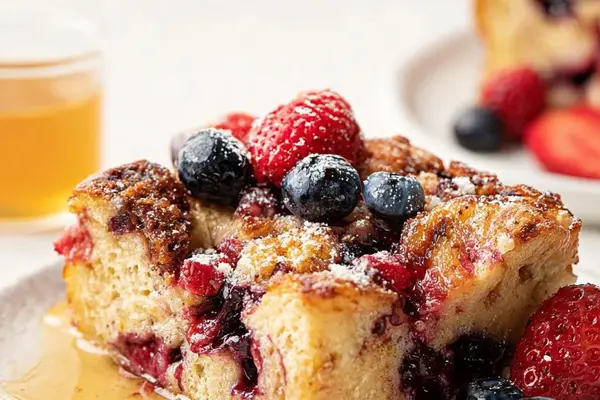
French Toast Bake With Blueberries
By Emma
Certified Culinary Professional
·
Recipe tested & approved
Easy french toast bake with eggs, milk, blueberries, and strawberries. Make ahead overnight, then bake until golden for a crowd-pleasing breakfast casserole.
Prep:
20 min
Cook:
50 min
Total:
5h 10min
Servings:
8 servings
Tear the bread into pieces first. Don’t overthink it—2 inches, rough chunks, doesn’t matter if they’re perfect. You need air pockets or the whole thing gets dense. The streusel has to chill for an hour minimum, which means this isn’t a quick weekend breakfast. It’s a plan-ahead thing. But that’s the point.
Why You’ll Love This Blueberry French Toast Casserole
Doesn’t hit the pan until morning. Do the work the night before—20 minutes of actual effort—then sleep. Wake up, sprinkle the cold streusel on top, bake 50 minutes while you drink coffee.
One vegetarian breakfast that actually fills people. Eggs do that.
The blueberries don’t cook into mush. They stay distinct. Tart. Like little pockets of actual fruit, not fruit sauce that happened to a casserole.
Cinnamon and vanilla are baked all the way through. Not just a surface thing. The custard carries it.
Leftovers taste better the next day. Seriously. The flavors settle. Toast them again—five minutes in a warm oven—and the streusel crisps back up.
What You Need for Blueberry French Toast Casserole
Flour, brown sugar, cinnamon. That’s your streusel base. Cold butter cut in—use your fingertips, not a mixer. You want clumps, not powder. Those clumps brown and get crispy.
Nine eggs. Not eight, not ten. The ratio matters for the soak.
Whole milk. Three cups. Don’t use skim. It tastes thin.
Vanilla extract. Real vanilla. The fake stuff gets bitter when it bakes for 50 minutes.
Salt twice. Once in the streusel, once in the custard. Sounds redundant. It’s not.
Granulated sugar in the custard. Brown sugar in the streusel. Different jobs, different things.
French bread torn into pieces. Not sliced. Torn. The irregular edges catch the custard better. About 12 cups torn from one loaf. Stale bread works—actually works better. Doesn’t turn to mush.
Blueberries. Fresh. Don’t use frozen unless you thaw them first, or they bleed into everything and turn the custard purple.
Strawberries too, diced small. They soften the berry tartness, keep it from being one-note. Or swap them for blackberries. Or don’t use them at all.
How to Make a Blueberry French Toast Casserole Overnight
Start with the streusel because it needs to chill. Flour, brown sugar, three-quarters teaspoon cinnamon, salt—mix it in a bowl. Cut cold butter into it using your fingertips. You’re pressing the butter into the flour, breaking it into smaller and smaller pieces until it looks like wet sand with clumps in it. Cover it. Chill it. Minimum one hour. You can do this the day before and leave it overnight if you want.
Then the custard. Eggs, milk, vanilla extract, half a teaspoon cinnamon, half a teaspoon salt, granulated sugar. Whisk it like you mean it. The eggs need to break up completely. The custard should smell warm and spiced. Taste it and adjust salt if you need to, but go easy—the bread soaks up everything, and oversalt is harder to fix than undersalt.
How to Get the Custard to Soak Right
Spray the baking dish. Use nonstick spray or butter. Don’t skip this. Toast gets stuck and burned-on is a disaster.
Tear the bread into 2-inch pieces. Spread them evenly in the dish. Don’t press them down hard. You need space between pieces so the custard gets everywhere, not just on top.
Pour the custard over slowly. Watch it sink. All the bread pieces should be wet. Some will float for a second, then sink. Press them down gently with a spatula if there are dry spots. You want every piece touching custard.
Scatter the blueberries and strawberries on top. Even. Not clumped in one corner.
Wrap it tight. Plastic wrap or foil. The fridge. Four to six hours minimum, or overnight. The bread swells and softens and becomes almost pudding-like. This is when the magic happens. Less than four hours and you get dry patches. More than overnight and it starts to get mushy on the edges, but it still works.
Blueberry French Toast Casserole Tips and Common Mistakes
Preheat to 340°F, not 350°F. One number lower sounds like nothing. It’s the difference between golden streusel and burned streusel. The center stays softer. More even.
The streusel needs to be cold when it hits the oven. If it’s warm, it melts too fast and goes into the custard instead of staying on top. Chill it. Actually chill it.
Sprinkle it evenly. Don’t dump it all in one spot. No bare patches, no clumps. It should look like sandy topping everywhere.
Bake for 50 minutes. The surface springs back when you touch it. The edges puff and brown. The center should barely jiggle when you move the pan. Don’t rely on a toothpick—it’s custard, so it’ll never come out dry. Look at the texture instead.
If the top browns too fast, drape foil over it loosely for the last ten minutes. Oven heat is weird. Some run hot. Watch the color, not just the timer.
Rest it 15 minutes after it comes out. Don’t dig in right away. The custard sets up more. Everything tastes better when it’s not steaming.
Cinnamon in the custard is subtle. Some people add extra cinnamon on top after it bakes, like a finishing dust. Personal thing.
Blueberry and cream cheese French toast casserole is another angle—dot the top with cream cheese before baking. Never tried it. Might work.
Strawberries soften. Blueberries stay firm. That’s the trade-off. Raspberries are similar to blueberries—tart, hold their shape. Blackberries go somewhere in between.
Leftovers last three days covered in the fridge. Reheat in a warm oven, not the microwave. Five minutes at 325°F and the streusel crisps again. Microwave turns it soggy.
Overnight blueberry French toast casserole is basically this—you’re just doing the sleep-and-bake method, which is the whole point.
French Toast Bake With Blueberries
Prep:
20 min
Cook:
50 min
Total:
5h 10min
Servings:
8 servings
Ingredients
- 1 cup all-purpose flour
- 1/3 cup packed brown sugar
- 3/4 teaspoon ground cinnamon
- 1/4 teaspoon salt
- 1/3 cup unsalted butter chilled
- 9 large eggs
- 3 cups whole milk
- 1 tablespoon pure vanilla extract
- 1/2 teaspoon cinnamon
- 1/2 teaspoon salt
- 1/3 cup granulated sugar
- 1 loaf French bread torn into pieces (about 12 cups)
- 1 cup diced fresh strawberries
- 1 cup fresh blueberries
Method
- Streusel
- 1 Combine flour, brown sugar, 3/4 teaspoon cinnamon, and salt in medium bowl. Use fingertips to cut cold butter into mixture until crumbly clumps form. Chill streusel covered for at least 1 hour or until firmer; this prevents melting too fast in oven.
- Custard Mix
- 2 In large bowl, vigorously whisk eggs, milk, vanilla, 1/2 teaspoon cinnamon, 1/2 teaspoon salt, and sugar until uniform with no streaks. Notice mixture thickens slightly and smells warmly spiced; season carefully as bread will absorb.
- Assembly
- 3 Spray 9×13 baking dish liberally with nonstick spray or grease with butter to prevent sticking; toast buildup is disaster otherwise.
- 4 Tear French bread into pieces roughly 2 inches. Distribute evenly in pan, pressing gently but do not compact; air pockets help soak custard.
- 5 Pour custard mixture evenly over bread. Important: all pieces must be fully moistened. Press bread lightly to push down, exposing dry pockets.
- 6 Scatter diced strawberries and blueberries evenly on top of soaked bread; fresh berries add subtle acidity and juiciness. Optional twist: replace strawberries with blackberries or use frozen thawed raspberries for tartness.
- 7 Cover tightly with plastic wrap or foil. Refrigerate 4 to 6 hours or overnight to allow bread to fully soak – timing affects texture significantly. Avoid less than 4 hours or you’ll get dry patches.
- Baking
- 8 Preheat oven to 340°F (reduce 10 degrees from typical 350°F for better even cooking). Streusel should still feel cold before sprinkling.
- 9 Sprinkle chilled streusel evenly over casserole top. Distribute well; no clumps, no bare spots. This forms crisp crust.
- 10 Bake uncovered for about 50 minutes until surface is golden and set. Surface springs back lightly when pressed; no jiggle at center. Internal edges may be puffed and slightly browned; this means custard is cooked through.
- 11 If crust browns too fast, loosely tent foil for last 10 minutes. Oven variability common; watch for crust color, not just time.
- 12 Remove from oven; rest 15 minutes. Cooling helps custard finish setting and flavors meld. Serve warm with powdered sugar dusted or maple syrup drizzled over top.
- 13 Leftovers store covered refrigerated up to 3 days. Reheat gently in oven to restore crispness. Avoid microwave reheating unless saucy syrup is desired.
- 14 Substitute challah or brioche bread for richer flavor and softer crumb. Whole milk can be swapped for half and half for creamier result but adjust sugar down slightly to avoid oversweet.
- 15 If streusel is too buttery and melts into casserole, chill butter longer before cutting and chill crumble well before baking. Also use cold baking dish if possible.
- 16 Watch custard soak visually; bread should look puffed and soft, almost pudding-like before placing berries.
- 17 Customary mistake: not covering soak letting bread crust dry out. Wrap tightly to trap moisture.
- 18 I usually keep some extra cinnamon in final dusting to add aroma rather than mix into custard; personal touch after baking.
Nutritional information
Calories
320
Protein
9g
Carbs
38g
Fat
15g
Frequently Asked Questions About Blueberry French Toast Casserole Recipe
Can I make this without the cream cheese? Yeah. This version doesn’t have it. You don’t need it. The custard is rich enough.
How far ahead can I prep this? Make the streusel the day before. It actually prefers sitting. Soak the bread overnight. Don’t go longer than that—the bottom gets soggy and weird after about 18 hours.
What if I use frozen blueberries? Thaw them first. Otherwise they release juice and everything turns purple. Defeat the whole thing.
Can I double it? Use two 9x13 pans. Same recipe, just doubled amounts. Stack them in the oven if you need to, but stagger the time by maybe five minutes on the top one.
How do I know when the custard is actually cooked through? Press the center lightly. It should bounce back instead of jiggling. The edges get puffed and brown. The top springs back. That’s how you know.
What bread works besides French bread? Challah is better—richer, softer crumb. Brioche works. Even regular sandwich bread works, but it gets mushier. Don’t use sourdough. Too sour.
Can I make this the morning of? Minimum four hours soak. So if you’re making it in the morning, you’re eating it for dinner. Not ideal. The overnight method exists for a reason.
You’ll Love These Too
Explore all →
Condensed Milk Fudge with Pecans

Pear Ricotta Blue Canapés Recipe

Marinated Italian Eggplants with Garlic

Blue Lagoon Cocktail Recipe

Shrimp in Coconut Curry with Eggplant
Cheesy Zucchini Casserole with Cracker Crust

Creamy Garlic Chicken with Bacon & Peas

Greek Yogurt Breakfast with Carrot Jam
Lemon Poppy Seed Muffins with Coconut Oil
Coconut Cream Pie with Toasted Coconut Flakes
Crispy Air Fryer Corn on the Cob

BBQ Chicken Quesadillas with Pineapple
Caramel Popcorn Cake with Peanut Chocolate
Beef Pasta with Beets and Gorgonzola
Cream Cheese Frosting with Mascarpone
Rustic Onion Gratinée with Sherry

Mini Crab Sliders with Sriracha Mayo

Asparagus Pea Puff Tart with Herb Spread

Cornbread Salad with Chickpeas & Bacon