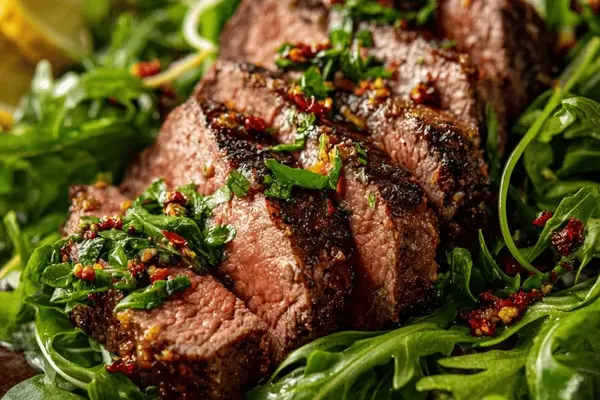
Beef Tataki with Harissa & Rice Vinegar
By Emma
Certified Culinary Professional
·
Recipe tested & approved
Beef tenderloin hits the pan for maybe four minutes. That’s it. The inside stays raw, the outside goes dark and crispy, and then the whole thing sits in a bath of ginger, lemongrass, harissa, and citrus soy that pulls everything together overnight. Cold slices on greens with a tangy aioli that shouldn’t work but absolutely does.
Why You’ll Love This Asian Beef Appetizer
Feels fancy. Takes 25 minutes of actual work if you count the marinade. The searing part is four minutes — literally just listen for the sizzle and stop.
Harissa without being loud about it. The spicy beef tataki sits in the back of your mouth, doesn’t overpower. Green onions in the marinade, ginger, lemongrass — it’s layered. Not one-note.
Works cold. Tastes better the next day. Overnight in the marinade means the beef gets these citrus and soy flavors all the way through, not just the surface.
Citrus from the rice vinegar and lemongrass doing the work — no actual lemon or lime needed. Just acidity and brightness. The mayo cuts through it. Doesn’t feel heavy even though it’s beef.
What You Need for Spicy Beef Tataki with Harissa
Beef tenderloin. 350 grams. The expensive cut, but four minutes means you’re not wasting it on heat time. Nothing else works — sirloin gets too chewy, ribeye’s too fatty when it’s raw.
Rice vinegar. Not white vinegar. Rounder, less sharp. Makes the citrus soy marinade actually balanced.
Ginger. Fresh. Finely grated. Ground ginger’s dead here.
Lemongrass. Chopped fine. If you can’t find it, don’t substitute with lemon juice. The flavor’s totally different. Just use more ginger.
Harissa paste. A teaspoon. Not hot sauce. The paste disperses better. Gives you that spicy beef edge without heat that screams.
Soy sauce. Regular. Not low-sodium.
Green onions. Sliced thin. Gets into the marinade and also works as garnish later if you want.
Mayonnaise and olive oil for the sear and the aioli. Arugula or baby kale underneath — bitter keeps the richness in check.
How to Make Spicy Beef Tataki with Harissa
Mix the marinade first. Green onions, rice vinegar, soy sauce, ginger, lemongrass, harissa — all into a bowl or a bag. Stir until the harissa breaks up and isn’t clumpy anymore. Takes maybe two minutes. Set it aside.
Get your pan hot. Really hot. Heavy skillet on high. You want it shimmering before you touch it with oil. This is where the crust happens.
Olive oil goes in and swirls around. Beef hits the pan immediately after. All sides quick — the goal is a deep brown crust, not cooking the middle. Four minutes total. You’ll hear it sizzle. That’s correct. You want noise. Not smoke, just aggressive sizzle.
Pull it out. Let it sit on a plate at room temperature for five minutes. Carryover cooking stops. Juices settle back in instead of running all over when you slice.
Submerge the whole thing in the marinade. Make sure it’s covered. Refrigerate. Five hours minimum. Overnight’s better — the beef gets these flavors deep, not just on the surface.
How to Get the Beef Perfectly Seared and Sliced
The sear matters because you want that crust-raw contrast. It’s the whole thing. Pan hits high heat, oil shimmers, beef goes in and doesn’t move. Four minutes. Don’t flip constantly. Just once or twice. You’re building a shell, not cooking through.
When it comes out, it’ll look rare in the center. That’s not a mistake. That’s the point.
Rest it. Five minutes sounds short but it’s real. The heat distributes. The meat relaxes. You’re not getting a puddle of juice leaking everywhere when you slice.
Strain the marinade after it’s been in there for hours. Get the solids out — green onions, lemongrass pieces. Keep the clear liquid. Mix 30 ml of that with mayonnaise. It makes an aioli that’s tangy and bright but not acidic enough to make your face twist.
Slice thin. Sharp knife. Across the grain. This ensures the beef isn’t chewy. You want slices that fall apart a little when you touch them, not ones you have to saw through.
Arrange on the greens. Drizzle with aioli. That’s it.
Beef Tataki Tips and Common Mistakes
Don’t skip the rest time. I know four minutes seems short but carryover cooking is real. If you go straight from pan to marinade, the middle keeps cooking and you lose that raw center that makes this work.
The harissa paste needs breaking up. If you just dump it in, you get pockets of spice. Mix it until it’s dispersed. It should look uniform.
Slice when it’s cold. Take it straight from the fridge. Cold beef slices cleaner and thinner. You’re not trying to cut warm meat that’s soft.
Don’t overcomplicate the garnish. Sesame seeds if you want texture. Extra green onions if the knife work didn’t bother you. It doesn’t need anything else.
Mayo ratio matters. 30 ml of reserved marinade to 40 ml mayo. More marinade and it breaks. Less and it’s too thick. This ratio stays.
Beef Tataki with Harissa & Rice Vinegar
Prep:
25 min
Cook:
4 min
Total:
29 min
Servings:
2 main plates or 4 appetizers
Ingredients
- Marinade
- 2 green onions thinly sliced
- 50 ml (about 3 tablespoons plus 1 teaspoon) rice vinegar
- 25 ml (1 tablespoon plus 2 teaspoons) soy sauce
- 15 ml (1 tablespoon) finely grated fresh ginger
- 15 ml (1 tablespoon) finely chopped lemongrass
- 5 ml (1 teaspoon) harissa paste
- Tataki
- 1 piece of about 350 g (12 oz) beef tenderloin
- 25 ml (1 tablespoon plus 2 teaspoons) olive oil
- 40 ml (just under 3 tablespoons) mayonnaise
- Fresh arugula or baby kale leaves
Method
- Marinade
- 1 Mix green onions, rice vinegar, soy sauce, ginger, lemongrass, and harissa in a glass bowl or a sealable plastic bag. Stir well to break up the harissa paste so it disperses.
- Tataki
- 2 Heat a heavy skillet on high flame until it's shimmering hot. Add olive oil and swirl. Sear beef tenderloin on all sides quickly. Look for a deep brown crust forming; it should sizzle loudly but not smoke excessively—usually 3 to 4 minutes total. Don't cook through; the inside stays raw.
- 3 Rest the meat at room temp about 5 minutes—juices settle, and carryover cooking stops. Then submerge it in marinade. Coat the meat well, cover, refrigerate at least 5 hours, ideally overnight for max infusion.
- 4 When ready, remove meat. Strain marinade to remove solids. Reserve clear liquid.
- 5 Mix mayonnaise with 30 ml of the reserved marinade to make a tangy aioli. Stir till smooth.
- 6 Using a sharp knife, slice the beef thinly across the grain—this ensures tenderness and precise texture. Arrange slices on plates atop fresh arugula or baby kale.
- 7 Drizzle with the aioli. Optionally, garnish with extra green onions or sesame seeds for texture and aroma.
Nutritional information
Calories
320
Protein
28g
Carbs
4g
Fat
23g
Frequently Asked Questions About Beef Tataki with Rice Vinegar and Lemongrass
Can I use a different cut of beef? Tenderloin’s the move because it’s tender raw. Ribeye’s too marbled. Sirloin gets stringy. Could try strip steak but it’s not the same texture. Doesn’t matter how good the cut is if it doesn’t slice clean when it’s barely cooked.
What if I can’t find lemongrass? Don’t swap it for lemon juice. The flavor’s completely different. Use more ginger instead. Or honestly just skip it and lean into the harissa and ginger. The marinade still works.
How long does it keep in the fridge? Three days max in the marinade. After that it gets soft. The acid breaks the protein down too far. Still tastes fine but texture’s gone.
Can I make this ahead? Yes. That’s kind of the point. Make it in the morning, eat it at night. Or make it two days before. Slice it cold right before serving.
Does the beef need to be room temperature before searing? Doesn’t have to be. Cold beef just takes maybe 30 seconds longer. Room temp sears faster. Either way four minutes total, so not a big difference.
What’s the harissa paste doing here? Heat without shouting. It’s spicy but also complex. Sits in the back. If you like it spicier, go to a teaspoon and a quarter. If you like it milder, half a teaspoon works but you lose something.
Can I cook the beef all the way through? You could. But you’re making beef tataki wrong at that point. The whole thing is the raw center against the seared crust. If you want cooked beef, just make a different appetizer.
You’ll Love These Too
Explore all →
Crunchy Cocoa Bites with Hazelnuts

Butternut Squash Tart with Goat Cheese

Corn Casserole Dish with Creamed Corn

Pineapple Cilantro Slaw with Creamy Mayo

Easy Beef Wellington with Mushroom Duxelles
Chicken Thighs With Onion Jam and Pancetta

Cookie Recipe Cake Mix Orange Frosting
Beef Burger with Smoked Cheddar & Chipotle

Gluten-Free Tuna Fritters with Corn Masa

Hot Crab Dip with Mascarpone & Lemon
Autumn Roasted Vegetables with Pear
Cold Rotini Salad with Mozzarella & Pepperoni
Cajun Chicken Pasta with Shrimp & Andouille
Black Bean Brownies with Apple Butter
Simple Fudge Recipe with Condensed Milk

Double Ginger Crunch Cookies with Cardamom

Egg Turkish with Delicata Squash & Goat Cheese

No Bake Cheesecake with Chocolate Ganache
Meatball for Spaghetti Recipe with Italian Sausage