Autumn Roasted Vegetables with Pear
By Emma Kitchen
Certified Culinary Professional
·
Recipe tested & approved
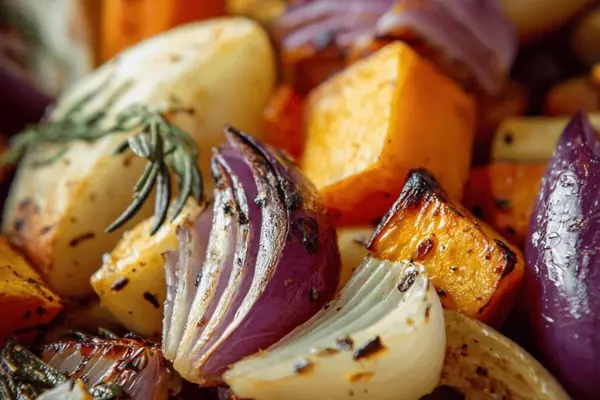
Roasted butternut squash, fennel, and red onions tossed with fresh pear. Dressed in apple juice and cider vinegar for a bright, seasonal side dish.
Prep:
15 min
Cook:
30 min
Total:
45 min
Servings:
8 servings
Oven to 220°C. Butternut squash, fennel, red onion on a sheet. Thirty minutes and you’ve got fall on a plate.
Why You’ll Love This Autumn Roasted Vegetables Recipe
Takes 45 minutes total — 15 to cut, 30 in the oven, done. It’s vegetarian but doesn’t taste like you’re missing anything. The squash gets actually sweet. Fennel goes soft and kind of licorice-y in a way that works. Tastes better the next day. Way better. The apple cider vinegar soaks in overnight and everything gets more itself somehow. Cold or warm. Works either way. Throw it in lunch bowls, eat it at dinner, just sits there fine on the counter. One pan. Roasted vegetables mean zero cleanup beyond rinsing a sheet.
What You Need for Roasted Butternut Squash and Fennel
Butternut squash. The 800g one. Peeled and cubed — your knife will hate you for a minute, then it’s done.
Fennel bulb. Sliced into wedges. The fronds go on top at the end. Don’t throw them away.
Red onions. Two of them, quartered. Not white. Red ones stay kind of firm and they taste sweeter when roasted.
Garlic. Two cloves, minced. Just a whisper of it. Not the main thing.
Olive oil. Three tablespoons. That’s enough to get everything glossy without making it greasy.
A pear. Ripe. Sliced thin. Goes in after roasting — the warmth softens it just enough without turning it to mush.
For the dressing: apple juice (90ml), apple cider vinegar (45ml), maple syrup (20ml). The vinegar’s the whole point. White vinegar doesn’t work here. Too sharp. Apple cider sits different on your tongue.
Salt and pepper. Obvious but it matters.
How to Make Roasted Autumn Vegetables
Oven rack in the middle. Heat it to 220°C. Not higher. You want the squash to actually cook through, not char the outside and call it done.
Cut the butternut squash into 1cm pieces. Fennel too — wedges, not chunks. Red onion in quarters. Toss them on a parchment-lined sheet with the minced garlic. Drizzle the olive oil over everything. Season it now. Toss until it’s all coated and kind of glistening.
Into the oven. Thirty minutes. Stir it once halfway through — not because you have to, but because some pieces toward the back cook faster than the edges, and you want them to catch heat evenly.
While that’s happening, make the dressing. Bowl. Apple juice, apple cider vinegar, maple syrup. Whisk it until the syrup dissolves. Taste it. It should be tart with an edge of sweet. If it’s too vinegary, add a touch more syrup. If it’s too sweet, another splash of vinegar. You’re balancing two things — the acid and the maple.
Pull the vegetables out when the squash is soft enough to poke through with a fork and the fennel edges go kind of brown. They won’t be crispy. They’ll be tender in the middle with some caramelized spots. Let them cool for a minute. Not cold. Just not-burning-your-mouth temperature.
How to Get Roasted Butternut Squash Crispy and Balanced
The thing about roasting fall vegetables is the timing. Cook them long enough that the insides go soft and the edges get brown — that specific tan-gold color, not dark — and you’ve got something that tastes like it sat in autumn. Rush it and it’s raw. Push it too far and the squash turns to mush.
Heat matters. 220°C does this better than 200. The vegetables need that intensity to develop flavor. If your oven runs cool, add five minutes. If it runs hot, check at 25.
The pear goes in after. Once the roasted vegetables are done. Slice it thin and toss it in with everything while the pan is still warm. It’ll soften from the heat but keep its shape. That’s the point. Cold pear doesn’t belong here.
The dressing is the whole thing. It’s not a glaze. It’s a balance. The apple cider vinegar cuts through the sweetness of the maple syrup and the roasted squash. Without it, this is just candied vegetables. With it, it tastes like something that thought itself through.
Fennel fronds on top at the very end. They’re just there for texture and a little green. But they matter.
Autumn Roasted Vegetables Tips and Common Mistakes
Don’t crowd the pan. If you’re roasting a ton of vegetables, use two sheets. Crowded vegetables steam. Spread-out vegetables caramelize. There’s a difference.
Stir halfway through. This isn’t optional. The pieces touching the pan cook faster.
Let the squash cool a little before dressing it. Hot vegetables absorb liquid better. But if it’s too hot, the pear starts to fall apart and the dressing boils off.
White onion doesn’t work here. Red onion is slightly sweet and holds up. White is too sharp when raw and gets bitter when roasted.
The maple syrup has to dissolve into the vinegar before it hits the vegetables. If you just pour the dressing on, the syrup pools and tastes like straight syrup. Whisk it first. Takes 30 seconds.
Apple juice matters more than you’d think. It’s not just liquid. It softens the vinegar edge and tastes like it belongs in autumn. Chicken broth doesn’t work. Water doesn’t work. Apple juice does.
Fennel can be weird if you’ve never cooked it. It mellows completely when roasted. The licorice flavor goes kind of subtle and sweet. Trust it.
Autumn Roasted Vegetables with Pear
Prep:
15 min
Cook:
30 min
Total:
45 min
Servings:
8 servings
Ingredients
- For the roasted vegetables
- 1 small butternut squash, around 800g, peeled and cubed
- 1 large bulb of fennel, sliced into wedges
- 2 red onions, quartered
- 2 cloves of garlic, minced
- 3 tablespoons olive oil
- 1 ripe pear, cored and sliced thinly
- Fennel fronds, to taste
- For the dressing
- 90ml fresh apple juice
- 45ml apple cider vinegar
- 20ml maple syrup
Method
- For the roasting
- 1 Position the oven rack in the center. Preheat to 220 °C (425 °F).
- 2 On a cutting board, slice the butternut squash and fennel into 1 cm pieces. Arrange them on a parchment-lined baking sheet. Include red onions, garlic, and drizzle with olive oil. Season with salt and pepper. Toss to coat.
- 3 Roast in the oven for 30 minutes, stirring halfway through for even cooking.
- 4 Let the roasted mixture cool slightly once done.
- For the dressing
- 5 In a medium bowl, whisk together apple juice, cider vinegar, and maple syrup. Season with salt and pepper.
- For assembly
- 6 In a large bowl, combine roasted veggies, sliced pear, and fennel fronds. Pour the dressing over the top, toss gently to coat. Serve warm or at room temperature.
Nutritional information
Calories
150
Protein
2g
Carbs
28g
Fat
5g
Frequently Asked Questions About Roasted Butternut Squash
Can I roast these vegetables ahead of time? Yeah. Roast them, let them cool, keep them in a container. The dressing goes on maybe an hour before eating. Actually — it’s better if the dressing sits on them for a few hours. Overnight is even better.
Can I use a different squash instead of butternut? Acorn works. So does kabocha. Whatever — just cube it to 1cm so it cooks in 30 minutes. Bigger pieces and you’re waiting. Smaller and they fall apart.
What if I don’t have apple cider vinegar? Don’t use white vinegar. The whole thing depends on apple cider. You could try sherry vinegar. Maybe. Not the same but closer than white.
Should this be warm or cold? Warm is better. Room temperature is fine. Cold doesn’t work as well — the maple syrup gets thick and the flavors kind of shut down. But leftovers are good reheated.
Can I make this roasted vegetable side dish without maple syrup? Honey works the same way. Amount stays the same. Agave would probably work too — I haven’t tried it.
What goes with this for a full meal? It’s a side. Sits next to roasted chicken. Sits next to fish. Vegetarian meal — throw it over some grain or greens and it’s enough. That’s what I do.
You’ll Love These Too
Explore all →
Herb Lamb Lollipops with Romesco Sauce
Chicken Soup With Wild Rice Recipe
White Chocolate Brownies with Vanilla
Crispy Battered Fish with Honey Dijon
Lamb's Lettuce Salad with Lemon Vinaigrette

Fluffy Pancakes Recipe with Buttermilk
Crispy Air Fryer Chicken Wings with Hoisin
Lemon Ginger Chicken Thighs with Greek Yogurt
Pineapple Ham Glaze with Orange Juice

Crepes Recipe with Oat Milk and Honey
Dark Chocolate Ganache with Coconut Cream
Baked Maple-Chai Donuts with Whole Wheat
Crunchy Peanut Brittle with Maple Syrup
Apple Crescent Coffee Cake with Caramel
Caesar Salad with Bacon and Butter Croutons
Cabbage Beet Soup with Caramelized Onions

Anise Biscuits with Lemon Zest & White Wine

Make A Caramel Sauce with Brown Sugar
Roasted Veg and Salmon with Carrot Purée