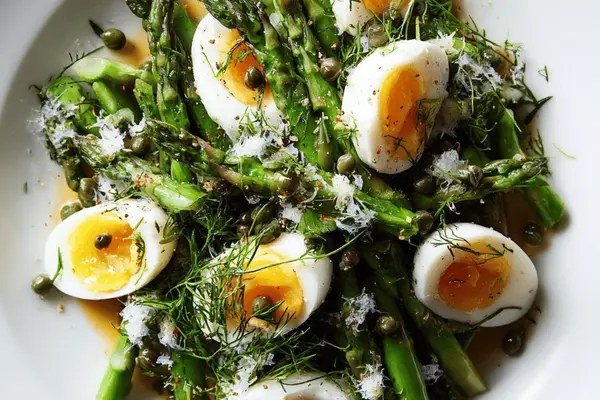
Asparagus Mimosa with Soft-Boiled Eggs
By Emma
Certified Culinary Professional
·
Recipe tested & approved
Asparagus mimosa features blanched asparagus with champagne vinegar dressing, grated soft-boiled eggs, and pickled capers. A fresh spring starter with bright, textured layers.
Prep:
25 min
Cook:
4 min
Total:
29 min
Servings:
4 servings
Boil the water first. Drop them in. Four minutes, that’s it—asparagus still snaps when you bite it, the color’s still bright. Drain right away or it keeps cooking in its own heat and gets soft and sad. This is asparagus mimosa. Egg grated fine over the top, a sharp vinaigrette underneath, and it’s done in 29 minutes total.
Why You’ll Love This Asparagus Mimosa
Looks fancy. Takes almost no time. The egg grates into these tiny feathery bits that sit on top like garnish—doesn’t read as “a whole egg,” just something that makes it look special.
Works as an appetizer or the vegetable part of dinner. Cold, warm, room temperature. Kind of doesn’t matter. One bowl for ingredients. One pot for water.
The capers add a small pop of salt and tang. Not overwhelming. Just there. And because it’s an egg and asparagus thing, it feels elegant without any actual effort.
Texture doesn’t last forever—asparagus softens over maybe an hour. But that’s not a problem. Eat it soon or don’t. Either way it’s still good.
What You Need for Asparagus Mimosa
Fresh asparagus. Medium thickness. Thin ones get mushy too fast. The thick ones take forever and stay woody in the middle.
One soft-boiled egg. This matters. Scrambled doesn’t work. Fried doesn’t work. You need the grated texture, and that only happens when the white and yolk are set enough to grate but still tender inside.
Champagne vinegar. Not white vinegar—sharper and more obvious. Not balsamic. The bubbles are the point. Apple cider works if you’re stuck but it’s different. Milder.
Dijon mustard. A spoonful. Cuts through the fat in the oil.
Garlic-infused olive oil. Not regular olive oil with garlic in it. The infused kind. Different flavor, less harsh. Can’t find it? Regular olive oil is fine but it changes the taste. Not worse, just different.
Pickled capers. Not the salt-packed kind. The vinegared ones that come in jars. The salt kind are too aggressive.
Salt and pepper. Kosher salt. Cracked pepper—not ground. Texture matters here.
How to Boil Asparagus Without Ruining It
Get a pot of salted water going. Real salt, not shy. Tastes like the sea. Bring it to a full boil.
Drop the asparagus in all at once. Watch it immediately. This is where people mess up. You’re not cooking it until it’s soft. You’re cooking it until it’s just past raw but still has teeth. Four minutes. That’s the window. Some pieces might be done in 3:30. Pull one out and bite it. If it snaps—actually snaps, not just bends—you’re close.
Drain the second it looks right. Don’t wait. Don’t let it sit in the water. The pot is still hot and the asparagus keeps cooking even after you drain it. Pat it dry with a towel. This stops the heat from doing more damage. Let it cool until it’s warm but not hot, not cold. Room temperature zone. This takes maybe five minutes if you spread it out on a plate.
How to Get the Egg Texture Right
Soft-boil the egg for about six or seven minutes depending on size. The white should be set completely. The yolk should be soft, almost liquid in the very center, but not runny. This matters because you’re going to grate it.
Cut it in half. Separate the white from the yolk. This is easier if the egg is still slightly warm.
Get the fine side of a box grater. Not the microplane—too fine, turns into paste. Not the coarse side. The fine side, the one with the little rectangular holes.
Grate the white first. Hold it gently and just let the grater do the work. You’ll get these tiny feathery strands that look like snow. Light, airy, they don’t pack down. This is the visual part. This is why it looks fancy.
Then grate the yolk on a separate surface. The yolk’s crumbly and rich and it doesn’t grate the same way. Bit more crumbly. Bit more yellow. Keep them separate until you’re ready to plate.
Asparagus Mimosa Tips and Serving
The vinaigrette is where the sharp comes in. Whisk the champagne vinegar and mustard together first. Then pour the oil in slowly while you whisk. Doesn’t have to be perfect—just thick and emulsified enough that it doesn’t separate immediately. Add the capers last. They’ll keep popping as you eat. Some days you want more mustard, some days less. Taste it. Adjust. Your mouth knows.
Toss the asparagus in about a third of the vinaigrette. Gently, but make sure every piece gets touched. Then arrange it on a shallow plate. Put the grated white on one side, the grated yolk on the opposite side. This is the visual part. The contrast matters. Then drizzle the rest of the vinaigrette over everything.
Serve it warm or at room temperature. Never cold. Cold mutes the flavors and makes the asparagus taste like nothing.
Eat it within an hour if you want the best texture. After that the asparagus gets softer, soggier. Not inedible. Just different. If you have leftovers and you want to eat them later, reheat the asparagus gently in a steam situation—just let it get warm again—and it tightens up a bit.
Asparagus Mimosa with Soft-Boiled Eggs
Prep:
25 min
Cook:
4 min
Total:
29 min
Servings:
4 servings
Ingredients
- 500 g fresh asparagus, trimmed medium thick
- 1 soft-boiled egg
- 15 ml champagne vinegar
- 5 ml Dijon mustard
- 45 ml garlic-infused olive oil
- 15 ml chopped pickled capers
- Salt and freshly cracked black pepper
Method
- 1 Bring salted water to boil. Drop asparagus in. Watch carefully. Slightly softer than usual, 4 minutes max. Perfect al dente—still snap and color vibrate. Drain immediately. Pat dry extensively to stop carryover cooking. Let cool till just warm, not cold or hot.
- 2 Cut soft-boiled egg in half. Separate white and yolk carefully. Using fine side of box grater, grate egg white first; tiny feathery strands keep light texture, like fresh snow. Then grate yolk separately—the richer, crumbly bits want their own spotlight.
- 3 In small bowl, combine champagne vinegar and Dijon mustard. Whisk thoroughly. Slowly drizzle in garlic-infused olive oil while stirring vigorously to create emulsified vinaigrette. Add pickled capers last—small pops of salt and tang bite through richness.
- 4 Toss warmed asparagus in about 25 ml vinaigrette, gently but thoroughly. Taste, adjust salt and pepper precisely—champagne vinegar is sharper than expected. Some days needs extra mustard punch; other times just a pinch. Trust nose and tongue.
- 5 Arrange dressed asparagus on shallow dish. Carefully arrange grated egg white along one side, yolk on opposite side. Visual contrast essential—windown to layering flavors. Drizzle remaining vinaigrette over top. Serve warm or room temperature—never icy cold; mutes flavors.
- 6 Eat immediately or within hour—textural shift quick, asparagus soggier over time. Leftovers? Dress asparagus after reheating briefly in steam to revive crunch.
Nutritional information
Calories
110
Protein
6g
Carbs
4g
Fat
9g
Frequently Asked Questions About Asparagus Mimosa
Can I use a different vinegar? Apple cider works. Tastes a bit milder, a bit sweeter. Red wine vinegar is too harsh. White vinegar is too sharp. Stick with champagne or switch to apple cider and don’t overthink it.
What if I overcook the asparagus? It gets soft. Serve it anyway but know it’ll be softer than it should be. Next time pull it at three and a half minutes and check. Every stove runs different.
Can I make this ahead? Not really. The asparagus stays decent for an hour maybe. After that it starts to soften and the vinaigrette makes it wilt. The egg gets weird if you grate it too early—just sits there turning darker. Make it right before you eat it.
Do I have to use a soft-boiled egg? Yeah, kind of. That’s the whole thing. You need the grated texture. Hard-boiled works but it’s grainy and dry. Scrambled doesn’t work. This recipe is specifically soft-boiled.
Is this vegetarian? Yeah. Eggs, vegetables, oil, vinegar. No meat.
Can I use regular olive oil instead of garlic-infused? You can. The flavor changes though. Garlic-infused is mellower, sweeter. Regular olive oil with garlic in it works but it’s sharper. Not worse, just different.
How thick should the asparagus be? Medium. Not the pencil-thin kind. Not the thick ones that are almost stalks. Somewhere in the middle. The thin ones cook in like two minutes and get mushy. The thick ones need six and still have a woody core.
You’ll Love These Too
Explore all →
Apple Trio Cocktail with Pear Brandy
Tuna Salad Recipe with Dijon Mustard
Pesto Pine Nut Grilled Cheese with Jarlsberg
Pineapple Popsicles with Lime and Mint
Crispy Beer-Battered Chicken Thighs with Dill Pickle
Sausage Meatballs with Orzo and Broccoli
Pumpkin For Pie Cake with Pudding
Beef Hash Brown Bake with Sharp Cheddar
Apple Tart with Granny Smith and Fuji
Caramel Apple Pretzel Bark Recipe
7 Layer Bars with Dates, Walnuts & Pumpkin
Indian Spiced Beef Burgers with Mango Sauce
Peanut Butter Muffins with Chocolate Chips
Ciabatta Rolls with Garlic Herb Butter
Gluten-Free Tuna Fritters with Corn Masa
Kahlua Chocolate Cheesecakes with Oreo Crust
Spiced Roasted Mixed Nuts Recipe
Smoked Trout Salad with Potatoes & Asparagus
Vegan Pie Crust with Vegan Butter