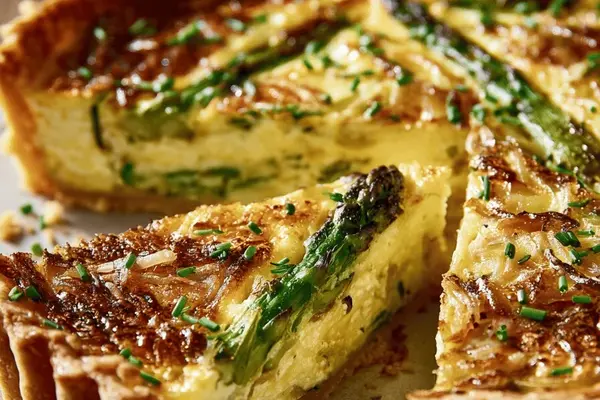
Gruyère and Asparagus Tart Recipe
By Emma
Certified Culinary Professional
·
Recipe tested & approved
Gruyère and asparagus tart with tender asparagus tips, caramelized leeks, and a flaky shortcrust pastry. Silky egg custard baked until just set.
Prep:
25 min
Cook:
55 min
Total:
1h 20min
Servings:
6 servings
Dock the bottom with a fork, chill it again, then blind bake until the edges just start turning golden. That’s the move that keeps the crust from getting soggy when the filling goes in. Gruyère melts differently than cheddar — it stays creamy instead of getting stringy — which is why it matters here. Three eggs, a splash of milk, asparagus tips arranged on top like you actually care. Takes an hour twenty total. Worth it.
Why You’ll Love This Gruyère and Asparagus Tart
Tastes like you spent all day on it. Takes 25 minutes to prep, maybe 55 in the oven. Works for dinner, works for lunch the next day cold straight from the fridge. The crust is actually crispy — not a promise, an outcome. Blind baking does that. Gruyère doesn’t get weird or rubbery like some cheeses. Stays smooth all the way through. You can make it vegetarian, you can add ham if you want. Flexible thing.
What You Need for Gruyère Asparagus Tart
Flour and cold butter first — 260 ml flour, 110 grams butter diced into tiny pieces. Cold matters. Pea-sized crumbs, that’s the texture you want. Salt. A pinch. Water, maybe 90 ml but add it slow, one tablespoon at a time. Dough should hold together but still feel crumbly.
One medium leek, white and light green parts only, sliced thin. Olive oil — 30 ml, nothing fancy. Asparagus. 450 grams. Cut the stalks into 2 cm pieces and keep the tips whole. They go on top later.
Vegetable broth. 120 ml. Three eggs, beaten loose. 200 ml whole milk. 150 grams Gruyère shredded — not the pre-shredded stuff, actual cheese you grate. Salt, black pepper, nutmeg if you want it. Handful of fresh chives chopped.
That’s it. Nothing surprising.
How to Make Gruyère and Asparagus Tart
Pulse flour and salt first. The food processor does the work. Add the cold butter pieces and pulse until it looks like sand with tiny pea-sized bits still visible. Don’t overwork it — that’s how you get a tough crust. Add water one tablespoon at a time, pulsing between each one, until it barely holds together when you squeeze it. Wrap it in plastic, stick it in the fridge for at least 40 minutes. Longer is fine.
Lightly flour the counter. Roll the dough out to a circle about 30 cm across, thinner at the edges. This is the part where you have to be gentle — rolling too hard means it shrinks in the oven. Ease it into a 23 cm tart pan, press it into the corners, trim the edges. Fork the bottom all over to stop it bubbling up.
Chill it again. At least 20 minutes. This part keeps the shape.
How to Get Gruyère Asparagus Quiche Crispy and Set
Preheat to 185°C, rack in the lower third. Line the shell with parchment, fill it with pie weights or dried beans. Blind bake for 15 to 18 minutes. You’re watching for the edges to turn a light golden, but the center should still be pale. Take out the weights and parchment, put it back for 5 minutes more just to dry the base out. Cool it a little.
Heat oil in a heavy skillet. Medium heat. Slice leek goes in now. Stir it for about 5 minutes, watching it go soft and translucent and golden. Don’t let it brown dark or it gets bitter. Asparagus stalks in next — just 2 minutes, enough to lose the raw crunch. Salt and white pepper now.
Pour the broth in, turn the heat up slightly, let it reduce down until almost nothing’s left. That takes maybe 4 to 6 minutes. You want tender asparagus, not disintegrating. Let it cool.
Whisk eggs and milk together gently in a large bowl. Add the Gruyère, the asparagus tips, the leek and stalk mixture, the chives, a pinch of nutmeg. Stir. Taste it. Fix the salt. You want something that tastes balanced and savory, not like a salt shaker exploded in there.
Pour it into the tart shell. Arrange the asparagus tips on top — space them out so they brown evenly. Bake at 185°C for 43 to 48 minutes. Watch the crust edges. If they’re getting too dark, tent it loosely with foil. The filling should be just set with a tiny bit of wobble in the center when you shake the pan gently. It’ll firm up as it cools. Overbake it and you get rubbery custard. Not worth it.
Rest it for at least 12 minutes before you cut into it. The custard needs that time to set up properly. Serve it warm, room temperature, or cold. Actually tastes better cold.
Gruyère and Asparagus Tart Tips and Mistakes
Dough cracks? Patch it with a tiny piece of cold dough and a little water. Keep your hands cool or the butter melts into the flour and then nothing works right.
Blind baking. Don’t skip it. I learned that the hard way. Soggy bottom otherwise. Trust it.
Use fresh asparagus. Frozen releases water and dilutes the custard. If you thaw frozen, drain it really well and maybe even pat it dry.
Leeks soften slow. Medium heat, stir often, let them take their time getting golden. That’s when the sweetness comes out.
Custard looks too loose after baking? Stick it back for 5 to 7 minutes more, or just let it rest longer. Sometimes it just needs time.
Leftover quiche gets reheated in a low oven. Microwave makes the crust soggy and the custard bounces around weird. Low oven, maybe 10 minutes, it comes back right.
Gruyère stays creamy. Sharp cheddar works if you want something stronger but it melts different, gets a bit stringy. Your call.
Gruyère and Asparagus Tart Recipe
Prep:
25 min
Cook:
55 min
Total:
1h 20min
Servings:
6 servings
Ingredients
- SHORTCRUST DOUGH
- 260 ml all-purpose flour, plus extra for dusting
- Pinch of fine salt
- 110 g cold unsalted butter, diced
- 90 ml chilled water, approximately
- FILLING
- 1 medium leek, white and light green parts, thinly sliced
- 30 ml olive oil
- 450 g asparagus, trimmed; tips reserved whole, stalks cut into 2 cm pieces
- 120 ml vegetable broth
- 3 large eggs, beaten lightly
- 200 ml whole milk
- 150 g shredded Gruyère cheese
- Salt and freshly ground black pepper to taste
- Freshly grated nutmeg, optional
- Handful fresh chives, chopped (added twist)
Method
- SHORTCRUST DOUGH
- 1 Pulse flour and salt in food processor to combine. Add cold butter, pulse in short bursts until pea-sized crumbs form — avoid overmixing, or dough gets tough. Add water, one tablespoon at a time, pulsing until dough just clumps together. Dough should feel cool, slightly crumbly but hold when pressed. Wrap tightly in plastic; chill minimum 40 minutes (longer if you can).
- 2 Lightly flour work surface. Roll chilled dough evenly into a 30 cm circle, somewhat thinner at edges. Gentle pressure only — don't stretch dough; will shrink in oven. Ease dough into 23 cm tart pan with removable bottom, pressing into corners without tearing. Trim excess dough. Dock bottom with fork to prevent bubbling.
- 3 Chill lined tart shell again at least 20 minutes to relax gluten and keep shape during blind baking.
- 4 Preheat oven to 185 °C (365 °F), rack in lower third.
- 5 Line dough with parchment paper, fill with pie weights or dried beans. Bake blind 15–18 minutes until edges start to blush golden and firm but center still pale.
- 6 Remove weights and paper carefully. Return shell to oven 5 minutes more, until base is dry and slightly golden but not fully cooked. Cool slightly.
- FILLING
- 7 Heat olive oil in heavy skillet over medium. Add sliced leek; soften, stir often ~5 min until translucent and lightly golden, releasing gentle onion aroma. Avoid browning too dark or bitter.
- 8 Add asparagus stalk pieces; sauté 2 min, just losing raw crunch. Season lightly with salt and white pepper.
- 9 Pour in vegetable broth; raise heat slightly, reduce until almost evaporated, about 4–6 minutes. You want tender asparagus, not mushy. Let cool slightly.
- 10 In large bowl, whisk eggs and milk gently. Add grated Gruyère, reserved asparagus tips, leek-asparagus mixture, chopped chives, and a pinch of freshly grated nutmeg if using. Stir well. Taste for seasoning; add salt and pepper incrementally. You want a balanced savory custard, not overly salty.
- 11 Pour filling into pre-baked tart shell. Arrange asparagus tips artfully on top, spaced for even browning and a bit of bite.
- 12 Bake 43–48 minutes at 185 °C. Watch crust edges—if overbrowning, tent with foil. Filling should be just set but still with slight wobble in center when gently shaken. The quiche firms as it cools. Avoid overbaking, or risk rubbery texture.
- 13 Let quiche rest at least 12 minutes before slicing to allow custard to firm properly. Serve warm, room temperature, or chilled. Flavors intensify cooled.
- NOTES & TROUBLESHOOTING
- 14 If dough cracks during transfer, patch gently with cold water and patched piece. Keep hands cool to avoid melting butter.
- 15 If custard seems too loose after baking, return to oven 5–7 minutes, or give extra resting time before cutting.
- 16 Substitute whole milk with half milk half cream for richer custard; or use sharp cheddar for stronger flavor but expect slightly different melting.
- 17 Vegetable broth replacement: low-sodium chicken broth or water with pinch of dried herbs works fine for deglazing.
- 18 Leeks can replace onions for milder sweetness; saute low and slow to bring out natural sugars.
- 19 Blind baking prevents soggy crust from wet filling; skip and the bottom will be mushy, trust me learned the hard way.
- 20 Use fresh asparagus; frozen will release too much water and dilute custard; if frozen, thaw and drain thoroughly.
- 21 Leftover quiche reheated gently in low oven retains texture better than microwave which makes crust soggy and custard rubbery.
Nutritional information
Calories
320
Protein
12g
Carbs
18g
Fat
22g
Frequently Asked Questions About Gruyère and Asparagus Tart
Can I make the dough ahead of time? Yes. Wrap it, stick it in the fridge for a few hours or overnight. Pull it out 10 minutes before rolling so it’s not too cold and cracks.
What if I don’t have vegetable broth? Water works fine. Low-sodium chicken broth too. Honestly just water with a pinch of dried herbs is the same thing.
Can I use frozen asparagus? Not really. It releases too much water and the custard gets watery. If you have to, thaw it completely and squeeze it dry.
Should I bake the crust blind? Yes. Do it. The filling is wet and the crust needs that head start or the bottom stays soggy. I tried skipping it once. Never again.
Can I add ham or bacon? Yeah. Crisp it, chop it, throw it in with the filling. Changes nothing about the method.
How do I know when it’s done baking? The edges should be set. The center should have just a tiny wobble when you shake the pan gently. It’ll firm up more as it cools. Overbaking makes it rubbery.
Can I use half and half instead of milk? Go for it. The custard gets richer. Some people do half milk, half cream. Works either way.
How long does it keep? Leftover quiche lives in the fridge for maybe 4 days. Reheats best in a low oven, not the microwave.
You’ll Love These Too
Explore all →
Pork Parmigiana Patties with Eggplant
Herb Goat Cheese Dip with Greek Yogurt

Buffalo Chicken Mac and Cheese Recipe
Rustic Chicken Pot Pie with Buttermilk Crust
Chinese Pasta Noodles with Chili Oil
Coffee Caramel Macarons with Hazelnut
Ricotta Cheesecake with Honey & Cinnamon
Buttermilk Pie with Cinnamon Streusel

Braised Pork Quesadillas with Poblano
Quinoa Salad with Chickpeas and Walnuts
Seed Loaf Recipe with Sunflower & Sesame
Banana Caramel Syrup with Pecans

Cosmopolitan The Drink Recipe
Pineapple Popsicles with Lime and Mint
Cajun Chicken Pasta with Creamy Tomato Sauce
Chocolate Cake Recipe with Espresso

Homemade Orange Juice Drink Recipe
Spiced Bread Recipe with Maple Syrup & Lemon
Buttermilk Pie Recipe with Eggs & Vanilla