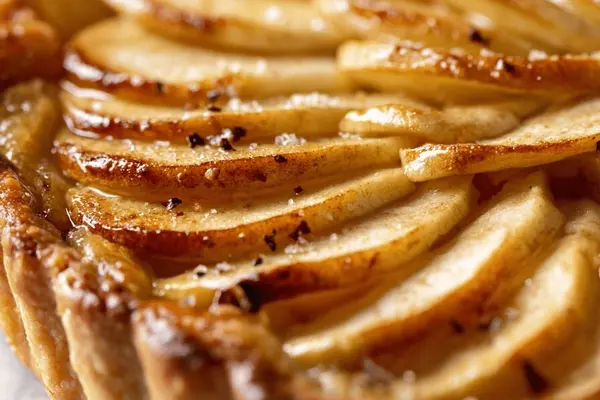
Apple Tart with Granny Smith and Fuji
By Emma
Certified Culinary Professional
·
Recipe tested & approved
Homemade apple tart featuring Granny Smith and Fuji apples with brown sugar, nutmeg, and a flaky cornstarch crust. Master the sealing technique.
Prep:
50 min
Cook:
40 min
Total:
90 min
Servings:
8 servings
Melt the butter first—that smell is your timer. Brown sugar goes in while it’s foaming, and you stir until the whole skillet smells like caramel and the sugar starts bubbling. This is the moment everything hinges on. Too long and it burns. Too short and the filling tastes like nothing.
Why You’ll Love This Apple Tart
Takes 90 minutes total and tastes like you spent a weekend on it. The crust actually stays crisp. Two kinds of apples—Fuji keeps its shape, Granny Smith melts into the caramel—and the cornstarch in the dough absorbs all the juice so the bottom doesn’t get soggy. Smells incredible while it bakes. Like fall in your kitchen. Works as dessert, works cold the next morning with coffee. Leftovers are somehow better. It’s a comfort food that doesn’t feel like you’re being lazy. Actually requires you to pay attention.
What You Need for an Apple Tart
Unsalted butter. Cold. Cut into pieces. Warm butter ruins the crust texture—just doesn’t flake the way it should.
All-purpose flour. Not bleached. Bleached has different protein, affects how everything binds.
Cornstarch mixed into the flour. Sounds weird but it absorbs moisture from the apples and keeps the bottom crust from getting watery. This is the actual trick nobody mentions.
Ice water with apple cider vinegar stirred in. The vinegar relaxes the gluten so the dough rolls out without fighting you, and the acid keeps the crust tender instead of tough.
Fine salt. One teaspoon total. That’s enough.
Fuji apples—seven to nine medium ones. Sweeter. They hold their shape when they cook instead of collapsing into mush. Peel and core them, then slice each one into eight wedges.
Granny Smith apples. Two medium ones. Tart. Soften down into the caramel and add this sharp edge that makes the whole tart taste more interesting. Same preparation—peeled, cored, eight wedges each.
Brown sugar. Packed down. A full cup. This caramelizes with the butter and becomes the glue holding everything together.
Ground nutmeg. Not much. Half a teaspoon. Sounds small but it’s the only spice in here and it matters.
Heavy cream for brushing the top crust. Makes it brown better than milk ever could.
How to Make an Apple Tart Crust
Food processor. Flour, cornstarch, salt, cold butter diced into small pieces. Pulse until it looks like coarse sand—pea-sized bits of butter throughout. This is what makes the crust flake instead of turn into a tough disc.
Stream the ice water mixed with vinegar while pulsing. Stop as soon as clumps start forming. Over-process and you’ve got a dense pastry. Under-process and it falls apart when you try to roll it. It’s somewhere in between.
Dump it onto a floured counter and pat it into two discs. Work fast—don’t knead it, don’t make it smooth. It should look kind of rough and shaggy. Wrap both discs in plastic wrap and chill them. Forty minutes minimum. Longer is better if you have time. The cold firms up the butter and makes everything easier to handle.
How to Get the Apple Tart Filling Right
Heavy skillet. Medium-high heat. Melt the butter until it foams. This is the moment to watch. When the foaming subsides and you see it starting to brown slightly at the edges, add the brown sugar. Stir for one minute. Just one. The sugar should bubble and the whole thing should smell like caramel is happening—sweet and deep, almost burnt but not quite.
Add the sliced apples. Both kinds. Sprinkle the nutmeg over top. Crank the heat to high and toss constantly. You’re not trying to soften them all the way—the oven will finish that. What you want is for the Granny Smiths to start turning translucent at the edges while the Fujis stay mostly firm. The syrup should thicken and coat everything, not sit at the bottom watery and pooling.
This takes maybe five minutes. Pull it off the heat and let it cool to room temperature. Hot filling on a crust means the bottom gets soggy and never crisps. Room temperature. Actually let it sit.
Apple Tart Assembly and Baking Tips
Oven rack positioned one notch below center. Set it to 215°C (420°F) and let it preheat.
Flour your counter. Roll out one dough disc into a circle about 23 cm across—doesn’t have to be perfect. Aim for three millimeters thick. Not thinner. Transfer it to your tart pan, press it gently against the sides and bottom. Patch any tears immediately with a scrap of dough. Don’t tug at it or stretch it.
Spread the cooled apple filling into a modest mound in the center. Don’t pile it in the corners—the juice will pool there and make the crust soggy.
Roll the second dough disc to the same size. Take a small round cutter—or just use a bottle cap, honestly—and punch five holes spaced out evenly across the top. These are vents. They let steam escape so the filling doesn’t build up pressure and crack the edges wide open. It actually matters.
Place the second crust over the apples. Pinch the edges together firmly—fold the bottom crust up and over the top one, crimp with your fingers. Then take a fork and press the tines lightly all around the perimeter. Seal it completely. You’re actually trying to keep the steam from escaping anywhere except those five holes.
Brush the top crust with heavy cream. Use a pastry brush or just your fingers. This browns it better than milk, gives it a richer sheen, and helps the texture stay crisp instead of dull.
Bake for 38 to 40 minutes. After 30 minutes start watching the crust color. If it’s browning too fast, lay foil loosely over the top. Crispness is the goal—tap it lightly and listen for a firm sound, not a soft thud. Let it cool for 15 minutes before slicing. The filling needs that time to set or it runs everywhere.
Store loosely covered at room temperature. Maximum three days. Refrigeration keeps it longer but changes the texture. Warm it slightly before serving—the apple and caramel flavors wake back up.
Apple Tart with Granny Smith and Fuji
Prep:
50 min
Cook:
40 min
Total:
90 min
Servings:
8 servings
Ingredients
- Filling
- 45 ml butter unsalted
- 200 ml brown sugar packed
- 2 litres Fuji apples peeled and cored, each sliced into 8 wedges (7-9 medium)
- 400 ml Granny Smith apples peeled and cored, each sliced into 8 wedges (2 medium)
- 2 ml ground nutmeg
- Crust
- 420 ml all-purpose flour not bleached
- 1 ml fine salt
- 200 ml cold unsalted butter diced
- 60 ml ice water
- 5 ml apple cider vinegar
- 30 ml cornstarch
Method
- Crust
- 1 In processor pulse flour with cornstarch, salt, and butter until mixture resembles peas. The cornstarch here helps absorb moisture from apples and keeps crust crisp. Slowly stream ice water mixed with vinegar and pulse until dough just starts forming into clumps. Avoid over-processing to keep crumbly texture.
- 2 Dump dough onto floured surface, quickly pat into two discs. Wrap tight in plastic wrap to prevent drying. Chill at least 40 minutes; longer if possible — firms butter, aids rolling.
- 3
- Filling
- 4 Melt butter in heavy skillet. When foaming gently, add brown sugar and stir for 1 minute until it bubbles and smell deepens. Too much cooking, sugar burns, so stay alert. Toss in apples and sprinkle nutmeg. High heat; toss often. Watch for Granny Smiths to soften and Fuji to get tender but hold shape. Syrup should thicken, almost clinging, not watery. Remove from heat. Cool to room temp to avoid soggy bottom.
- 5
- Assembly & Baking
- 6 Oven rack one notch below center. Preheat oven to 215°C (420°F). Flour counter, roll out one disc edge-to-edge into 23 cm (9 inch) circle but no thinner than 3 mm. Transfer to tart pan, gently press dough to edges and bottom. No tugging; patch tears immediately. Spreading the filling in a modest mound prevents juice pooling.
- 7 Roll out second dough disc into similar circle. Using a small cutter or round tip (around 1.5 cm diameter), punch five holes spaced evenly. These vents release steam and avoid cracking edges.
- 8 Place second crust over apples. Pinch edges firmly with bottom crust. Fork tines pressed lightly all around seal completely. Don’t skip this—steam escapes here or all goes disaster. Brush top crust with heavy cream. Gives golden brown sheen and a bit of richness. Skip milk; cream browns better and helps texture.
- 9 Bake about 38-40 minutes; watch crust color closely after 30 minutes. Some ovens run hot; foil crust edges mid-bake if it browns too fast. Crispness should sound firm when tapped lightly. Be patient before slicing—letting cool 15 min lets filling set up, less watery mess.
- 10
- 11 Store loosely covered at room temp max 3 days. Refrigeration prolongs but changes texture. Warm slightly before serving; filling aromas reawaken.
Nutritional information
Calories
310
Protein
2g
Carbs
40g
Fat
15g
Frequently Asked Questions About Apple Tart
Can I use a different apple variety for this apple tart? Not really. Fuji and Granny Smith work because they behave differently when heated—one holds shape, one softens. If you mix two similar apples they’ll either all stay firm or all turn to mush. Tried it once with all Fujis. Tasted flat. Stick with the combination.
Why is cornstarch in the apple tart crust? Absorbs moisture. The apples release juice while everything bakes, and without cornstarch that liquid soaks into the bottom crust and makes it soggy. The cornstarch traps it, keeps the crust crisp. That’s the whole reason.
How long does an apple tart with pastry crust keep? Three days at room temperature, loosely covered. After that it goes stale. You could refrigerate it—keeps five days that way—but cold changes how it tastes and the crust texture gets different. Better to eat it fresh.
What if the crust browns too fast while baking? Drape foil loosely over the top around 30 minutes. Some ovens run hot. You’re trying to let the filling cook through without the crust burning black. Remove the foil for the last few minutes if the top needs more color.
Can you make an apple tart filling ahead of time? Make it the morning of, let it cool to room temperature, cover it loosely. Use the same day. It starts breaking down after that and gets watery. The cornstarch helps but it’s not magic.
Do I have to use apple cider vinegar in the crust? Yes. It relaxes the gluten so the dough stays tender instead of getting tough and chewy. Regular vinegar works in a pinch but apple cider is better. Don’t skip it thinking the dough will be fine—it won’t be.
You’ll Love These Too
Explore all →
Banana Bread Recipe with Oat Flour
Peanut Butter Reeses Cups Cookies
Oven Baked Hard Eggs in Muffin Tin
Ricotta Cream Heart with Lemon & Maple
Sweetbreads of Veal with Duck Fat
Chive Blossom Butter Recipe

Red Velvet Cake with Walnuts & Cream Cheese
Cosmopolitan The Drink Recipe

Sautéed Shrimp Dishes with Garlic & Sweet Chili
Buffalo Chicken Mac and Cheese Recipe
Raspberry Cheesecake Cookies with Milk Chocolate
Quinoa Salad with Roasted Sweet Potato
Broccoli Cheddar Potato Skins with Sour Cream
Caramelized Peppers with Smoked Bacon
Creamy Garlic Parmesan Linguine Recipe
Chocolate Martini with Hazelnut Liqueur
Herbed Cheese Pull-Apart Bread Recipe

Jalapeno Popper Chicken Breast with Cream Cheese
Grilled Beef Fillet with Garlic Butter Mushrooms