Apple Tart with Pecans and Dried Apricots
By Emma
Certified Culinary Professional
·
Recipe tested & approved
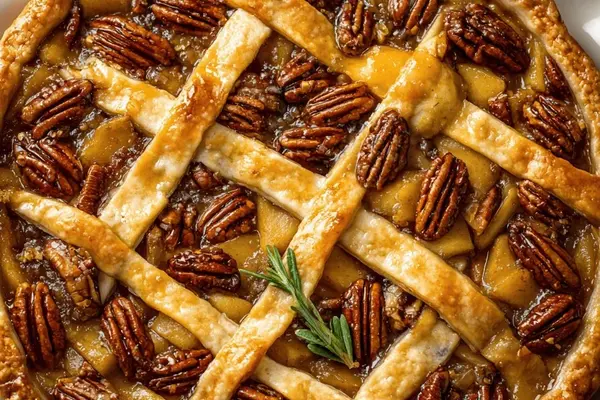
Brown butter hits a skillet. Coconut sugar bubbles, thickens, catches the edge of caramel without falling off it. Apples go in—that specific moment when they hit heat and start to glisten. Forty-five minutes later, lattice crust turns that color of dark honey. This is how fall desserts actually happen.
Why You’ll Love This Apple Cranberry Nut Tart
Pecan pie texture meets apple tart. Not exactly either one. Takes an hour and a half total, but most of that’s hands-off time. Thirty-five minutes prepping, fifty minutes baking. You’re not standing there. Toasted pecans stay crunchy inside the filling. They don’t go soft. That’s the thing—they hold their shape. Works warm or cold. Warm, it’s almost jammy. Cold, you get actual slices that don’t collapse. Different thing entirely, but both work. Dried apricots in there add this brightness nobody expects. Not cranberry—apricots. Tastes like something happened, not like you just threw apples and sugar at a crust. Fall dessert that doesn’t need vanilla ice cream, but definitely takes it.
What You Need for a Rustic Apple Tart with Pecans
Pecans—toasted. Not raw. Toasting changes everything. Two-thirds cup, chopped rough. Pieces, not dust. Apples. Granny Smith and Fuji mixed. Sharp and sweet together. Five and three-quarter cups sliced. That’s about five medium apples, peeled and cored first. Dried apricots, chopped fine. Half a cup. Small pieces so they distribute through the filling instead of sitting in chunks. Browned butter. Three tablespoons. You brown it yourself in the skillet—foam, then nutty brown, then you stop. Unsalted. Coconut sugar. Two-thirds cup. Different from regular sugar. It dissolves slower, stays in the filling instead of dissolving into juice. All-purpose flour. One and two-thirds tablespoons. Just enough to thicken the filling without making it starchy. Ground cinnamon. Half a teaspoon. Not more. Two pie crusts. Store-bought is fine. Works just as well. Milk for brushing the lattice. That’s it.
How to Make a Lattice Apple Tart with Toasted Pecans
Oven rack goes to the bottom third. Preheat to 375°F. That low position matters—the filling needs time to cook, and the bottom crust needs heat or it stays doughy.
Start with the pecans, apricots, and flour in a bowl. Mix them together. This mixture gets folded into the apples later—it’s your binding, your texture, your whole thing. Set it aside.
Heavy skillet over medium heat. Melt the butter. You’re watching for it to brown—first it foams, that foam settles, and underneath you’ll see it turning tan, then brown, then nutty. Stop before it gets black. That takes maybe three minutes. Once it’s brown, add the coconut sugar. It bubbles immediately. Stir it—it should thicken. Two or three minutes, maybe less. You’re looking for it to darken slightly and thicken before you add the apples or it burns.
Apples go in. Stir gently. You’re not breaking them. Four to five minutes, they soften just enough to glisten but they hold their shape still. They should look wet but intact, not mushy. Sprinkle the cinnamon over them. Toss the nut mixture in—fold it, don’t stir violently. Just fold until it coats everything. Pull off heat. Let it cool slightly while you work on the crust.
Roll one crust into a nine-inch tart pan. Press it carefully into corners. Thin spots should get patched—you don’t want leaks on the baking sheet. Pour the apple filling in, spread it even. Brush the edges lightly with milk.
Second crust gets cut into strips. Three-quarter inch wide. Brush milk on each strip. Weave them over the filling—over, under, over, under. Pull it tight. Seal all edges by pinching them together or running a fork around the rim. Trim the excess dough that hangs over.
Baking sheet underneath catches drips. The filling will bubble over slightly. That’s normal. Bake forty-two to forty-five minutes. The crust browns golden. Watch for darker spots—that means you’re near done, not that you’re overdoing it. The filling bubbles at the edges, almost jammy looking but still fresh-tasting when you look at it through the lattice. Cool on a rack. The filling firms as it cools. Flavors settle too.
Pecan Apple Tart Tips and Common Mistakes
Don’t skip browning the butter. That’s the flavor. Melted butter doesn’t have that nutty depth—browned butter does. Thirty seconds of extra heat changes everything.
Coconut sugar stays thicker than regular sugar. It dissolves slower. That’s why it works here instead of breaking into pure liquid. If you use regular sugar, add a quarter teaspoon more flour to the filling.
Apples go in before they’re fully softened. They firm back up as they bake. If they’re already mushy when they hit the oven, they turn to sauce.
Lattice strips should be tight. Loose lattice looks pretty but falls apart. Pull them snug.
Bottom crust. That low oven rack position isn’t optional. Bottom crust stays doughy if it doesn’t get direct heat. Low rack, full fifty minutes of bake time—crust cooks through.
Cool completely before slicing if you want neat slices. Warm, it’s more of a spoon situation. Both are fine. Just depends what you want.
Toasted pecans hold their texture inside the filling. Raw pecans go soft. Toast them first or they disappear.
Apple Tart with Pecans and Dried Apricots
Prep:
35 min
Cook:
50 min
Total:
1h 25min
Servings:
8 servings
Ingredients
- 265 ml 1 1/8 cups pecans toasted and roughly chopped
- 125 ml 1/2 cup dried apricots chopped fine
- 25 ml 1 2/3 tablespoons all-purpose unbleached flour
- 170 ml 2/3 cup coconut sugar
- 50 ml 3 tablespoons unsalted butter
- 1.4 liters 5 3/4 cups peeled cored sliced apples (Granny Smith and Fuji mix)
- 2 ml 1/2 teaspoon ground cinnamon
- 2 pie crusts
- Milk for brushing
Method
- 1 1 In a bowl combine pecans chopped apricots and flour. Hold aside.
- 2 2 Brown butter in a heavy skillet over medium heat. Swirling; once foam settles, add coconut sugar. It should bubble, thicken 2-3 minutes. Before burning, toss in sliced apples. Stir gently, soften 4-5 minutes. Apples will glisten but retain some shape. Sprinkle cinnamon. Toss in nut mixture, fold to coat. Remove from heat; cool slightly.
- 3 3 Position oven rack low to bottom third. Preheat oven to 190°C 375°F.
- 4 4 Roll one crust into a 9 tart pan. Press carefully, patch thin spots to avoid leaks. Fill with apple mixture evenly. Coat edges lightly with milk.
- 5 5 Cut second crust into 2 cm 3/4 inch strips. Brush milk on each. Weave lattice over filling tightly, sealing all edges neatly by pinching or using fork tines to avoid puffing or shrinks. Trim excess dough carefully.
- 6 6 Set tart on rimmed baking sheet to catch drips; tart can bubble over. Bake 42-45 minutes. Crust will brown golden but watch—darker spots signal near done. Filling will bubble and spill slightly, almost jammy but still fresh-tasting. Cool on rack; flavors settle while tart firms.
- 7 7 Serve warm or cooled for firmer slices.
Nutritional information
Calories
320
Protein
4g
Carbs
45g
Fat
15g
Frequently Asked Questions About Apple Tart with Pecans
Can I use a different type of apple? Granny Smith is tart. Fuji is sweet. Mix matters. You could do all Granny Smith but it’ll be sharper. All Fuji gets bland. Half and half works. Other crisp apples work too. Not Honeycrisp—too soft. Not Red Delicious—too mealy.
What if I don’t have coconut sugar? Works with brown sugar. Add an extra half teaspoon flour to thicken it. Regular granulated sugar is thinner—quarter teaspoon more flour for that one too.
How long does this keep? Stays good on the counter two days, covered loosely. The filling gets firmer as it sits. Fridge keeps it four days. Cold slices actually cut cleaner.
Can I make this ahead? Assemble it, don’t bake it. Cover with plastic wrap, refrigerate overnight. Bake the next day—might need two extra minutes since it goes in cold. Or bake it the day before and reheat gently wrapped in foil.
Do I have to weave the lattice or can I just do strips? Weaving is stronger. Just laying strips over and under keeps it from sliding around during the bake. You could do a simple pattern—just lay them one direction without weaving—but it’s less stable. Weaving takes five extra minutes.
What about dried cranberries instead of apricots? They’re drier. You’d need to soften them first in warm water or they’ll stay hard inside the tart. Apricots work as-is. Cranberries work, just need that step.
Is this better warm or cold? Different. Warm it’s soft, almost jammy. Cold it’s structured—you get actual slices. Serve it however you’re in the mood for it.
You’ll Love These Too
Explore all →
Pineapple Blueberry Crisp with Cake Mix
Grilled Chicken Salad with Red Beans
Italian Osso Bucco with Veal and Cheddar
Salted Caramel Shortbread Bars with Chocolate
Smoked Mackerel Tostadas with Avocado
Hot Toddy Recipe with Honey and Ginger
Fluffy Pancakes Recipe with Buttermilk
Creamy Herb Ranch Mash with Greek Yogurt

Hot Apple Cider with Cinnamon & Rosemary
Pan Roasted Turkey with Cranberry Sausage
Barley Lentil Soup with Chickpeas and Spinach
Apple Tartlets with Granny Smith Apples
No-Knead Overnight Rye Bread Recipe
Grilled Corn On The Cob With Garlic Herb Butter
Roasted Carrots Lentil Couscous with Halloumi
Fluffy Chocolate Pancakes with Egg Whites
Chocolate Chip Cookie Bars with Oreos
Chicken Soup With Wild Rice Recipe
Cilantro Lime Pasta Salad with Citrus Gremolata